

Shure
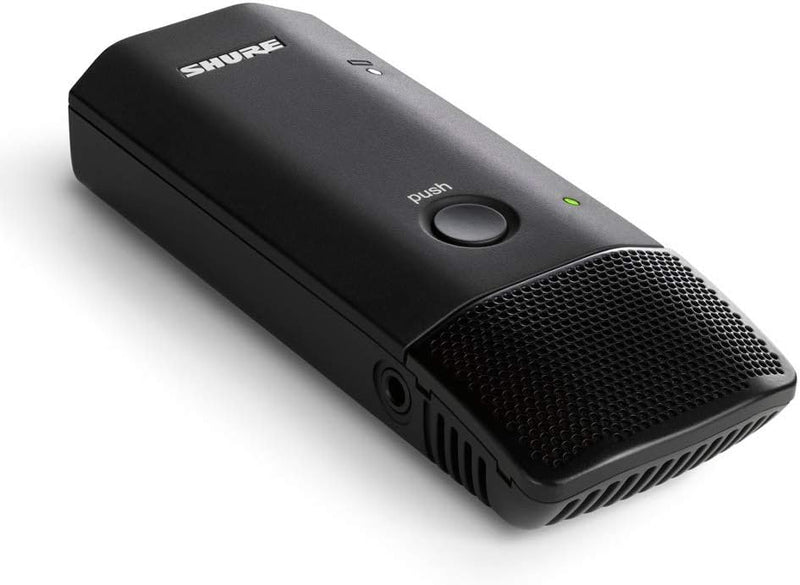
Shure MXW6/O=-Z10 Wireless Instrument Condenser Microphone (Renewed)
Shure's MXW6 brings wireless condenser clarity to instrument tracking and live performance without compromising the signal chain.
$299.99*$707.00Save 57%
View on Amazon
✓ In Stock on Amazon.com
*Price sourced from Amazon.com. Last updated:Aug 28, 2026.Price and availability are subject to change — details.
Affiliate Disclosure: As an Amazon Associate, Studio Supplies earns from qualifying purchases made through links on this page, at no additional cost to you. This helps support our editorial team.
Notice a mistake? Let Us Know
Overview
Specifications
Type
Instrument Condenser Microphone
Polar Pattern
Omnidirectional
Frequency Band
Z10 (1920–1930 MHz DECT)
Connectivity
Wireless (Shure MXW System)
Power Source
Battery Powered
Condition
Renewed
Model
MXW6/O=-Z10
Frequently Asked Questions
What wireless system does the MXW6/O work with?
The MXW6/O is designed for Shure's Microflex Wireless (MXW) ecosystem. It pairs with MXW access point transceivers and requires the MXWAPT base unit to function — it will not work with other Shure wireless systems like SLX or ULX.
Does the MXW6 require phantom power to operate?
No. The MXW6 is battery-powered by design — it operates as a wireless transmitter/microphone, so phantom power from a preamp or interface is not part of its signal chain. Power is self-contained within the transmitter body.
What wireless system does the MXW6 pair with, and does it require a specific receiver?
The MXW6 is part of Shure's Microflex Wireless ecosystem and requires a compatible MXW receiver unit. It does not function as a standalone XLR mic — the wireless link to an MXW access point or receiver is essential to the signal path.
What polar pattern does this microphone use, and what does that mean for instrument pickup?
The "/O" designation indicates an omnidirectional polar pattern. This captures sound equally from all directions, which yields a natural, open tone on instruments but offers no off-axis rejection — important to consider in high-stage-volume environments.
Does this microphone require phantom power?
No. The MXW6 is battery powered and transmits wirelessly to the MXW access point. It carries its own internal power supply, eliminating the need for phantom power from a console or preamp.
What polar pattern does the MXW6 use, and what instruments is it best suited for?
The MXW6 uses an omnidirectional condenser capsule, which captures sound evenly from all directions. This makes it well-suited for acoustic instruments in controlled environments where ambient bleed is acceptable, or for clip-on applications close to the sound source.
What latency can I expect in a live or broadcast application?
Shure's Microflex Wireless platform is engineered for low-latency RF transmission suitable for live performance and broadcast. Exact latency figures depend on the paired receiver and system configuration, but the platform is designed to be imperceptible in real-time monitoring scenarios.
What is the Z10 frequency band, and will it work in my region?
The Z10 designation covers the 1920–1930 MHz DECT frequency band. This band is license-free in the United States and many other regions, operating above the congested UHF spectrum, which reduces interference in dense RF environments.
Is this a renewed unit, and what does that mean for reliability?
Yes, this is a renewed (refurbished) unit. It has been inspected, tested, and restored to working condition. Wireless microphone components like the MXW6 are generally robust, but buyers should verify that battery performance meets expectations upon arrival.
This unit is listed as Renewed — what should I verify before putting it into a session?
Confirm the transmitter body, capsule, and battery contacts are all intact and functioning before a session. Renewed units are tested and restored to working condition, but verifying RF pairing with your receiver in advance is standard practice for any wireless rig going into a show or critical tracking date.
Related Products


