Shure

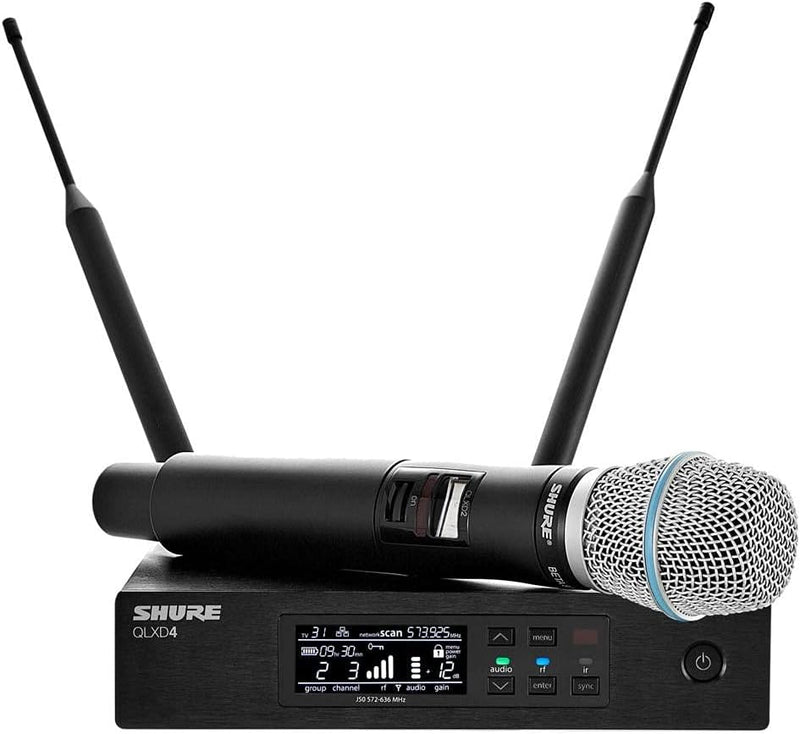
Shure QLXD24/B87A-X52 QLXD Handheld Wireless Supercardioid Microphone System

Wireless Beta 87A supercardioid condenser system delivering studio-grade vocal clarity with 300-foot range on the QLXD platform.

$1,299.00*
Check availability

*Price sourced from Amazon.com. Last updated:Jun 27, 2026.Price and availability are subject to change.

Affiliate Disclosure: Studio Supplies may earn a commission from qualifying purchases made through links on this page, at no additional cost to you. This helps support our editorial team.

Notice a mistake? Let Us Know

Overview

The Shure QLXD24/B87A-X52 pairs the Beta 87A supercardioid condenser capsule with Shure's QLXD digital wireless platform, creating a system built for vocalists and presenters who demand studio-level clarity without a cable. The Beta 87A capsule is known for its smooth, detailed frequency response with pronounced presence in the upper midrange — it captures the nuance of a vocalist's delivery, from breathy subtleties to aggressive transients, with a fidelity that dynamic capsules simply do not achieve. The supercardioid pattern provides tighter pickup than a standard cardioid, offering superior rejection of ambient stage noise and adjacent instruments, though it introduces a rear lobe that demands attention to monitor positioning. The QLXD platform transmits 24-bit digital audio across a 300-foot operating range with under 2.9 ms of latency — transparent enough that performers and engineers will not perceive the wireless link in the signal chain.

The X52 frequency band (902-928 MHz) operates in license-free ISM spectrum in the US, and the system's 64 MHz tuning bandwidth with support for up to 17 systems per 6 MHz channel makes it viable for multi-channel installations in houses of worship, corporate AV, touring productions, and broadcast. The receiver features automatic frequency scanning, IR sync with the transmitter, and a half-rack metal chassis with networked control capability. Build quality is consistent with Shure's professional tier — the handheld transmitter feels solid, the receiver withstands rack mounting and transport, and the included accessories (antennas, BNC cables, rackmount kit) cover a complete installation. For engineers who need a wireless vocal system that preserves the sonic character of a premium condenser capsule while delivering reliable RF performance in demanding environments, the QLXD24/B87A sits in the sweet spot between Shure's entry-level BLX line and the flagship Axient Digital platform.

Key Features

Combo wireless system with handheld and lavalier microphone

64 MHz tuning bandwidth (region dependent)

Up to 17 compatible systems per 6 MHz TV channel; 22 systems per 8 MHz channel

300 ft line of sight operating range

Includes 2 AA batteries, 2 wave antennas, 2 BNC cables, zipper bag, 2 BNC bulkhead adapters, rackmount kit, users guide, and power supply

Specifications

Brand
Shure
Model
QLXD24/B87A-X52
Microphone Capsule
Beta 87A Supercardioid Condenser
Frequency Band
X52 (902-928 MHz)
Tuning Bandwidth
64 MHz
Operating Range
300 ft (line of sight)
Channel Density
Up to 17 per 6 MHz / 22 per 8 MHz channel
Power Source
2 AA Batteries (transmitter)
Included Accessories
2 AA batteries, 2 wave antennas, 2 BNC cables, zipper bag, 2 BNC bulkhead adapters, rackmount kit, power supply, user guide

Pros & Cons

👍 Pros

  • Beta 87A supercardioid condenser capsule captures vocal detail with extended high-frequency response and articulate transient handling that dynamic capsules cannot match
  • 64 MHz tuning bandwidth provides extensive frequency agility for navigating congested RF environments in multi-system deployments
  • 300-foot line-of-sight operating range delivers reliable coverage for large venues, houses of worship, and conference stages
  • Sub-3ms system latency keeps the wireless link transparent in the signal chain for live monitoring and broadcast
  • QLXD receiver's automatic frequency scanning and IR sync simplify setup — find a clean channel and pair in seconds

👎 Cons

  • The supercardioid polar pattern's rear rejection lobe requires careful monitor wedge placement to avoid feedback — less forgiving than a cardioid capsule
  • AA battery operation in the handheld transmitter means carrying spares and managing battery life during long events rather than recharging between sets
  • The condenser capsule is more sensitive to handling noise than a dynamic alternative, requiring disciplined mic technique from vocalists
  • At the QLXD price tier, you are paying significantly more than ULX-D for similar RF performance — the premium is largely in build quality and workflow features
  • No built-in Dante or AES67 digital audio output on the receiver — integration with networked audio systems requires an additional stage box or converter

Frequently Asked Questions

The X52 band operates in the 902-928 MHz range. This is an ISM band in the United States that does not require FCC licensing for wireless microphone operation, though it is shared spectrum. Verify that X52 is the correct band for your region before purchasing.
Up to 17 compatible systems per 6 MHz TV channel, or 22 per 8 MHz channel, thanks to the QLXD platform's efficient spectral management. With the 64 MHz tuning bandwidth, you have significant room for multi-channel deployments in dense RF environments.
The Beta 87A is a supercardioid condenser, while the SM58 is a cardioid dynamic. The Beta 87A delivers noticeably more detail, airiness, and high-frequency extension — you hear more of the singer's breath and articulation. The trade-off is that the supercardioid pattern has a narrower pickup angle and a rear lobe, so microphone technique and monitor placement matter more.
No. The Beta 87A capsule in the handheld transmitter is powered by the transmitter's two AA batteries, not by phantom power from the receiver. This is standard for wireless condenser systems — the transmitter handles all capsule biasing internally.
Shure rates QLXD system latency at under 2.9 ms. This is low enough to be imperceptible for live vocal monitoring and well within acceptable limits for broadcast and installed sound applications.