



Shure
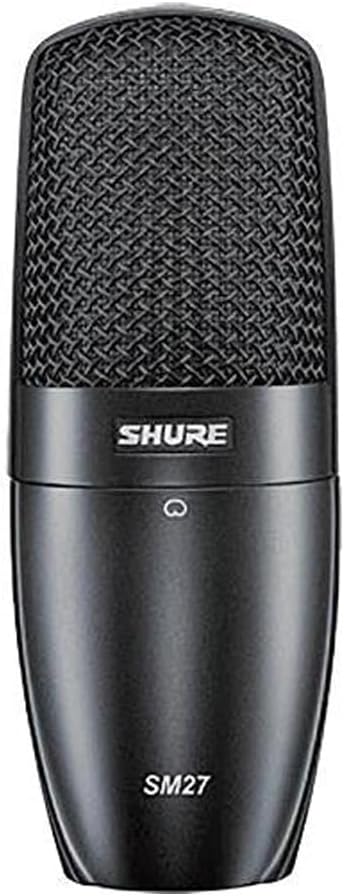
Shure SM27-SC Studio Condenser Microphone Kit
Condenser
The SM27's flat cardioid response and switchable 15dB pad deliver transparent studio tracking from whisper-quiet vocals to cranked guitar cabinets — in one mic.
$399.00*
Check availability
*Price sourced from Amazon.com. Last updated:Aug 28, 2026.Price and availability are subject to change — details.
Affiliate Disclosure: As an Amazon Associate, Studio Supplies earns from qualifying purchases made through links on this page, at no additional cost to you. This helps support our editorial team.
Notice a mistake? Let Us Know
Overview
Key Features
Large-diaphragm Cardioid Condenser Microphone f Studio Stage with 3-position Low-frequency Filter 15dB Pad
Specifications
Type
Large Diaphragm Condenser
Polar Pattern
Cardioid
Frequency Response
20 Hz – 20 kHz
Sensitivity
-37 dBV/Pa
Signal-to-Noise Ratio
78 dB
Output Impedance
150 Ohm
Low-Frequency Filter
3-position
Pad
-15 dB
Connector
XLR
Power Requirement
48V Phantom Power
Construction
Metal
Frequently Asked Questions
Does the SM27 require phantom power, and at what voltage?
Yes — the SM27 is a condenser microphone and requires 48V phantom power from the preamp or interface. Virtually every modern audio interface and console preamp provides 48V phantom; verify it's engaged before use. Without phantom power, the mic will not pass signal.
When should I engage the -15dB pad, and what sources demand it?
Engage the pad whenever the source SPL would push the capsule into distortion without it. Guitar cabinets close-miked, kick drum shells, and loud brass instruments are the typical candidates. At -37 dBV/Pa sensitivity, the SM27 handles high SPL sources well in its standard configuration, but the pad extends its safe operating range further — useful for sources above approximately 130dB SPL at close proximity.
What does the 3-position low-frequency filter do, and which position should I use for vocals?
The filter offers a flat setting plus two high-pass positions to reduce low-frequency content — useful for cutting proximity effect when working close to the mic, or for thinning out a boomy room or rumble from HVAC. For seated vocal tracking at normal distance, many engineers use the flat setting and apply filtering in the DAW for more control, but the built-in filter is a useful tool for addressing problems at the source.
How does the SM27's 78dB signal-to-noise ratio affect recordings in a less-than-ideal room?
A 78dB SNR is a solid figure for a large-diaphragm condenser, meaning the mic's self-noise contribution is low enough to stay well below audible thresholds in most recording contexts. In an untreated room, reflected room noise will reach the capsule before the mic's own noise floor becomes relevant — acoustic treatment addresses room issues, but the SM27 won't add noise on top of them.
At 150 Ohm output impedance, does this mic need a high-gain preamp or will a standard interface work?
150 Ohm output impedance is a standard professional spec — it will pair well with virtually any preamp presenting a load of 1k Ohm or higher, which covers every common interface and console preamp. Budget interfaces with noisier preamp stages will reveal the SM27's resolution; a cleaner preamp will let its low self-noise and flat response fully express themselves.
Related Products


