
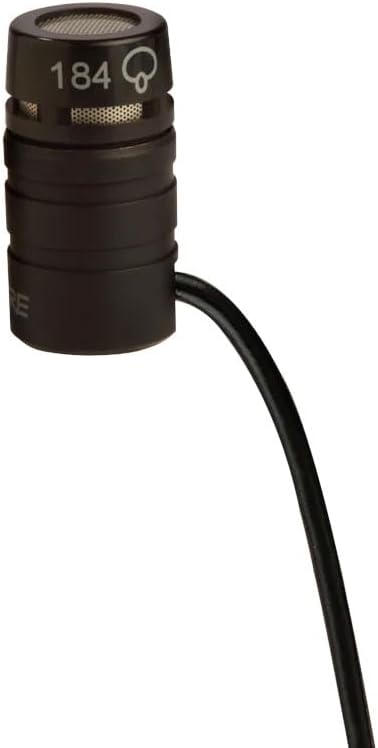


Shure WL184 Lavalier Microphone - Supercardioid Condenser Mic
Capture Crystal-Clear Audio with Superior Noise Rejection The Shure WL184 Lavalier Microphone is a premium wireless TQG supercardioid condenser lav mic designed for speech applications requiring high rejection of ambient noise. Featuring a narrow 115-degree pickup angle, rotatable tie-clip, snap...
*Price sourced from Amazon.com. Last updated:Aug 28, 2026.Price and availability are subject to change — details.
Notice a mistake? Let Us Know
Overview
Capture Crystal-Clear Audio with Superior Noise Rejection
The Shure WL184 Lavalier Microphone is a premium wireless TQG supercardioid condenser lav mic designed for speech applications requiring high rejection of ambient noise. Featuring a narrow 115-degree pickup angle, rotatable tie-clip, snap-fit windscreen, and CommShield Technology, the WL184 ensures clear, interference-free audio capture.
Specifications:
- Polar Pattern: Supercardioid
- Pickup Angle: 115 degrees
- Cable Length: 1.2 meter (4 ft.)
- Connector: Miniature 4-pin mini connector
- Technology: CommShield Technology
Key Features
Supercardioid Lavalier Microphone f Shure TA4F-equipped Bodypack Transmitters
Specifications
Frequently Asked Questions
Related Products

