

Sigma
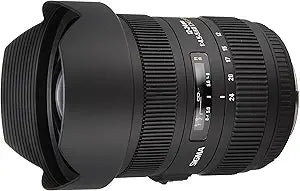
Sigma 204101 12-24mm f/4.5-5.6 DG HSM Lens - Canon
★★★★★
Capture the World in Ultra-Wide DetailThe Sigma 12-24mm f/4.5-5.6 AF II DG HSM Lens is designed for Canon Digital SLRs, offering an ultra-wide angle zoom capability for capturing expansive landscapes and creative perspectives. With advanced optical design and high-quality glass elements, this len...
$449.00*
View on Amazon
✓ In Stock on Amazon.com
*Price sourced from Amazon.com. Last updated:Jul 14, 2026.Price and availability are subject to change.
Affiliate Disclosure: Studio Supplies may earn a commission from qualifying purchases made through links on this page, at no additional cost to you. This helps support our editorial team.
Notice a mistake? Let Us Know
Overview
Capture the World in Ultra-Wide Detail
The Sigma 12-24mm f/4.5-5.6 AF II DG HSM Lens is designed for Canon Digital SLRs, offering an ultra-wide angle zoom capability for capturing expansive landscapes and creative perspectives. With advanced optical design and high-quality glass elements, this lens delivers superior image quality across the entire zoom range.
- Lens Construction: 17 Elements in 13 Groups
- Angle of View: 122 - 84.1 degrees
- Number of Diaphragm Blades: 6
- Minimum Aperture: F22
- Minimum Focusing Distance: 28cm / 11in
- Maximum Magnification: 1:6.4
- Dimensions: Diameter 87mm x Length 120.2mm / 3.4in x 4.7in
- Weight: 670g / 23.6oz
Specifications
Lens Type
Zoom Lens
Focal Length
12-24mm
Aperture Range
f/4.5-5.6
Autofocus Motor
HSM (Hyper Sonic Motor)
Compatibility
Canon
Digital Optimization
DG (Full-Frame Digital SLR)
Pros & Cons
👍 Pros
- Offers a versatile ultra-wide-angle zoom range from 12-24mm, suitable for landscapes, architecture, and interior photography.
- Features a Hyper Sonic Motor (HSM) for fast, quiet, and accurate autofocus performance.
- Designed as a "DG" lens, indicating it is optimized for full-frame digital SLR cameras.
- The constant f/4.5-5.6 aperture range provides reasonable low-light capability across its zoom range for its class.
- Compatible with Canon EF mount cameras, offering a wide user base access to this specialized lens.
👎 Cons
- The variable aperture from f/4.5 to f/5.6 may be less ideal for consistent low-light shooting compared to a constant aperture lens.
- Specific optical stabilization details are not provided, suggesting it may not feature built-in image stabilization.
- The "HSM" indicates autofocus, but specific details on manual focus override or focus-by-wire implementation are not mentioned.
- As an ultra-wide zoom, it might exhibit some distortion or vignetting at its widest settings, common for this lens type.
- The lack of a stated minimum focus distance means users would need to research its close-up capabilities separately.
Frequently Asked Questions
Is this lens compatible with Canon cameras?
Yes, the Sigma 204101 12-24mm f/4.5-5.6 DG HSM Lens is designed for Canon mount cameras.
What focal length range does this Sigma lens offer?
This lens provides a versatile ultra-wide to wide-angle zoom range of 12-24mm.
What is the maximum aperture of this lens?
The lens has a variable maximum aperture, ranging from f/4.5 at the wide end to f/5.6 at the telephoto end.
Does this lens feature a Hyper Sonic Motor (HSM)?
Yes, the lens includes a DG HSM (Hyper Sonic Motor), which typically provides quiet and fast autofocus performance.
Is this lens part of Sigma's DG series?
Yes, the "DG" in the product name indicates it is designed for full-frame digital SLR cameras.
Related Products


