



Sigma
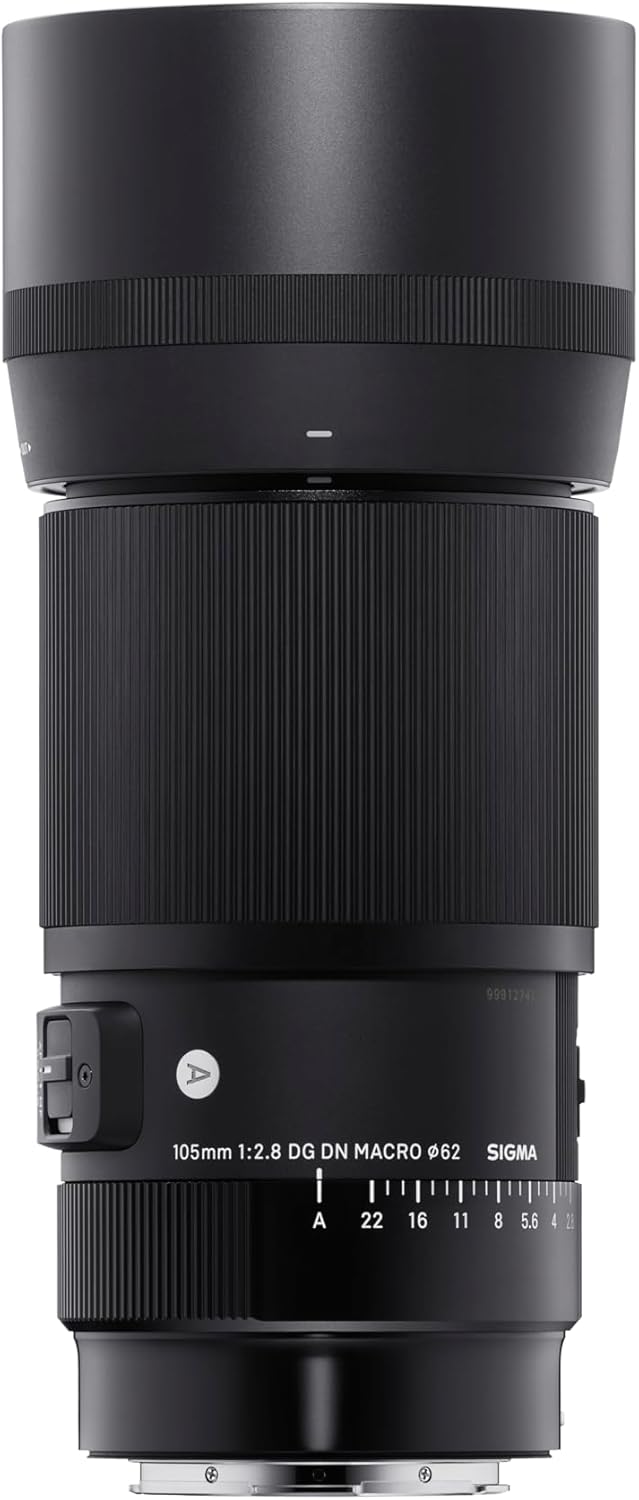
Sigma 260965 105mm f/2.8 DG DN Macro Art Lens (Sony E)
★★★★★
f/2.8
Tack-sharp 1:1 macro and silky f/2.8 portraits in one Art-series lens built specifically for full-frame Sony E-mount mirrorless.
$828.96*$879.00Save 5%
View on Amazon
✓ In Stock on Amazon.com
*Price sourced from Amazon.com. Last updated:Jul 14, 2026.Price and availability are subject to change.
Affiliate Disclosure: Studio Supplies may earn a commission from qualifying purchases made through links on this page, at no additional cost to you. This helps support our editorial team.
Notice a mistake? Let Us Know
Overview
Key Features
SIGMA Art line class optical and AF performance
Life-sized magnification (1:1) short tele macro for full-frame mirrorless
Clicked and de-clicked aperture ring with Aperture Ring Lock Switch
Focus Limiter switch for macro, portrait, or full range autofocus
Hypersonic Motor optimized for smooth and accurate AF
Specifications
Mount
Sony E-mount
Focal Length
105mm
Maximum Aperture
f/2.8
Lens Type
Macro
Magnification
1:1 (life-sized)
Autofocus Motor
Hypersonic Motor (HSM)
Aperture Ring
Clicked and de-clicked, with Aperture Ring Lock Switch
Focus Limiter
Macro / Portrait / Full Range
Compatible Sensor Format
Full-frame mirrorless
Model Number
260965
Pros & Cons
👍 Pros
- Delivers true 1:1 life-sized magnification with a working distance that keeps the front element clear of the subject and allows practical lighting.
- The clicked/de-clicked aperture ring with lock switch makes this lens genuinely dual-purpose across stills and video without any workaround.
- Three-position Focus Limiter meaningfully speeds up AF in portrait range by preventing the lens from hunting through the macro focus band.
- Art-series optical design renders fine detail — textures, product surfaces, and hair strands — with the resolving power that justifies shooting macro at this sensor resolution.
- Native E-mount build means full AF, IBIS communication, and EXIF data without adapters or compromised performance.
👎 Cons
- At this focal length and optical standard, the lens is physically substantial — it's noticeable weight during a long handheld portrait session compared to lighter native options.
- Maximum aperture of f/2.8 means in very low light, photographers accustomed to f/1.4 portrait glass will need to adjust exposure strategy.
- The focus limiter and aperture ring switches add operational complexity — shooters transitioning quickly between macro and portrait distances need to remember to flip the limiter, or AF will hunt.
- No built-in optical stabilization; relies entirely on Sony IBIS, which may not fully compensate at 1:1 magnification with handheld technique.
Frequently Asked Questions
Is this lens compatible with Sony full-frame mirrorless bodies like the A7 and A1 series?
Yes — the 260965 is built natively for Sony E-mount and is designed for full-frame sensors. It works on APS-C Sony bodies too, where it becomes an effective 157mm equivalent, though you lose the full-frame rendering.
How does the Focus Limiter switch affect autofocus speed in the field?
The three-position Focus Limiter (Macro, Portrait, Full Range) is one of the most practical features on this lens. In portrait mode the lens skips hunting through the close-focus range, which noticeably speeds up AF acquisition when you're shooting subjects at 1–3 meters. In macro mode it limits the range to near-focus distances so you're not waiting for the lens to rack through its full travel.
How does the aperture ring work, and can it be de-clicked for video?
The aperture ring operates in clicked mode by default for still photography — each stop has a positive detent. Flip the de-click switch and the ring moves smoothly and silently, making it usable for video pulls without audible or tactile stepping. An Aperture Ring Lock Switch prevents accidental ring movement when you want to control aperture from the camera body instead.
What's the minimum focusing distance for true 1:1 macro?
The lens achieves 1:1 life-sized magnification at a working distance that keeps the front element far enough from the subject to allow natural lighting — an important practical consideration when shooting insects or small objects where a lens breathing down the subject causes shadows.
How does the Hypersonic Motor perform for macro subject autofocus?
The HSM is optimized for smooth, accurate acquisition rather than raw speed, which suits macro work well. It's not a sports-tracking motor, but for still macro subjects, product work, and portrait sessions it locks on cleanly and holds without hunting.
Related Products


