



Sigma
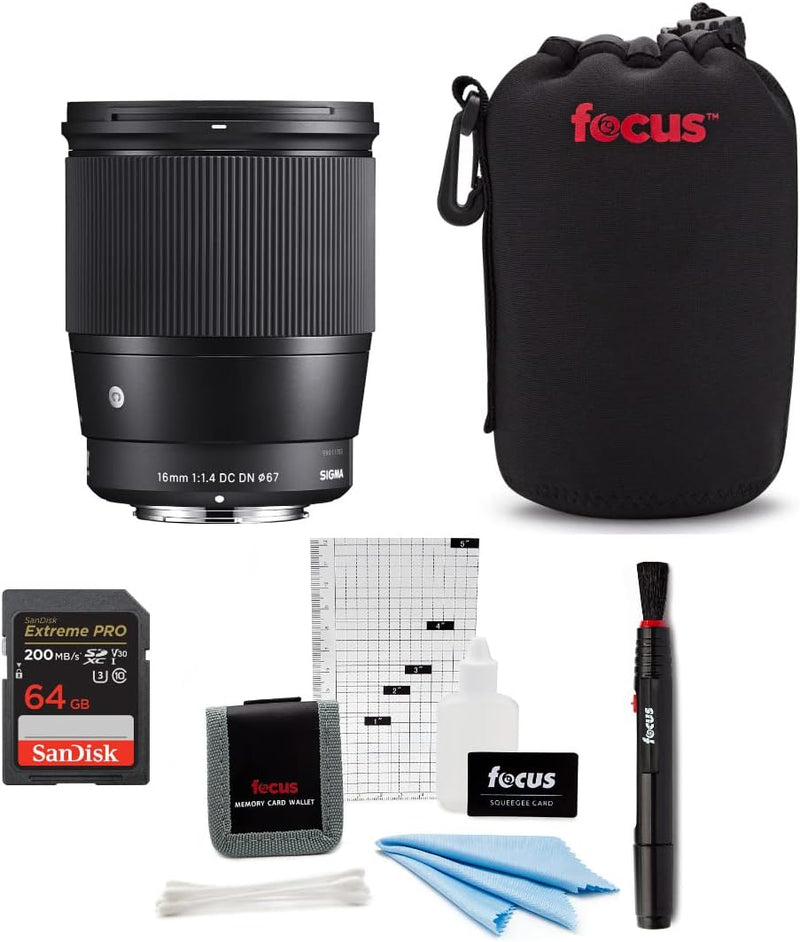
Sigma 402965_K2 16mm f/1.4 Sony E Lens Bundle
f/1.4
Fast f/1.4 wide-angle lens for Sony E-mount APS-C cameras, bundled with a high-speed SD card and accessories.
$429.99*$539.00Save 20%
View on Amazon
✓ In Stock on Amazon.com
*Price sourced from Amazon.com. Last updated:Aug 31, 2026.Price and availability are subject to change — details.
Affiliate Disclosure: As an Amazon Associate, Studio Supplies earns from qualifying purchases made through links on this page, at no additional cost to you. This helps support our editorial team.
Notice a mistake? Let Us Know
Overview
Key Features
HIGH PERFORMANCE: This lens combines superior optical performance and compactness for high-performance lenses that cover a wide range of needs. The large aperture is great for low light conditions and for creating depth of field and its small size makes it highly portable
COMPATIBILITY: The Sigma 16mm f/1.4 DC DN Contemporary Lens is the world’s first interchangeable lens for mirrorless Sony E-mount cameras in the APS-C format to offer a 24mm focal length (35mm equivalent) and f/1.4 brightness. Developed to feature a lightweight, compact package for everyday use, this lens delivers superior performance
CONSTRUCTION: Sigma’s super Multi-Layer Coating reduces flare and ghosting to help photographers produce sharp and high contrast images even in backlit conditions. The included lens hood can be attached to block out extraneous light, which can have a negative effect on rendering performance
Specifications
Brand
Sigma
Model
402965_K2
Focal Length
16mm (24mm equivalent on APS-C)
Maximum Aperture
f/1.4
Minimum Aperture
f/16
Lens Mount
Sony E Mount
Format Compatibility
APS-C
Optical Design
3 FLD, 2 SLD, and 2 Aspherical Elements
Coating
Super Multi-Layer Coating
Autofocus Motor
Stepping Motor
Frequently Asked Questions
What is the equivalent focal length on an APS-C Sony camera?
On APS-C Sony bodies, the 16mm focal length provides a 24mm equivalent field of view, making it a versatile wide-angle option for everyday shooting.
Does this lens support autofocus on Sony mirrorless cameras?
Yes, it uses a stepping motor designed for smooth, quiet autofocus that also performs well during video recording.
How does the f/1.4 aperture benefit my photography?
The bright f/1.4 maximum aperture lets in substantially more light than typical kit lenses, allowing faster shutter speeds in dim environments and producing a shallow depth of field with pleasing background blur.
What is included in this bundle beyond the lens?
The bundle includes a high-speed SD card and essential accessories alongside the Sigma 16mm f/1.4 DC DN Contemporary lens and its included lens hood.
Will this lens work on full-frame Sony cameras?
It is designed for APS-C format sensors. It can mount on full-frame Sony bodies, but the camera will crop to APS-C mode, reducing the effective resolution.
Related Products


