

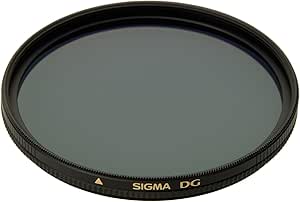
Sigma
Sigma AFL-950 Filter - 46mm EX DG Circular Polarizer
★★★★★
Cut glare, deepen blue skies, and saturate colors on any 46mm-threaded lens with this digitally-optimized circular polarizer built for modern sensor performance.
Check availability
Affiliate Disclosure: Studio Supplies may earn a commission from qualifying purchases made through links on this page, at no additional cost to you. This helps support our editorial team.
Notice a mistake? Let Us Know
Overview
Specifications
Filter Type
Circular Polarizer
Filter Size
46mm
Pros & Cons
👍 Pros
- The digitally-optimized multi-layer coating suppresses the sensor-reflection cycle that generic polarizers allow, delivering more accurate color neutrality on modern digital sensors.
- Blue sky saturation visibly deepens when the filter is correctly rotated — mid-day landscape shots gain the contrast between sky and clouds that would otherwise require heavy post-processing.
- The 46mm circular design maintains full compatibility with autofocus and TTL metering systems, requiring no workflow changes when mounted.
- Reflections on water surfaces, windows, and glossy foliage can be reduced substantially in-camera — a creative control that cannot be fully replicated in post-production.
- Compact and lightweight, the filter adds negligible bulk and can stay mounted during outdoor travel and nature sessions without changing handling on small-to-mid-size lenses.
👎 Cons
- The 1.5–2 stop light loss is a real penalty in overcast or indoor conditions — autofocus hunting and noise from compensating ISO increases are noticeable on darker shooting days.
- The polarization effect requires precise rotation to achieve maximum suppression — incorrect rotation actively reduces image quality by cutting light without delivering the intended benefit.
- At 46mm, this filter fits a narrower range of lenses than 58mm, 67mm, or 77mm alternatives — photographers with multiple lenses of varying thread sizes need separate polarizers rather than step-up rings with a single large filter.
- Polarizers have no effect on metallic reflections — chrome, brushed metal, and mirror-finish surfaces will not have glare reduced by this filter.
- When shooting wide-angle lenses, uneven polarization across the frame can produce gradient effects in skies — though at 46mm this is typically used on moderate or telephoto focal lengths where the issue is less acute.
Frequently Asked Questions
How does Sigma's multi-layer digital coating on this filter differ from a standard polarizer coating, and does it matter for digital sensors?
The multi-layer digital coating is specifically formulated to counteract reflections caused by light bouncing back off the imaging sensor — a problem more pronounced with digital sensors than with film. Without this coating, some light reflects from the sensor surface back through the filter, then reflects again off the filter and back to the sensor, introducing flare and color cast. The digital coating suppresses this secondary reflection, preserving accurate white balance and color neutrality.
How do I use this filter to eliminate reflections on water or glass in the field?
Mount the filter on your lens, look through the viewfinder or live view, and rotate the outer ring of the polarizer while observing the reflection. At a specific rotation angle — typically around 90 degrees to the light source — reflections from non-metallic surfaces like water, glass, and leaves reach maximum suppression. The effect is most pronounced when shooting at roughly 35–45 degrees to the reflective surface.
Does this filter work on lenses with 46mm front filter threads only, or will it fit other diameters?
This filter is sized specifically for 46mm front filter threads. It will not fit lenses with different thread diameters. Always verify your lens's front filter thread diameter — printed on the lens barrel, often preceded by the ø symbol — before purchasing.
Does the polarizer affect autofocus performance, and is the circular design important for this?
The circular (as opposed to linear) polarizer design is essential for proper autofocus operation with modern cameras that use beam-splitting AF systems. A linear polarizer would interfere with phase-detection autofocus and produce inaccurate metering. The Sigma AFL-950 is a circular polarizer, so autofocus and metering function normally with it attached.
How much light does this filter absorb, and will it require exposure compensation when shooting in low light?
Circular polarizers typically reduce light transmission by approximately 1.5 to 2 stops. In bright outdoor conditions this is managed easily with exposure adjustment, but in low-light situations the light loss can push you toward slower shutter speeds or higher ISO. This filter is most effective and practical for outdoor daytime shooting where light is abundant.
Related Products


