



Sirui
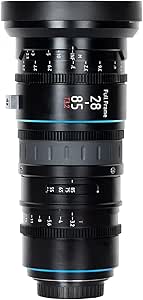
Sirui Jupiter ZM-EF 28-85mm T3.2 Full-Frame Cine Lens
8K
A parfocal 28-85mm T3.2 cine zoom with 259° focus throw and 11-blade aperture — the Sirui Jupiter covers your entire narrative shooting range in a single, focus-mark-accurate package.
$1,194.64*$1,499.00Save 20%
Check availability
*Price sourced from Amazon.com. Last updated:Aug 28, 2026.Price and availability are subject to change — details.
Affiliate Disclosure: As an Amazon Associate, Studio Supplies earns from qualifying purchases made through links on this page, at no additional cost to you. This helps support our editorial team.
Notice a mistake? Let Us Know
Overview
Key Features
【3X Zoom Ratio】This cine lens covers a very practical zoom range from wide-angle to medium telephoto (28mm to 85mm), which allows filmmakers to go out for filming all in one package. This zoom lens features advanced parfocal design, which allows the focus remains unchanged throughout the zoom range, so the story will be consistent and attractive.
【8K Resolution】The image is exceptionally sharp and the overall look is crystal clear. The transition is smooth and natural with some pleasing bokeh in the background. Minimal Focus breathing is unnoticeable especially when you have a moving subject or the camera panning, effectively keeping your audience from distracting.
【Step-less Control】An aperture range of T3.2 to T22 is offered for precise exposure control. The lens features a step-less aperture ring and a long focus throw of 259° for accurate and smooth iris adjustment and focus pulling. The focus ring features a dual scale with both feet and meters, making this lens super nice to operate and use.
【Ingenuity In Details】Weighs only 2.5kg with an all-metal body, this lens looks super solid and premium. It comes with a custom hard case with PP alloy construction, providing optimal protection for the lens against extreme temperatures, water, dust, etc.
【Specification】Lens Mount: EF | Focal Length: 28-85mm | Maximum Aperture: T3.2 | Minimum Aperture: T22 | Lens Structure: 22 Elements in 18 Groups | Aperture Blade: 11 | Shooting Distance: 2.3ft(0.7m)-∞ | Focus Method: Manual Focusing | Front Dia.(mm/inches): 114/4.49 | Dia. of Focus Ring (mm/inches): 94.4/3.72 | Dia. of Zoom Ring(mm/inches): 89.6/3.53 | Dia. of Aperture Ring(mm/inches): 85.6/3.37 | Rotation Angle of Focus Ring:259°| Weight (kg/ lbs):2.536/5.59 | Length(mm/inches): 223/8.78
Specifications
Focal Length
28–85mm
Maximum Aperture
T3.2
Minimum Aperture
T22
Aperture Blades
11
Lens Structure
22 elements in 18 groups
Minimum Focus Distance
2.3 ft (0.7m)
Focus Ring Rotation
259°
Mount
EF
Front Diameter
114mm / 4.49 in
Weight
2.536 kg / 5.59 lbs
Length
223mm / 8.78 in
Parfocal
Yes
Frequently Asked Questions
What does "parfocal" mean on this lens, and why does it matter during a film shoot?
Parfocal means the focus point remains constant as you zoom — if you focus at 85mm and then zoom out to 28mm, your subject stays in focus throughout the zoom move. This is critical for filmmakers: zooming in to focus tightly, then zooming back to your intended composition, is a standard first-AC technique. A non-parfocal lens (most photo zoom lenses) requires refocus after every zoom change, making in-camera zoom shots and focus pulls significantly more complex.
What is the T-stop aperture rating, and how does T3.2 differ from an f/3.2 rating?
T-stops measure the actual light transmission through the lens — accounting for light lost to absorption and reflection within the optical formula — while f-stops are purely geometric calculations. A T3.2 rating means the lens actually transmits T3.2-equivalent light, not approximately that amount. This matters on set: two lenses rated T3.2 will expose identically, enabling matched coverage across multiple camera units without exposure correction in post.
What is the focus ring's rotation angle and why does a 259° throw matter?
The focus ring travels 259° from minimum focus distance to infinity. A longer throw gives the focus puller finer mechanical resolution per degree of rotation — at 259°, the difference between 1m and 2m subject distance represents many degrees of ring travel rather than the 30–60° of a typical photo lens. This directly improves the accuracy of focus pulls during dialogue scenes and slow-moving subject tracking.
Does the step-less aperture ring allow for smooth iris pulls in video?
Yes — the step-less (de-clicked) aperture ring allows continuous smooth aperture adjustment without the click stops that create audible clicks on-camera microphones and visible exposure steps in video. This enables in-scene iris pulls for exposure adjustment during a take — a standard narrative filmmaking technique that clicked photo lenses physically cannot perform cleanly.
What is the lens weight and how does that affect rig balance?
The Sirui Jupiter weighs 2.536 kg (5.59 lbs). This is a substantial lens — heavier than most photo lenses and comparable to professional cinema prime sets. On a shoulder rig or gimbel, this weight requires deliberate counterbalancing. The all-metal construction contributes to this weight; the trade-off is build rigidity and thermal stability during long shooting days.
Related Products


