



Sirui
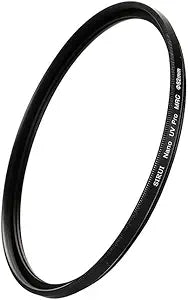
Sirui SUUV82A 82mm Aluminum Ultra Slim UV Lens Filter
Sirui's 22-layer nano coating and B270 Schott glass keep your 82mm front element protected without robbing a single stop of light.
Check availability
Affiliate Disclosure: As an Amazon Associate, Studio Supplies earns from qualifying purchases made through links on this page, at no additional cost to you. This helps support our editorial team.
Notice a mistake? Let Us Know
Overview
Key Features
Models: Sirui Nano multi-layer coating UV filter
Color: Black
Material and structure: German Schott plate glass B270 with aircraft grade Aluminum ring; exclusive anti-reflective 22-layer uv coating provides outstanding light transmission
Advantage: protects the camera lens and reduces the blue cast caused by UV rays to enhance the quality of the image; high strength, corrosion resistance, Waterproof, oil-resistant, scratch-resistant, anti-reflective and anti-static; 99. 8% UV cut-off rate
Specifications
Model
SUUV82A
Diameter
82mm
Glass
German Schott Plate Glass B270
Frame Material
Aircraft-Grade Aluminum
Coating
Nano Multi-Layer (22 layers)
UV Cut-Off Rate
99.8%
Frame Thickness
3.4mm (Ultra Slim)
Surface Properties
Waterproof, Oil-Resistant, Scratch-Resistant, Anti-Reflective, Anti-Static
Color
Black
Frequently Asked Questions
Will the 3.4mm slim profile of this filter cause vignetting on wide-angle lenses at 82mm?
The ultra-slim 3.4mm frame is specifically engineered to reduce corner vignetting on wide-angle lenses — a common problem with standard-depth filter frames on lenses with large front elements. At 82mm with a slim ring, vignetting risk is minimal for most wide-angle lenses, though extreme rectilinear lenses at their widest aperture may still show slight corner shading worth testing on your specific lens.
Does the 99.8% UV cut-off rate visibly affect color rendering in images?
No. The 99.8% UV cut-off blocks ultraviolet wavelengths that are invisible to digital sensors, eliminating the blue-cast haze that UV light introduces in high-altitude and coastal environments. Visible wavelengths pass through with approximately the same transmission rate, so color accuracy at the sensor is preserved while atmospheric haze is reduced.
How does the nano multi-layer coating protect against lens flare and ghosting?
The 22-layer nano coating applies alternating layers of anti-reflective material to both surfaces of the B270 glass, reducing surface reflectivity to a fraction of uncoated glass. Fewer internal reflections mean less internal light scatter, which directly reduces the ghosting and flare that filter glass can introduce in front-lit or backlit shooting scenarios.
Can this filter be stacked with a polarizing filter or ND filter on the same lens?
At 3.4mm the slim frame allows filter stacking with less vignetting risk than standard-profile filters, but stacking any two filters on a wide-angle lens introduces some vignetting risk at wider focal lengths. For best results, use this UV filter as a sole protective layer and switch to a CPL or ND filter when those effects are needed rather than stacking.
How should the filter be cleaned without scratching the nano coating?
The scratch-resistant and oil-resistant properties of the nano coating simplify cleaning — a microfiber cloth with a small amount of lens cleaning solution is sufficient for most contamination. Avoid abrasive cloths or paper products. The anti-static coating reduces dust adhesion, so light dry brushing with a blower before wet cleaning is recommended to avoid grinding airborne particles into the surface.
Related Products


