



Sony
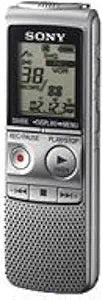
Sony ICD-BX700 Digital Voice Recorder: 280 Hours
★★★★★
Never miss a meeting note or lecture again — the Sony ICD-BX700 captures up to 280 hours of crystal-clear audio in your pocket.
$96.99*
Check availability
*Price sourced from Amazon.com. Last updated:Jul 14, 2026.Price and availability are subject to change.
Affiliate Disclosure: Studio Supplies may earn a commission from qualifying purchases made through links on this page, at no additional cost to you. This helps support our editorial team.
Notice a mistake? Let Us Know
Overview
Key Features
280 hours of recording time (LP mode)
1 GB Flash Memory
Stereo recording with optimal microphone
New super high quality mode - 192kbbs of MP3 recording and a frequency range up to 20,000Hz
Stereo microphone jack
Specifications
Brand
Sony
Model
ICD-BX700
Storage
1GB Flash Memory
Max Recording Time
280 hours (LP mode)
Top Bitrate
192kbps MP3
Frequency Range (SHQ)
Up to 20,000Hz
Microphone
Built-in stereo
External Mic Input
Stereo microphone jack
Features
Voice-operated recording, Digital pitch control, Alarm function
Pros & Cons
👍 Pros
- The 280-hour LP recording capacity means you rarely need to worry about running out of space mid-session
- Super High Quality mode at 192kbps MP3 delivers noticeably cleaner playback than basic voice recorders in this price range
- Voice-operated recording automatically trims silence, making long recordings much faster to review
- Built-in stereo microphone captures directionality and ambience, not just mono voice
- Stereo microphone jack allows external mic expansion without an adapter
👎 Cons
- LP mode trades audio quality for storage — 280 hours sounds great until you notice the compression artifacts on playback
- 1GB of built-in flash memory is not expandable, so high-quality recordings fill it faster than you'd expect
- No Bluetooth or Wi-Fi — transferring files requires a physical USB connection every time
- The alarm function is basic and won't replace a dedicated scheduling tool for complex workflows
- Digital pitch control, while useful, can introduce artifacts when adjusting speed significantly
Frequently Asked Questions
How much recording time does the ICD-BX700 actually give you?
Up to 280 hours in LP mode, which is genuinely massive for a 1GB device. For most users — students, journalists, meeting-goers — that means weeks of recordings before you need to offload anything.
Does the ICD-BX700 start recording automatically when it detects sound?
Yes. The voice-operated recording (VOR) feature kicks in when it detects audio and pauses when the room goes quiet, so you're not wading through dead air on playback.
What's the audio quality like at the highest setting?
At the Super High Quality mode, the ICD-BX700 records at 192kbps MP3 with a frequency range up to 20,000Hz — that's full stereo fidelity that captures speech and ambient sound with real clarity.
Can I connect an external microphone to the ICD-BX700?
Yes, there's a stereo microphone jack, so you can plug in a lapel or boundary mic for situations where the built-in stereo mic isn't close enough to the source.
How do I get recordings off the ICD-BX700 and onto my computer?
The recorder connects via USB and appears as a storage device, so you can drag and drop MP3 files directly — no proprietary software required on most systems.
Related Products


