



Sony
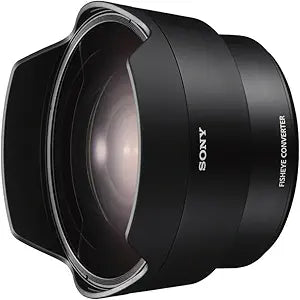
Sony SEL057FEC 16mm Fisheye Converter Lens
Turn your Sony FE 28mm F2 into a 180-degree fisheye in seconds — without swapping lenses or leaving your E-mount system.
$348.00*
View on Amazon
✓ In Stock on Amazon.com
*Price sourced from Amazon.com. Last updated:Sep 05, 2026.Price and availability are subject to change — details.
Affiliate Disclosure: As an Amazon Associate, Studio Supplies earns from qualifying purchases made through links on this page, at no additional cost to you. This helps support our editorial team.
Notice a mistake? Let Us Know
Overview
Key Features
Converts 28mm Lens to 16mm Fisheye
35 mm full-frame.180 degree Angle of View
Transmits EXIF Data to Camera
Built-In Petal-Type Lens Hood
Specifications
Compatible Lens
Sony FE 28mm F2 (SEL28F20)
Effective Focal Length
16mm (fisheye)
Angle of View
180 degrees (35mm full-frame)
EXIF Data Transmission
Yes
Lens Hood
Built-in petal-type
Filter Thread
None (not compatible with front-mounted filters)
Mount Compatibility
Sony E-mount (via SEL28F20 host lens)
Frequently Asked Questions
Which lens does the SEL057FEC attach to, and does it work on any other Sony lens?
The SEL057FEC is engineered specifically for the Sony FE 28mm F2 (SEL28F20) lens. It does not fit other Sony lenses — the optical design, physical mount, and EXIF communication are all calibrated for the 28mm F2 host lens specifically.
What focal length and angle of view does the converter produce?
Attaching the SEL057FEC transforms the 28mm F2 into an effective 16mm fisheye with a 180-degree angle of view on a full-frame sensor. On an APS-C body the angle of view will be narrower due to the crop factor — you will not achieve the full 180-degree fisheye effect.
Does the converter affect autofocus or EXIF data recording?
Autofocus through the host 28mm F2 remains operational with the converter attached. The SEL057FEC transmits EXIF data to the camera body, so focal length and lens identification are recorded in your image metadata — useful for cataloging and lens correction workflows in post.
Is there a built-in lens hood, and can I use filters with this converter?
Yes, a petal-type lens hood is built directly into the SEL057FEC. Because of the extreme 180-degree angle of view, standard screw-on filters are not usable — the protruding front element and the fisheye optics make front-mounted filters impractical.
How does fisheye distortion from this converter compare to a dedicated fisheye prime lens?
The SEL057FEC is an optical converter, not a native fisheye prime, which means image quality at the edges will not match a purpose-built fisheye prime in sharpness and distortion control. For creative fisheye work and environmental portraiture it performs well; for technical optical benchmarks, a dedicated prime has the advantage.
Related Products


