Sony

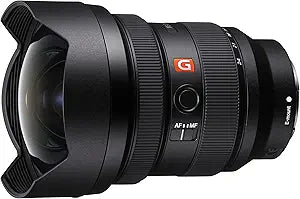
Sony SEL1224GM FE 12-24mm F2.8 G Master Wide Zoom Lens

4.7 (858 reviews)

Sony's second-generation 70-200mm f/2.8 G Master pairs constant-aperture reach with in-lens optical stabilization for full-frame E-mount bodies

$2,898.00*
In Stock on Amazon.com
View on Amazon

*Price sourced from Amazon.com. Last updated:Jul 14, 2026.Price and availability are subject to change.

Affiliate Disclosure: Studio Supplies may earn a commission from qualifying purchases made through links on this page, at no additional cost to you. This helps support our editorial team.

Notice a mistake? Let Us Know

Overview

The Sony FE 70-200mm F2.8 GM OSS II is the second iteration of Sony's flagship telephoto zoom for full-frame E-mount cameras, and it is aimed squarely at the working professional who lives in the 70-200 focal range. Wedding and event shooters use this range for compressed portraits and ceremony coverage from the back of the room. Sports and wildlife photographers lean on it as a short-telephoto complement to longer primes. A constant f/2.8 aperture through the entire zoom range is the defining feature — it lets exposure and depth-of-field stay predictable whether you're framed at 70mm or pushed out to 200mm.

Carrying the G Master badge places this lens in Sony's most demanding optical tier, where sharpness wide open and bokeh character are prioritized alongside autofocus speed. Optical SteadyShot stabilization is built in, which is practical for handheld work at longer focal lengths and slower shutter speeds. Buyers stepping up from a variable-aperture telephoto should expect meaningfully more size, weight, and cost, but in exchange they get a full-frame professional zoom engineered specifically for Sony Alpha mirrorless bodies rather than adapted from an older DSLR design.

Specifications

Brand
Sony
Series
G Master
Mount
Sony E-mount (full-frame)
Focal Length
70-200mm
Maximum Aperture
f/2.8, constant through zoom
Lens Type
Telephoto zoom
Stabilization
Optical SteadyShot (OSS)
Generation
Mark II

Pros & Cons

👍 Pros

  • Constant f/2.8 aperture across the 70-200mm zoom range keeps exposure steady and background separation consistent at any focal length
  • G Master designation signals Sony's top-tier optical standard, targeted at professional portrait, event, and sports work
  • Built-in Optical SteadyShot stabilization helps preserve sharpness at longer focal lengths and slower shutter speeds
  • Native full-frame E-mount design means no adapter or electronic workaround is needed on Sony Alpha mirrorless bodies
  • A 70-200mm zoom is the workhorse focal range for weddings, journalism, and telephoto portraiture, covering a lot of assignments with one lens

👎 Cons

  • Top-of-line G Master pricing puts this lens well above third-party 70-200mm f/2.8 alternatives for E-mount
  • Constant f/2.8 telephoto zooms are inherently large and heavy compared to variable-aperture or shorter zooms
  • Sony E-mount only, so Canon, Nikon, or Leica shooters cannot adapt it without losing autofocus performance
  • At 200mm and f/2.8 the lens can be demanding to handhold for long sessions despite the stabilization
  • As a premium specialty zoom, its value is hard to justify for casual shooters who rarely reach past 100mm

Frequently Asked Questions

Yes. It is a full-frame E-mount lens, so it mounts natively on APS-C Sony bodies, where the effective field of view becomes roughly 105-300mm in full-frame equivalent terms.
The Mark II is Sony's updated second-generation design of the G Master 70-200 f/2.8. Sony positions it as a refinement focused on pro-level performance across the full-frame E-mount system.
Yes, Sony's Optical SteadyShot stabilization is integrated. Combined with in-body stabilization on most Alpha cameras, it helps maintain sharpness at longer focal lengths.
No. The FE 70-200mm F2.8 GM OSS II is a native Sony E-mount lens and does not have a supported autofocus adapter path to Canon RF or Nikon Z systems.
Yes. It's a constant-aperture zoom, so f/2.8 is available from 70mm all the way through 200mm without the brightness loss typical of variable-aperture telephotos.
For most hobbyists the answer is yes — it's priced and built as a professional workhorse. Enthusiasts who regularly shoot portraits, sports, or events in this focal range are the core audience.