



Sony
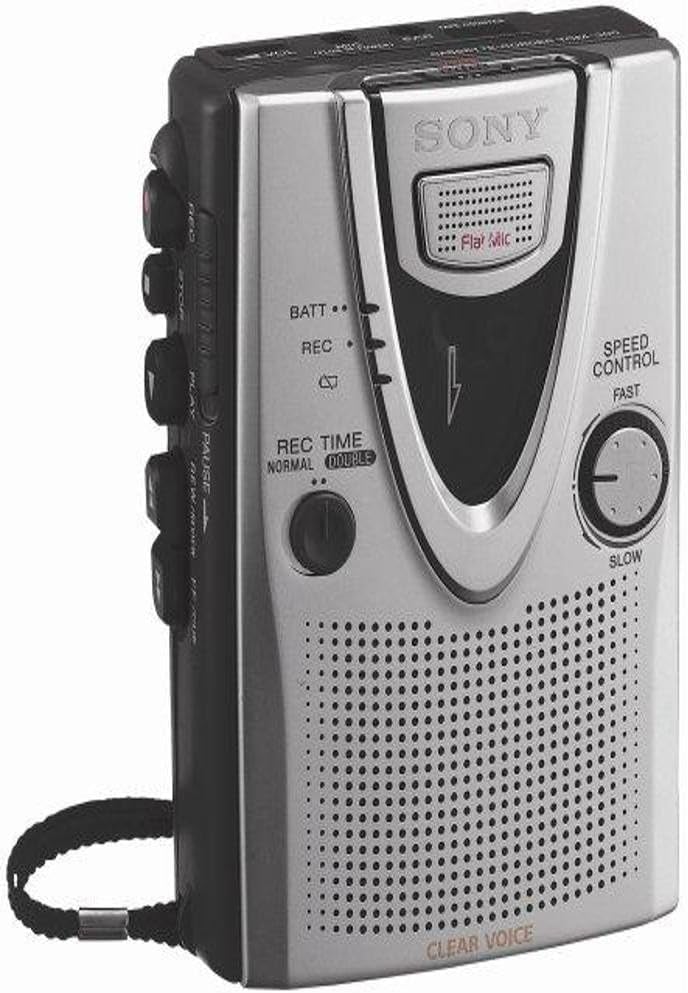
Sony TCM400DV Pressman Standard Cassette Recorder
★★★★★
Reliable cassette recording with voice-activated smarts — the Sony Pressman TCM-400DV is a no-fuss workhorse for interviews and lectures.
Check availability
Affiliate Disclosure: Studio Supplies may earn a commission from qualifying purchases made through links on this page, at no additional cost to you. This helps support our editorial team.
Notice a mistake? Let Us Know
Overview
Key Features
Built-in mic and speaker makes for easy recording and playback
Advanced voice operated recording (VOR) saves valuable recording time
Clear Voice function improves recording quality by enhancing voice sounds
Runs on two AA batteries
Specifications
Recording Format
Standard Cassette Tape
Microphone
Built-in
Speaker
Built-in
Voice Activation
VOR (Voice Operated Recording)
Voice Enhancement
Clear Voice Function
Power Source
2x AA batteries
Audio Channels
Mono
Pros & Cons
👍 Pros
- VOR technology means you only record when someone is actually speaking, stretching a single tape across longer sessions without constant manual pause/play management.
- Clear Voice processing improves voice intelligibility in recordings made in imperfect conditions — meeting rooms, lecture halls, or outdoor interviews.
- Built-in speaker means you can review recordings immediately without headphones — practical for journalists confirming they captured a quote.
- Standard AA battery power means you're never stranded without a charge — replacements are available anywhere in the world.
- Compact cassette format is universally transferable — recordings can be played back on any standard cassette deck without proprietary readers or software.
👎 Cons
- Cassette tape has a generation ceiling on audio quality — background hiss is inherent to the format and more noticeable in quiet recordings than digital alternatives.
- Mono-only recording limits the TCM-400DV's usefulness for anything beyond voice capture — music or ambient audio will sound flat.
- No USB or digital output means transferring recordings to a computer requires an analog audio interface or cassette-to-USB adapter — an extra step that digital recorders eliminate entirely.
- VOR sensitivity can be inconsistent in environments with low-level background noise, occasionally clipping the start of a sentence before the recorder registers the sound.
- Physical tape is a consumable — running out mid-session means finding a replacement cassette, unlike a digital recorder where you simply swap a memory card or delete old files.
Frequently Asked Questions
What is Voice Operated Recording (VOR) and when is it actually useful on the TCM-400DV?
VOR automatically starts the tape rolling when it detects sound and pauses when the room goes quiet — so you're not wasting tape on silence between interview questions or during gaps in a lecture. It's most useful in predictable speaking environments; in noisy rooms it can trigger continuously and offer less benefit.
Does the TCM-400DV record in stereo or mono?
The built-in microphone is mono, consistent with the Pressman's design as a voice recorder rather than a music capture device. For spoken word — interviews, dictation, meetings — mono recording at this quality level is perfectly adequate.
What kind of cassette tapes does it use?
It uses standard Type I (normal bias) cassette tapes, which are still widely available. Longer tapes (C-90 or C-120) give you extended recording sessions without needing to flip or swap.
How long do the batteries last, and can it run on anything other than AA batteries?
The TCM-400DV runs on two AA batteries — alkaline batteries are recommended for the longest life. There is no AC adapter option described in the product specifications; battery operation is the primary power source.
What does the Clear Voice function actually do to improve recordings?
Clear Voice processing filters and enhances the frequency range of human speech during recording, which helps reduce background muddiness and makes voice recordings easier to transcribe or review — particularly in less-than-ideal acoustic environments.
Related Products


