



Sony
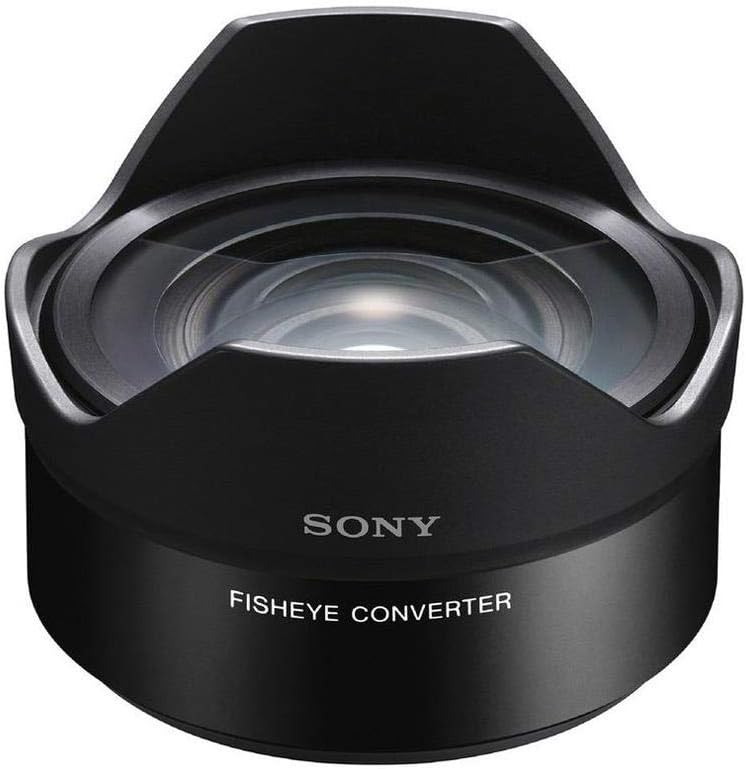
Sony VCLECF2 10-13mm Fisheye Converter Lens
Transform familiar E-mount glass into a dramatic 10mm fisheye perspective — without swapping bodies or buying a dedicated wide prime.
$128.00*$148.00Save 13%
View on Amazon
✓ In Stock on Amazon.com
*Price sourced from Amazon.com. Last updated:Sep 05, 2026.Price and availability are subject to change — details.
Affiliate Disclosure: As an Amazon Associate, Studio Supplies earns from qualifying purchases made through links on this page, at no additional cost to you. This helps support our editorial team.
Notice a mistake? Let Us Know
Overview
Key Features
For Alpha E-Mount Lenses
Provides Fisheye Perspective
Focal length when mounted on SEL16F28, 10 mm and on SEL20F28, 13 mm
Country of Origin:Thailand
Specifications
Compatible Mount
Sony Alpha E-Mount
Compatible Lenses
SEL16F28, SEL20F28
Focal Length (with SEL16F28)
10mm
Focal Length (with SEL20F28)
13mm
Perspective
Fisheye
Country of Origin
Thailand
Frequently Asked Questions
Which Sony lenses does this converter actually work with?
The VCLECF2 is designed specifically for the SEL16F28 (16mm f/2.8) and the SEL20F28 (20mm f/2.8) E-mount lenses. Mounted on the SEL16F28 it produces a 10mm fisheye; on the SEL20F28 it yields 13mm. It is not a universal adapter — attempting to use it on other E-mount lenses will not produce the intended optical result and may cause vignetting or optical misalignment.
Does attaching the VCLECF2 affect autofocus performance?
Because the converter attaches to the front of the host lens rather than between the lens and body, autofocus operation through the host lens is largely preserved. However, AF speed and accuracy may be slightly reduced compared to bare lens performance, particularly in low light — the additional glass elements in the optical path introduce some light loss.
How pronounced is the fisheye distortion at 10mm, and can it be corrected in post?
At 10mm the distortion is distinctly barrel-shaped — straight horizon lines will curve visibly, and subjects near the frame edges stretch. This is the defining look of fisheye optics. Some editing applications offer fisheye-to-rectilinear correction profiles, but the VCLECF2 does not have a native lens correction profile in most RAW processors — you'd be working with a manual distortion correction rather than a click-to-correct profile.
Is this converter useful for video, or is it primarily a stills accessory?
It works for both. The fisheye perspective is popular in skateboarding, action sports, and music video production where the distorted, immersive look is intentional and desirable. For handheld video, the ultra-wide angle also helps mask minor camera shake. Keep in mind the f/2.8 maximum aperture of the host lens and the light loss through the converter when planning low-light video.
How does the converter attach — is it a filter thread or a bayonet mount?
The VCLECF2 uses Sony's proprietary front-mount attachment system designed specifically for compatible E-mount lenses. It is not a standard filter thread adapter, so it cannot be freely swapped onto other lenses using a step-up ring.
Related Products


