

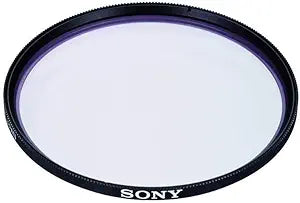
Sony
Sony VF67MPAM Alpha Multi-Coated Lens Protector 67mm
★★★★★
Keep your 67mm glass shooting clean and flare-free — Sony's Carl Zeiss T-coated protective filter guards your investment without compromising the image.
$88.00*
View on Amazon
✓ In Stock on Amazon.com
*Price sourced from Amazon.com. Last updated:Jul 15, 2026.Price and availability are subject to change.
Affiliate Disclosure: Studio Supplies may earn a commission from qualifying purchases made through links on this page, at no additional cost to you. This helps support our editorial team.
Notice a mistake? Let Us Know
Overview
Key Features
Protects lens from scratches and dust
Carl Zeiss T Coating
Minimizes reflections between filter and lens surface
Suppresses flares and ghosts
Multi-coating minimizes the effect on the image quality
Specifications
Brand
Sony
Model
VF67MPAM
Filter Size
67mm
Filter Type
Protective / Clear
Coating
Carl Zeiss T Multi-Coating
Function
Lens protection from scratches and dust
Optical Features
Minimizes reflections, suppresses flares and ghosts
Compatible System
Sony α (Alpha)
Pros & Cons
👍 Pros
- The Carl Zeiss T multi-coating suppresses flares and ghosting that cheaper protective filters introduce in backlit portraits, window light, and event environments with mixed artificial sources.
- Leaving this filter on permanently protects the front element from the dust, fingerprints, and contact damage that accumulate over a working lens's lifetime — a lens element replacement costs far more than the filter.
- The multi-coating is designed to be optically neutral, meaning color rendition and micro-contrast that distinguish quality Sony Alpha glass are preserved rather than softened.
- The 67mm thread is a common size across several Sony Alpha lenses, making this filter a standard-fit protective solution across a kit rather than a single-lens purchase.
👎 Cons
- Even a well-coated protective filter adds one more air-to-glass surface, which in extreme backlit or night shooting conditions can introduce a very slight reduction in contrast compared to shooting bare glass.
- The filter does not provide any optical enhancement — it adds no polarization, no ND reduction, and no UV filtration beyond what the lens coating already handles, making it a pure protection accessory.
- At 67mm, this is a larger-diameter filter that adds a small amount of weight and protrudes slightly from the lens front, which can interfere with certain lens cap designs or lens hood fits.
- Cleaning a filter that sits permanently on the front element becomes a regular maintenance habit — a dirty or smeared protective filter is worse optically than no filter at all.
Frequently Asked Questions
Will this filter degrade sharpness or introduce color cast on Sony Alpha lenses?
The multi-coating is specifically engineered to minimize any effect on image quality — in real-world shooting, a quality protective filter like this one is optically neutral enough that you won't see a measurable difference in sharpness or color rendition. The Carl Zeiss T coating is the same anti-reflection technology used on Zeiss optics and is matched to Sony Alpha glass.
Does the Carl Zeiss T coating actually reduce flare compared to cheaper uncoated protective filters?
Yes — meaningfully so. Uncoated or single-coated protection filters can introduce ghosting and flare in backlit situations and under artificial lights. The T coating suppresses internal reflections between the filter and front element, which matters on a 67mm lens used for portraits in mixed or directional lighting.
Is this filter specific to Sony Alpha lenses or will it fit other 67mm threaded lenses?
The 67mm thread size is a universal standard, so it will physically fit any lens with a 67mm filter thread. That said, the design and coating are optimized for use with Sony α system lenses, and the build quality matches what Sony Alpha shooters expect from the system.
Should I leave this filter on permanently or only use it in specific shooting conditions?
Many photographers leave a quality protective filter on permanently as a first line of defense — especially during event work, travel, or outdoor sessions where dust, fingerprints, and accidental contact with surfaces are constant risks. In highly controlled studio conditions with no risk of physical contact, removing it is a valid choice to eliminate any theoretical optical variable.
How does this compare to using a UV filter for protection?
Both serve as physical lens protection, but the Sony VF67MPAM is purpose-built as a protective filter with a focus on optical neutrality and reflection suppression rather than UV filtration. On modern digital sensors, UV filtering provides minimal practical benefit — a dedicated protective filter with quality multi-coating is generally the cleaner choice for contemporary digital workflows.
Related Products


