



Sony
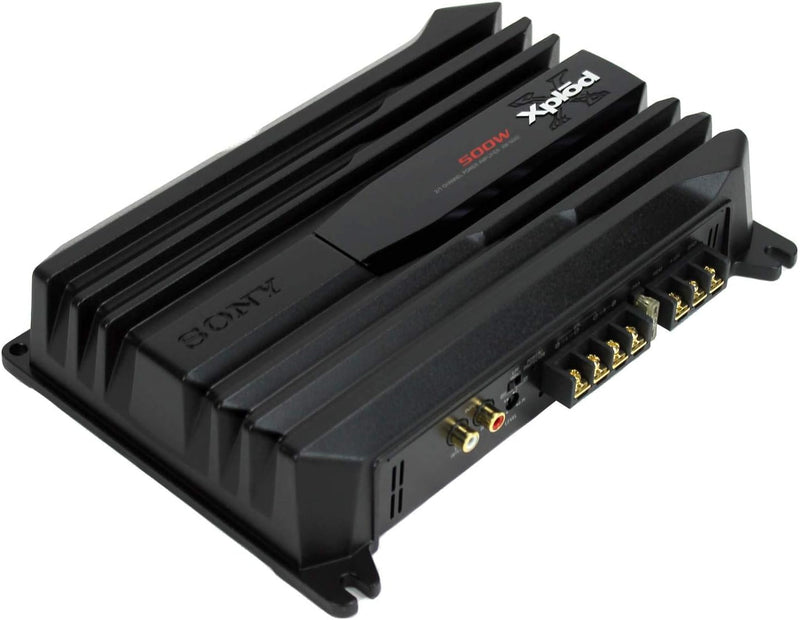
Sony XM-N502 500 Watt 2-Channel Car Amplifier
65W85W150W
Punch up your car audio without punching through your budget — Sony's XM-N502 delivers 500 watts of clean, efficient power in a compact two-channel package.
Check availability
Affiliate Disclosure: As an Amazon Associate, Studio Supplies earns from qualifying purchases made through links on this page, at no additional cost to you. This helps support our editorial team.
Notice a mistake? Let Us Know
Overview
Key Features
65W x 2 RMS at 4 Ohms
85W x 2 RMS power at 2 Ohms
150W x 2 max power at 4 Ohms
Specifications
Channels
2
Maximum Power
500W
RMS Power (4 Ohms)
65W x 2
RMS Power (2 Ohms)
85W x 2
Max Power (4 Ohms)
150W x 2
Amplifier Class
Class AB
Minimum Supply Voltage
12V
Mounting Type
Surface Mount
Frequently Asked Questions
Will the XM-N502 drive my existing 4-ohm speakers without clipping?
Yes — at 4 ohms it delivers 65W RMS per channel continuously, which is a meaningful step up from most head units. It also handles 2-ohm loads at 85W RMS per channel if you want to run lower-impedance speakers down the road.
How hot does this amp run, and do I need to worry about mounting location?
The XM-N502 uses a Class AB design with an integrated cooling structure, so it does generate some heat under sustained high volume. Mount it somewhere with airflow — under a seat with clearance or in a trunk with ventilation — and you'll have no issues.
What's the difference between the 500W "max" and the 65W RMS rating?
RMS is the number that matters for real-world listening — 65W per channel, continuously, without distortion. The 500W "max" figure is a peak/burst rating you'll rarely hit in practice. Plan your speaker matching around the RMS spec.
Does this amp have built-in crossover controls?
Sony has not published crossover filter specs for this model in the provided documentation. Check the included manual or Sony's product page for low-pass/high-pass filter options before assuming full-range-only operation.
What's the minimum supply voltage?
12 volts, which is standard for automotive electrical systems. It will work with any conventional 12V car or truck installation.
Related Products


