Spyder

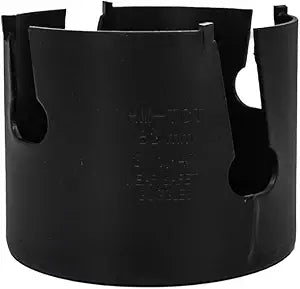
Spyder 600036 Rapid Core Eject Hole Saw 3.25-Inch

4.6 (18 reviews)

The Spyder 600036 cuts 3.25-inch holes five times faster than standard bi-metal saws and ejects the core with a button press — no more digging out plugs mid-job.

$27.45*
In Stock on Amazon.com
View on Amazon

*Price sourced from Amazon.com. Last updated:Jul 14, 2026.Price and availability are subject to change.

Affiliate Disclosure: Studio Supplies may earn a commission from qualifying purchases made through links on this page, at no additional cost to you. This helps support our editorial team.

Notice a mistake? Let Us Know

Overview

The Spyder 600036 is a 3.25-inch carbide-tipped hole saw built around two engineering decisions that separate it from standard bi-metal alternatives: the Rapid Core Eject system and carbide-tipped cutting teeth. The Rapid Core Eject uses a push-button mechanism to physically drive the wood core plug out of the saw cup after each cut — eliminating the most time-consuming non-cutting operation in hole saw work. On a job requiring 40 cutouts for recessed lighting installation, that core removal time reduction is a compounding advantage. The carbide-tipped teeth address the other hole saw failure mode: edge dulling. Carbide maintains a sharper cutting edge through abrasive materials — fiber cement, hardwood, laminated panels — for significantly longer than bi-metal alternatives, with Spyder claiming a 5x speed advantage in wood cutting applications.

The 600036 integrates into Spyder's Rapid Switch arbor system, which enables tool-free saw-to-arbor changes that let a contractor cycle through multiple hole saw diameters on the same drill without pausing to swap hardware. The 3.25-inch diameter covers the most common rough-in cutout sizes — recessed lighting, speaker wiring, plumbing pass-throughs — making it a high-repetition tool rather than a specialty one. The 2-inch cutting depth handles standard dimensional lumber and drywall assemblies. For electrical contractors, custom integrators, and renovation professionals who use hole saws daily, the combination of carbide durability and core ejection speed turns what is typically a consumable tool into a productivity asset worth the premium over commodity bi-metal alternatives.

Key Features

New Rapid Core eject holes saws allow you drop out the core at the touch of a button

Carbide tipped for exteneded life and clean cuts

Cuts 5x faster than standard hole saws

Cutting depth of up to 2"

Specifications

Product Type
Hole Saw
Feature
Rapid Core Eject
Saw Diameter
3.25-Inch
Tip Material
Carbide
Cutting Speed
5x faster than standard hole saws
Max Cutting Depth
Up to 2"

Pros & Cons

👍 Pros

  • The push-button Rapid Core Eject eliminates the 30–60 seconds typically lost prying and digging out compressed wood plugs on each cut — a direct productivity gain on repetitive rough-in work.
  • Carbide-tipped teeth maintain cutting edge integrity through materials that dull bi-metal saw teeth quickly, including abrasive fiber cement and hardwood — reducing replacement frequency on demanding projects.
  • The 5x speed advantage over standard hole saws in wood cutting is a measurable time saving on projects requiring multiple cutouts, such as running electrical through multiple studs or installing recessed lighting.
  • The Rapid Switch arbor system enables tool-free size changes, allowing contractors to swap between multiple hole saw diameters quickly during jobs requiring different cutout sizes.
  • The 3.25-inch diameter is a practical standard size covering recessed lighting cans, speaker rough-ins, and plumbing pass-throughs — the kind of cut that appears repeatedly across renovation and new construction projects.

👎 Cons

  • The Rapid Switch arbor is a proprietary Spyder system — if you don't already own a compatible arbor, it's an additional purchase required before the 600036 can be used.
  • The 2-inch cutting depth limit is insufficient for cutting through thick laminated beams, double-layer subfloor assemblies, or stacked lumber without multiple repositioning cuts.
  • The 3.25-inch diameter is a fixed-size tool — unlike adjustable hole cutters, you need a separate saw for every different diameter required on the same job.
  • Carbide-tipped hole saws are more brittle than bi-metal saws when subjected to lateral torque — binding the saw in the cut and twisting can chip carbide teeth in ways that bi-metal teeth would simply deflect.
  • At this price point compared to economy bi-metal alternatives, the value proposition is strongest for contractors doing high-volume repetitive cutting — the speed and durability premium is less justified for occasional single-project use.

Frequently Asked Questions

A push-button actuator inside the arbor drives a rod that physically pushes the core plug out of the saw cup — no tools, prying, or digging required. The ejection works in wood, drywall, and most soft materials. In harder materials where the core compresses tightly into the cup, the mechanism may require more force, but it still outperforms manual extraction.
The 600036 uses Spyder's Rapid Switch arbor system. This means the hole saw attaches to a Spyder-compatible arbor — verify that you have a Rapid Switch arbor or purchase one separately. The system is designed to swap hole saw sizes without tools, which is the feature that enables fast size changes on jobs requiring multiple cutouts.
The carbide-tipped teeth are designed for cutting wood, plywood, OSB, drywall, and fiber cement. The 5x speed claim is benchmarked against standard bi-metal hole saws in wood cutting applications. Cutting through harder materials like cement board will be significantly slower, but carbide tipping provides better durability in those materials than bi-metal alternatives.
The cutting depth is up to 2 inches. For standard framing lumber, dimensional 2x lumber, and door jambs this is sufficient for most electrical, plumbing, and HVAC rough-in applications. For thicker materials or stacked assemblies, the 2-inch depth limit will constrain usability.
Carbide-tipped hole saws can theoretically be resharpened by a qualified tool sharpening service, but the economics rarely favor resharpening over replacement for hole saws at this size and price point. For most users, the extended service life provided by carbide tips over bi-metal makes replacement frequency infrequent enough that resharpening is not practical.