



Spyder
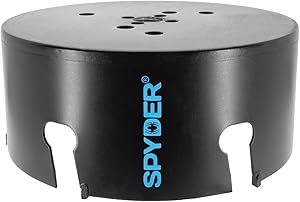
Spyder 600052 Rapid Core Eject 6-Inch Hole Saw
Punch a clean 6-inch hole through subfloor, door, or drywall and pop the core out in one button press.
$42.95*$45.78Save 6%
View on Amazon
✓ In Stock on Amazon.com
*Price sourced from Amazon.com. Last updated:Aug 30, 2026.Price and availability are subject to change — details.
Affiliate Disclosure: As an Amazon Associate, Studio Supplies earns from qualifying purchases made through links on this page, at no additional cost to you. This helps support our editorial team.
Notice a mistake? Let Us Know
Overview
Key Features
New Rapid Core eject holes saws allow you drop out the core at the touch of a button
Carbide tipped for exteneded life and clean cuts
Cuts 5x faster than standard hole saws
Cutting depth of up to 2"
Specifications
Diameter
6 inches
Cutting Depth
Up to 2 inches
Blade/Tip Material
Carbide tipped
Core Ejection
Rapid Core Eject button
Cutting Speed
5x faster than standard hole saws (manufacturer claim)
Brand
Spyder
Model
600052
Frequently Asked Questions
What materials can the Spyder 600052 cut through cleanly?
The carbide-tipped teeth handle wood, drywall, PVC, and light-gauge materials well. The 2-inch cutting depth covers most single-layer subfloor and framing scenarios without issue.
How does the Rapid Core Eject actually work on the job?
Once you've finished the cut, you press the button on the saw body and the core drops out — no screwdriver prying, no jamming a stick through the arbor hole. On a day with 20+ holes to cut, that time adds up fast.
Is this compatible with standard arbors and drill chucks?
Yes, it uses a standard hole saw arbor with a pilot drill bit. Any drill that accepts a standard arbor will work; just make sure your drill has enough torque — a mid-range 18V cordless or a corded half-inch drill is the right pairing for 6-inch cuts.
Can it handle 2-inch lumber or engineered wood like LVL?
The 2-inch cutting depth handles standard dimensional lumber and most subfloor panels. Dense engineered materials like LVL will slow the saw noticeably and accelerate tip wear — carbide helps, but it's not invincible in heavy repeated use on hard engineered stock.
Does it cut 5x faster than standard hole saws in practice?
The speed claim is real in the sense that carbide teeth bite more aggressively than bi-metal and the core eject eliminates the stop-and-clear cycle. In a real framing or plumbing rough-in scenario, throughput is meaningfully faster than a standard saw — especially across many repeated holes.
Related Products


