

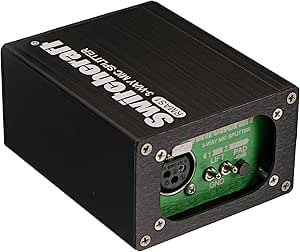
Switchcraft
Switchcraft RMAS1 Stereo A/V Direct Box Transformer
Achieve Pristine Audio Routing with Superior IsolationIntroducing the Switchcraft RMAS1 Stereo A/V Direct Box, a premium solution for distributing balanced audio signals. This passive, three-way microphone splitter employs high-quality transformers (available with Jensen or custom options) to ens...
$134.99*
Check availability
*Price sourced from Amazon.com. Last updated:Aug 28, 2026.Price and availability are subject to change — details.
Affiliate Disclosure: As an Amazon Associate, Studio Supplies earns from qualifying purchases made through links on this page, at no additional cost to you. This helps support our editorial team.
Notice a mistake? Let Us Know
Overview
Achieve Pristine Audio Routing with Superior Isolation
Introducing the Switchcraft RMAS1 Stereo A/V Direct Box, a premium solution for distributing balanced audio signals. This passive, three-way microphone splitter employs high-quality transformers (available with Jensen or custom options) to ensure complete isolation, eliminating noise and preserving the integrity of the original audio signal. Ideal for professional audio applications where signal clarity and multiple outputs are essential.
Specifications:
- Brand: Switchcraft
- Model: RMAS1
- Type: Stereo A/V Direct Box
- Configuration: 3-Way Microphone Splitter
- Isolation: Transformer Isolated (Jensen or Custom)
- Input: Single Balanced Audio Input
- Output: 3 Unique Destinations
- Transformer: Passive
Specifications
Brand
Switchcraft
Model
RMAS1
Function
Stereo A/V Direct Box Transformer
Frequently Asked Questions
What is the primary purpose of the Switchcraft RMAS1?
The Switchcraft RMAS1 is primarily designed as a stereo A/V direct box transformer, used for signal conversion in audio and video applications.
How does the transformer feature benefit audio and video signals?
The transformer helps to isolate signals, effectively eliminating ground loops and reducing unwanted noise interference in both audio and video transmissions.
Can this direct box handle both audio and video signals simultaneously?
Yes, its designation as a "Stereo A/V Direct Box" indicates its capability to process both stereo audio and video signals.
Is this device suitable for professional audio/video setups?
Given its design by Switchcraft, a reputable brand, it is intended to provide a reliable solution for professional integration of A/V equipment.
What kind of problems does a direct box transformer typically solve?
A direct box transformer often solves issues related to impedance matching and noise reduction, particularly when connecting unbalanced sources to balanced inputs, common in live sound or studio environments.
Related Products


