



Tamron
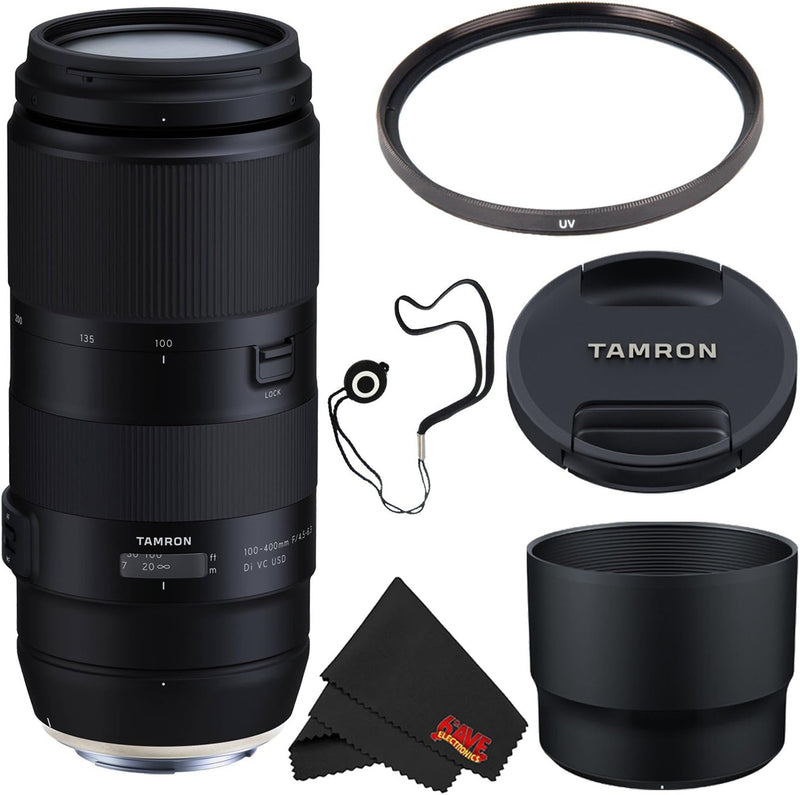
Tamron 100-400mm AFA035C Canon EF Telephoto Lens
f/4.5
Lock onto distant wildlife or sideline action with tack-sharp reach — the Tamron 100-400mm delivers serious telephoto versatility without the serious weight penalty.
$779.95*
Check availability
*Price sourced from Amazon.com. Last updated:Aug 30, 2026.Price and availability are subject to change — details.
Affiliate Disclosure: As an Amazon Associate, Studio Supplies earns from qualifying purchases made through links on this page, at no additional cost to you. This helps support our editorial team.
Notice a mistake? Let Us Know
Overview
Key Features
Tamron 100-400mm f/4.5-6.3 Di VC USD Lens for Canon EF
67mm Ultraviolet UV Filter
Lens Cap Keeper
MicroFiber Cloth
Specifications
Mount
Canon EF
Focal Length
100–400mm
Maximum Aperture
f/4.5–6.3
Optical Design
Three Low Dispersion Elements
Coatings
eBAND and Fluorine
Autofocus System
Ultrasonic Silent Drive (USD)
Image Stabilization
Vibration Compensation (VC)
Filter Thread
67mm
Bundle Includes
67mm UV Filter, Lens Cap Keeper, MicroFiber Cloth
Frequently Asked Questions
Does this lens work with full-frame Canon EF bodies as well as crop-sensor cameras?
Yes — the Canon EF mount version is fully compatible with both APS-C and full-frame Canon DSLRs. On a crop body you effectively get a 160-640mm equivalent reach, which is outstanding for birds in flight and wildlife at distance.
How effective is the Vibration Compensation (VC) system when shooting handheld at 400mm?
Tamron's VC provides meaningful stabilization, typically good for 3-4 stops of compensation. At 400mm, you'll still want a shutter speed of at least 1/400s for moving subjects, but static subjects and panning shots benefit noticeably — especially useful during slower-light situations like golden hour wildlife shooting.
How does autofocus perform during fast action like birds in flight or athletes?
The USD (Ultrasonic Silent Drive) motor is quick and near-silent, handling predictable motion well. It can struggle with erratic, fast-changing subjects — particularly birds cutting across complex backgrounds. For serious BIF work, it performs best in good light with clean backgrounds.
What filter thread does this lens take, and is the included UV filter a good fit?
The lens accepts 67mm filters, and the included UV filter matches that thread directly. The UV filter is useful for protecting the front element in the field, though serious shooters may prefer a higher-grade multicoated option for maximum flare resistance.
Does the zoom ring rotate in a way that could cause zoom creep when pointed upward or downward?
The lens includes a zoom lock switch that locks it at 100mm — essential for travel or carrying the lens pointed downward. Without engaging the lock, some zoom creep can occur under gravity at the longer end, so it's a good habit to engage it when not actively shooting.
Related Products


