Tamron

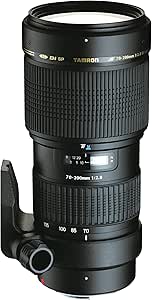
Tamron A001N SP AF 70-200mm Nikon Mount Macro Lens

4.2 (241 reviews)

Constant f/2.8 telephoto zoom with internal focusing and macro reach, built in the Nikon F mount for full-frame and APS-C DSLR bodies

$598.00*
Check availability

*Price sourced from Amazon.com. Last updated:Jul 14, 2026.Price and availability are subject to change.

Affiliate Disclosure: Studio Supplies may earn a commission from qualifying purchases made through links on this page, at no additional cost to you. This helps support our editorial team.

Notice a mistake? Let Us Know

Overview

Tamron's SP AF 70-200mm F/2.8 Di LD [IF] Macro is the kind of fast telephoto zoom that earned a loyal following among Nikon DSLR shooters who needed the f/2.8 light-gathering of the Nikkor 70-200mm without paying first-party flagship prices. The constant f/2.8 aperture keeps exposure and depth of field predictable across the whole zoom range, which matters for portrait sessions that move fluidly between full-length, three-quarter, and tight headshot framings. The Di designation marks it as designed for full-frame coverage, which means it works on FX bodies natively and can be deployed on DX cameras with a useful effective reach. The macro label refers to its close-focusing ability, which gives it secondary utility for product detail and floral work.

Construction-wise, this is an older SP-class build that predates the modern VC stabilization era, so handheld shooters at slower shutter speeds will lean on technique or a monopod rather than in-lens correction. The internal focusing system keeps overall length constant during focus pulls, which simplifies polarizer rotation and gimbal balance. Buyers should plan around the Nikon F mount specifically — using it on a current Z-series mirrorless body requires the FTZ adapter, and behavior on the newest bodies will track adapter compatibility rather than native lens features. For Nikon DSLR owners building a fast portrait, event, or sports kit on a budget, it remains a familiar option in the used and refurbished market.

Key Features

Extends the focal length range to 200 mm

Specifications

Brand
Tamron
Manufacturer
Tamron
Series
SP AF
Focal Length
70-200mm
Maximum Aperture
f/2.8
Format Coverage
Di (full-frame)
Optical Design
LD (Low Dispersion) elements
Focusing
Internal Focusing (IF)
Close-Focus
Macro capability
Lens Mount
Nikon F

Pros & Cons

👍 Pros

  • Constant f/2.8 maximum aperture across the full 70-200mm zoom range for consistent exposure and depth of field
  • Internal focusing keeps the front element from rotating, which simplifies polarizer and graduated filter use considerably
  • LD (low dispersion) glass elements help suppress chromatic fringing common to long telephoto zoom designs
  • Macro designation extends close-focus capability beyond what most fast 70-200mm telephoto zooms typically allow

👎 Cons

  • Built only in Nikon F mount, so it is not directly usable on Z series mirrorless bodies without an FTZ adapter
  • Older SP AF design lacks the built-in optical stabilization that newer 70-200mm zooms typically include now
  • Constant f/2.8 telephoto zooms of this class run heavy enough that a monopod is often needed for long sessions
  • Autofocus relies on the in-body screw drive on Nikon DSLRs, which can be slower and louder than newer USD designs

Frequently Asked Questions

It uses the Nikon F mount, so a Nikon Z body requires the FTZ adapter for mounting and metering, with autofocus behavior subject to adapter compatibility.
It holds constant f/2.8 across the full 70-200mm zoom range, which is the defining advantage of this class of telephoto over variable-aperture zooms in the same range.
This SP AF version predates Tamron's VC stabilization line, so it does not provide in-lens stabilization and relies on body-based correction or shooting technique.
The macro designation refers to extended close-focus capability rather than a true 1:1 magnification ratio, useful for product detail shots and tighter floral compositions.
The Di label indicates full-frame coverage, so it works natively on FX bodies and provides additional effective reach when mounted on a DX (APS-C) Nikon body.