



Tamron
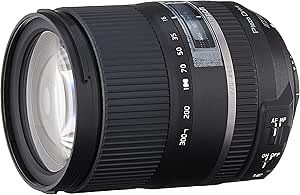
Tamron B016N 16-300mm Nikon All-In-One Zoom Lens
One lens from environmental wide to compressed telephoto — the Tamron 16-300mm keeps you shooting when switching glass isn't an option.
View price on Amazon
Affiliate Disclosure: As an Amazon Associate, Studio Supplies earns from qualifying purchases made through links on this page, at no additional cost to you. This helps support our editorial team.
Notice a mistake? Let Us Know
Overview
Specifications
Focal Length
16–300mm
Format
Di-II (APS-C/DX)
Maximum Aperture
F/3.5–6.3
Angle of View
82°12' – 5°20'
Lens Construction
16 elements in 12 groups
Minimum Focus Distance
15.3 in (at 300mm)
Filter Diameter
67mm
Overall Length
3.9"
Maximum Diameter
75mm
Weight
19 oz
Diaphragm Blades
7 (rounded)
Mount
Nikon F (DX)
Frequently Asked Questions
Is this lens compatible with full-frame Nikon DSLR bodies, or is it restricted to DX crop-sensor cameras?
This is a DX-format lens, designed exclusively for Nikon APS-C (DX) bodies. Mounting it on a full-frame FX body will produce heavy vignetting — it's built for crop-sensor cameras only.
How effective is the Vibration Compensation (VC) system when shooting handheld at the 300mm end?
VC is one of the lens's strongest practical advantages. At 300mm on a crop body (equivalent to 450mm), it provides meaningful stabilization for stationary subjects — though fast-moving subjects at long range will still require faster shutter speeds to freeze motion cleanly.
Does the Piezo Drive (PZD) autofocus perform well for moving subjects, or is it better suited to static scenes?
PZD AF is fast and quiet for a high-ratio zoom, which makes it solid for general travel, events, and street shooting. For demanding sports or wildlife tracking, the AF can struggle to keep pace with erratically moving subjects — the trade-off for having one lens cover this range.
What filter size does this lens take, and does it accept a polarizer without front-element rotation during focus?
The filter diameter is 67mm. The front element does not rotate during autofocus, which means you can set a polarizer or grad ND and have it stay in position — a useful detail for landscape work at the wide end.
How does this lens handle flare and contrast when shooting toward a light source?
The included lens hood helps, but like most high-ratio superzooms, the 16-300mm can show contrast reduction and some ghosting when shooting into strong directional light. Shooting with the sun out of frame and the hood attached minimizes the issue noticeably.
Related Products


