



Tamron
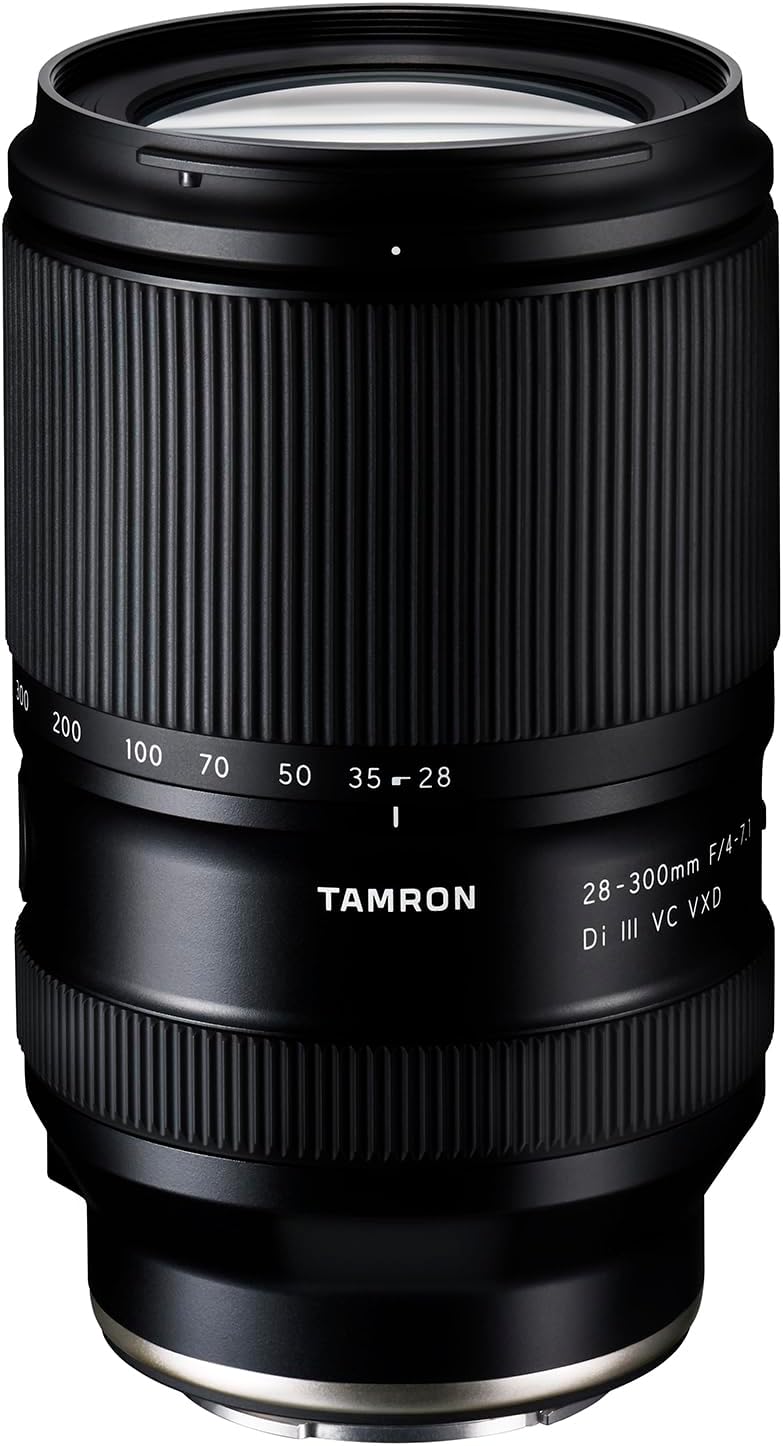
Tamron 28-300mm Sony E-Mount All-in-One Zoom Lens
21.5oz
One lens from street corner to wildlife blind — the Tamron 28-300mm covers every focal length you'll need on Sony E-mount without changing glass.
$669.00*
View on Amazon
✓ In Stock on Amazon.com
*Price sourced from Amazon.com. Last updated:Aug 29, 2026.Price and availability are subject to change — details.
Affiliate Disclosure: As an Amazon Associate, Studio Supplies earns from qualifying purchases made through links on this page, at no additional cost to you. This helps support our editorial team.
Notice a mistake? Let Us Know
Overview
Key Features
All-In-One Zoom Lens: The Tamron A074S 10.7x Zoom Lens for full-frame mirrorless cameras covers from 28mm wide-angle to 300mm telephoto
Unmatched Performance: Experience outstanding imaging performance with 20 elements in 13 groups and BBAR-G2 coating
Lightweight Body: It has a lightweight and compact lens body with a length of only 126mm (5-inch) and a weight of 21.5oz
Voice-coil eXtreme-torque Drive: Equipped with VXD, Tamron’s top-class linear motor focus mechanism and Tamron’s proprietary VC mechanism
Rugged Construction: The lens features moisture-resistant construction, and the front element has a protective fluorine coating for use in adverse weather environment
Specifications
Lens Type
All-In-One Zoom Lens
Mount Type
Sony E-Mount
Focal Length Range
28-300mm
Zoom Ratio
10.7x
Elements
20 elements
Groups
13 groups
Coating
BBAR-G2 coating
Length
126mm (5-inch)
Weight
21.5oz
Focus Mechanism
Voice-coil eXtreme-torque Drive (VXD)
Stabilization
Tamron's proprietary VC mechanism
Construction
Moisture-resistant
Front Element Coating
Fluorine coating
Frequently Asked Questions
Is this lens compatible with Sony APS-C E-mount cameras, or is it full-frame only?
The Tamron 28-300mm is designed for Sony full-frame E-mount cameras (A7/A9 series). It will mount and function on APS-C bodies like the A6700, but you'll be using a crop of the image circle — effectively giving you a 42-450mm equivalent, which may actually be useful for telephoto work, though you lose the wide end.
How does the VXD linear motor autofocus perform during continuous action shooting?
VXD is Tamron's top-tier focus motor, borrowed from their pro-grade primes and zooms — expect fast, near-silent AF acquisition that tracks well for walking subjects, sports on the sideline, and wildlife at distance. At the 300mm end with a variable aperture of f/7.1, focus performance in low light will slow somewhat, as less light reaches the sensor to drive phase-detect AF.
What is the closest focus distance, and can this lens work for macro-style shots?
At the wide end (28mm), the minimum focus distance is just 0.19m (7.5 inches) with a maximum magnification of 1:2.8 — not true macro, but genuinely impressive for an all-in-one zoom. You can fill the frame with flowers, product details, or small subjects at wide angle, which most superzoom lenses can't do.
How effective is Tamron's VC image stabilization on this lens at the telephoto end?
VC (Vibration Compensation) is Tamron's optical stabilization, which works in conjunction with Sony IBIS on compatible bodies for a combined stabilization effect. At 300mm handheld, this combination makes sharp frames achievable at shutter speeds you'd normally consider risky — a genuine asset for travel and wildlife shooting.
Is the moisture-resistant construction enough for shooting in light rain?
The moisture-resistant seals protect against light splashes and brief exposure to drizzle — it's a practical field-grade weather seal, not the full IPX-rated protection of a pro telephoto prime. Shoot in light rain confidently; avoid extended downpours or direct water exposure.
Related Products


