



Tascam
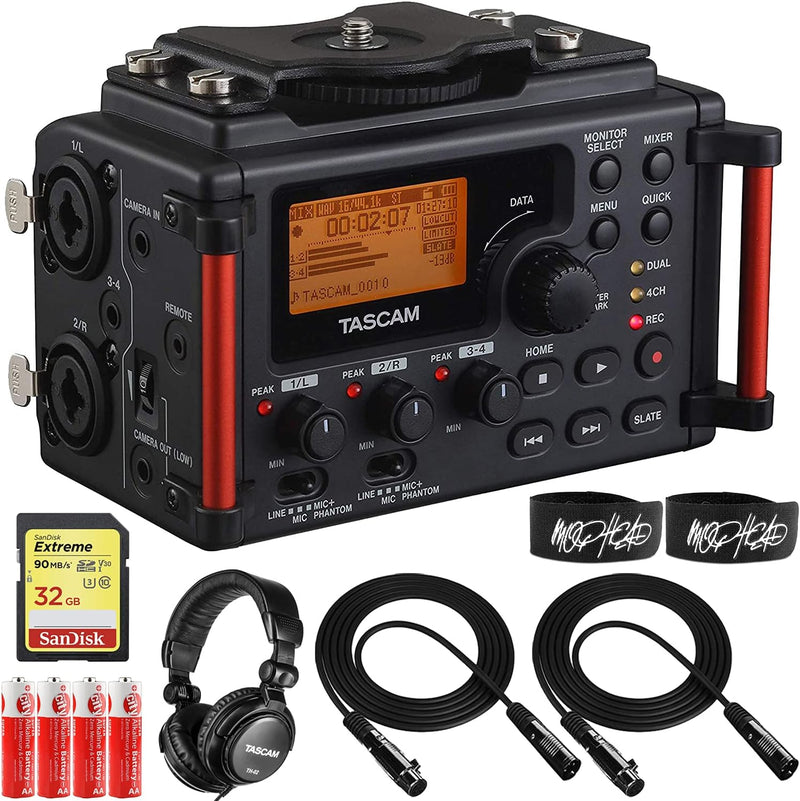
Tascam DR-60DmkII 4-Input Multitrack Field Recorder Bundle
★★★★★
Four-track 96kHz/24-bit field recording with HDDA preamps and a dedicated camera output gives DSLR filmmakers a broadcast-grade audio chain that fits under the lens.
Check availability
Affiliate Disclosure: Studio Supplies may earn a commission from qualifying purchases made through links on this page, at no additional cost to you. This helps support our editorial team.
Notice a mistake? Let Us Know
Overview
Specifications
Recording Channels
4-Input / 4-Track
Preamps
HDDA Mic Preamps, up to 64dB gain
Max Recording Resolution
96kHz / 24-bit WAV
Inputs
2x XLR/TRS Combo (with 48V Phantom Power), 1x 1/8" Stereo Input
Outputs
Camera Output (3.5mm), Line Output, Headphone Output
Recording Modes
Four-Channel, Dual Recording (safety track)
Power
4x AA Batteries
Bundled Accessories
Tascam TH-02 Headphones, 32GB Memory Card, 2x 10ft XLR Cables, 4x AA Batteries, 2x Cable Ties
Frequently Asked Questions
How clean are the HDDA preamps at high gain settings, and will I hear noise floor on quiet sources?
The DR-60DmkII's HDDA (High Definition Discrete Architecture) preamps offer up to 64dB of gain — which is enough headroom for ribbon mics and dynamic mics in quiet environments. At maximum gain settings, a low but audible noise floor becomes apparent, particularly with high-impedance dynamics. For condenser mics with healthy output levels, the noise floor is well-controlled; for ribbon mics requiring extreme gain, it's worth monitoring carefully before committing to a take.
Does the DR-60DmkII supply phantom power, and is it switchable per channel?
Yes — both XLR/TRS combo inputs supply 48V phantom power. Phantom power is switchable, but it applies to both channels simultaneously rather than per-channel independently. If you're running a condenser on one channel and a dynamic or ribbon on the other, be aware of this limitation — feeding 48V into a ribbon mic without a blocking transformer can cause damage.
How does the camera output work, and what level does it send to the camera's 3.5mm input?
The dedicated camera output is a 3.5mm connector that sends a line-level or attenuated signal designed to feed a DSLR or mirrorless camera's mic input. The output level is adjustable so you can match it to the camera's input sensitivity — this is critical for preventing clipping at the camera's ADC while maintaining a clean scratch track alongside the recorder's higher-quality WAV files.
What does Dual Recording mode do, and why does it matter for location audio?
Dual Recording captures each input simultaneously at two different gain levels — a primary level and a safety level set 6–12dB lower. If the primary track clips on an unexpected loud transient, the safety recording preserves a clean, lower-level version of the same moment. For interviews, live events, or any uncontrolled environment where unexpected loud sounds occur, this is the single most important safety net the DR-60DmkII offers.
Is the bundled TH-02 headphone sufficient for critical monitoring, or is it just a starter accessory?
The Tascam TH-02 is a closed-back headphone with a 32-ohm impedance and a relatively flat, detailed low-end response for its price tier — it's a workable monitoring tool for confirming signal presence and catching clipping or interference. It won't replace a studio reference headphone (MDR-7506, DT 770 Pro) for critical listening, but it is genuinely functional for field monitoring rather than being a throwaway bundle inclusion.
Related Products


