



Tascam
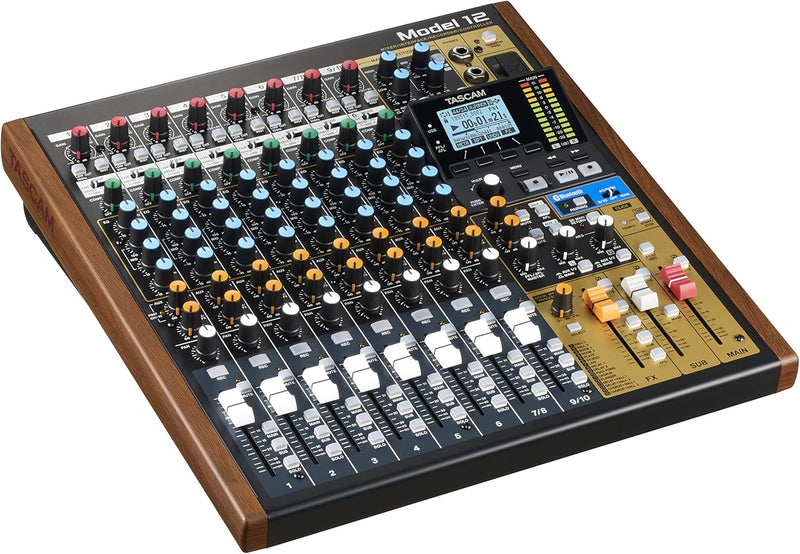
Tascam Model 12 Mixer/Interface/Recorder Production Suite
A 10-channel mixer, 12-track SD recorder, and USB audio interface in one compact unit built for hands-on music production and podcasting.
$599.00*
Check availability
*Price sourced from Amazon.com. Last updated:Aug 28, 2026.Price and availability are subject to change — details.
Affiliate Disclosure: As an Amazon Associate, Studio Supplies earns from qualifying purchases made through links on this page, at no additional cost to you. This helps support our editorial team.
Notice a mistake? Let Us Know
Overview
Key Features
10-channel mixer with built-in 12-track recorder and USB audio interface
Ten analogue inputs on six mono and two stereo channels
Two Aux outputs (monitor, effects) and two stereo outputs with independent master faders (Main, Sub)
Monitoring can be selected between PFL (pre-fader), AFL (after-fader) and SIP (solo-in-place)
Dedicated click output with tap tempo feature
Specifications
Mixer Channels
10 (6 mono + 2 stereo)
Analog Inputs
10
Recorder
12-track, SD card (standalone)
Audio Interface
USB (12-in / 2-out)
Aux Outputs
2 (monitor, effects)
Stereo Outputs
2 (Main, Sub) with independent master faders
Monitoring Modes
PFL, AFL, SIP (solo-in-place)
Phantom Power
+48V (global)
Special Features
Dedicated click output with tap tempo, Bluetooth 5 input
Hardware Interface
USB Type-C
Power Source
Corded electric (AC)
Weight
9.46 pounds
Dimensions
14.17 x 13.5 x 3.88 inches
Frequently Asked Questions
Can the Model 12 function as a multi-channel USB audio interface for DAW recording?
Yes. The Model 12 sends 12 channels of audio over USB to your DAW simultaneously, and returns a stereo mix back from the computer. This makes it a capable front-end interface for multi-track recording in any major DAW, while the onboard faders give you tactile mix control.
Does the built-in recorder require a computer, or can it record standalone?
The 12-track recorder operates completely standalone, recording directly to an SD card with no computer required. This makes it ideal for rehearsal captures, live show recordings, and field sessions where you want zero laptop dependency.
What phantom power does the Model 12 provide for condenser microphones?
The Model 12 supplies +48V phantom power on its XLR inputs, which is standard for powering condenser microphones. Phantom power is globally switched, so all connected condenser mics receive power simultaneously.
How does the monitoring system work with PFL, AFL, and SIP modes?
PFL (pre-fader listen) lets you hear a channel's signal before the fader affects it — useful for cueing. AFL (after-fader listen) monitors the signal post-fader. SIP (solo-in-place) mutes all other channels to isolate one in the main mix. Each mode serves a different workflow: PFL for gain staging, AFL for checking your actual mix contribution, and SIP for focused troubleshooting.
Can the Model 12 be used for podcast production with multiple hosts?
Yes, and it is well-suited for it. Six mono channels with individual gain, EQ, and compression handle multiple microphones cleanly. The built-in Bluetooth input lets you bring in remote callers or music, and the dedicated headphone monitoring with PFL means each host can be checked independently.
Related Products


