



Telex
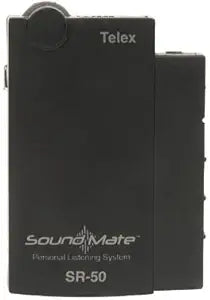
Telex SR-50 SoundMate Single Frequency Receiver 72.1MHz
Single-channel personal receiver engineered for crystal-clear assistive listening in education, worship, and live event environments.
$159.95*
Check availability
*Price sourced from Amazon.com. Last updated:Oct 23, 2026.Price and availability are subject to change — details.
Affiliate Disclosure: As an Amazon Associate, Studio Supplies earns from qualifying purchases made through links on this page, at no additional cost to you. This helps support our editorial team.
Notice a mistake? Let Us Know
Overview
Specifications
Type
Single Frequency Personal Receiver
Frequency
72.1 MHz (Channel A)
Compatible Transmitters
Telex TW-6, AAT-2, PST-16, ST-200, PST-170, ST-300
Brand
Telex
Model
SR-50
Frequently Asked Questions
What transmitters is the SR-50 designed to work with, and does it require any frequency matching at setup?
The SR-50 is factory-preset to Channel A at 72.1 MHz and is designed to pair directly with Telex TW-6, AAT-2, PST-16, ST-200, PST-170, and ST-300 transmitters operating on the same channel. There is no frequency scanning or pairing procedure — the receiver and transmitter are preset at the factory, which eliminates RF setup time in the field.
Is 72.1 MHz a licensed or license-free frequency for assistive listening use in the United States?
72.1 MHz falls within the FCC-designated assistive listening frequency band (72–76 MHz), which is allocated specifically for personal assistive listening devices and does not require an individual broadcast license for compliant use. This makes the SR-50 straightforward to deploy in public venues, houses of worship, and educational institutions.
What audio output does the SR-50 provide, and what headphones or earphones are compatible?
The SR-50 provides a standard headphone output for use with personal earphones or lightweight headphones. Standard 3.5mm or compatible earphone connections work with the receiver; audio level is controlled at the receiver for individual listener comfort without affecting the transmitter signal.
How many SR-50 receivers can operate simultaneously in a single space?
Because the SR-50 operates on a single fixed frequency (72.1 MHz), all SR-50 units in a deployment receive the same transmitter signal simultaneously. There is no practical limit to the number of receivers in use at once — each listener gets their own receiver tuned to the shared channel.
What is the typical operating range of the SR-50 in a real-world venue environment?
Operating range depends on the transmitter used and the RF environment, but 72 MHz systems like the SR-50 ecosystem are designed for typical venue-scale coverage — classrooms, conference rooms, small theaters, and houses of worship. Solid walls and metal obstructions reduce effective range, as with any RF assistive listening system.
Related Products


