

Tiffen
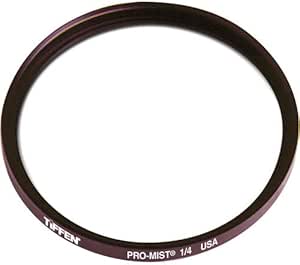
Tiffen 46PM14 46mm Pro-Mist 1/4 Filter
Add a skin-flattering, highlight-softening glow to portraits and beauty work without sacrificing the underlying sharpness your lens delivers.
$56.21*
View on Amazon
✓ In Stock on Amazon.com
*Price sourced from Amazon.com. Last updated:Jul 14, 2026.Price and availability are subject to change.
Affiliate Disclosure: Studio Supplies may earn a commission from qualifying purchases made through links on this page, at no additional cost to you. This helps support our editorial team.
Notice a mistake? Let Us Know
Overview
Key Features
Reduces Highlights and Lowers Contrast
Softens Wrinkles and Blemishes
Creates a Soft Quality of Light
ColorCore Technology
Made in the U.S.A.
Specifications
Filter Type
Pro-Mist Diffusion
Density
1/4
Size
46mm
Technology
ColorCore (laminated between optically flat glass)
Effect
Reduces highlights, lowers contrast, softens blemishes and wrinkles
Country of Manufacture
USA
Model
46PM14
Pros & Cons
👍 Pros
- The 1/4 density delivers flattering skin softening during beauty and portrait sessions without the heavy diffusion of stronger Pro-Mist grades, keeping the effect believable and professional.
- 1/4 strength diffusion reduces highlight harshness and softens fine skin texture in portraiture without the muddy, unfocused appearance of heavier diffusion grades
- ColorCore lamination produces consistent, edge-to-edge diffusion density — no uneven areas or hot spots visible at the filter's edges that would be apparent in a wide-open portrait frame
- Highlight halation at f/2.8 and wider gives candlelit, backlit, or window-lit portraits a cinematic glow quality that would otherwise require extensive post-processing to replicate convincingly.
- ColorCore construction between optically flat glass plates maintains neutral color response — you can shoot with it permanently mounted on a portrait prime without correcting for color drift in post.
- Tiffen's US manufacture and optical glass construction introduce no perceptible color cast, maintaining skin tone accuracy for beauty and fashion work where color fidelity is a client deliverable
- The halation effect around practical lights and window sources adds an organic quality that post-production retouching cannot fully replicate
- The 46mm size keeps this filter lightweight and unobtrusive on small primes, meaning you can leave it on the lens all day without adding noticeable weight or changing the lens's handling balance.
- Tiffen's US manufacturing provides quality consistency between units — the filter you receive will perform to the same optical standard as every other unit off the same production line.
- 46mm thread provides direct compatibility with compact prime lenses in the APS-C and Micro Four Thirds range — no step-up ring needed for matched portrait glass
👎 Cons
- At 46mm, this filter fits only lenses with a 46mm front thread — portrait photographers who own lenses in 52mm, 58mm, or 67mm will need separate filters or step rings for each, adding cost and kit complexity.
- 46mm is a less common filter thread size than 58mm, 67mm, or 77mm — it won't stack onto fast telephoto or full-frame zoom lenses without an adapter ring
- The diffusion effect is not adjustable — photographers who want variable control require multiple Pro-Mist grades in their kit rather than a single adjustable filter
- The Pro-Mist effect is baked into every frame while the filter is mounted — there is no ability to selectively apply or remove it during a shoot without physically swapping filters, which is disruptive in fast-changing light.
- Strong point light sources in the frame (catchlights, candles, specular reflections) create noticeable bloom at the 1/4 density — this can be a visual distraction in images where clean, crisp specular highlights are desired.
- No protective case is included for individual storage — without a filter wallet, the laminated front surface is vulnerable to scratching between uses
- At 1/4 strength, the effect may be barely perceptible on uncalibrated monitors or in small print formats — buyers expecting dramatic visible diffusion should consider the 1/2 strength instead
- Stopped down to f/8 and beyond, the Pro-Mist effect diminishes substantially, making this filter most useful for wide-aperture shooting only; landscape or architectural work on a stopped-down prime sees little benefit.
- Requires careful cleaning due to the laminated ColorCore construction — aggressive cleaning pressure or harsh solvents risk delamination at the glass edges over extended use.
- Pro-Mist filters accumulate dust in the diffusion medium's micro-structure more readily than clear UV filters and require more frequent careful cleaning
Frequently Asked Questions
How does the 1/4 density rating affect the strength of the Pro-Mist effect, and is it appropriate for everyday portrait use?
The 1/4 rating is the subtlest step in Tiffen's Pro-Mist lineup — it reduces highlight intensity and lowers contrast gently enough to remain appropriate for regular portrait, beauty, and fashion work without producing the overtly dreamy look of the 1/2 or 1 densities. If you want a visible but not heavy-handed diffusion effect, 1/4 is the most versatile choice.
What does "1/4 strength" mean — how visible is the effect compared to 1/2 or full strength?
The 1/4 designation is the mildest grade in the Pro-Mist range. It produces a subtle contrast reduction and gentle halation around highlights while preserving most of the lens's resolution. The 1/2 and full-strength versions deliver progressively heavier diffusion and more visible bloom. For most portraiture, 1/4 is the standard starting point.
Will this filter interfere with autofocus on lenses with a 46mm thread?
The filter does not interfere with autofocus operation. It sits in the optical path without affecting the AF system's light sensing. In very low-contrast scenes, the slight contrast reduction can occasionally cause hesitation in contrast-detection AF systems.
Does this filter degrade overall sharpness or resolution in the final image?
The Pro-Mist 1/4 does reduce micro-contrast, which creates the perception of slightly less clinical sharpness. Detail is preserved — the filter diffuses highlights and blooms bright areas rather than globally softening the frame. At 1/4 density the resolution penalty is minimal and is typically indistinguishable from the intended artistic effect.
Is Tiffen's ColorCore construction the same as a resin-sandwiched filter, and does it cause color casts?
ColorCore is Tiffen's process of laminating the filter material between two pieces of optically flat glass at a controlled temperature. This eliminates the stress birefringence common in single-piece dyed glass and produces a neutral color response — the 1/4 Pro-Mist should introduce no perceptible color cast under normal shooting conditions.
Is the Pro-Mist 1/4 useful for video production or mainly a stills filter?
It's widely used in video — particularly for interview, beauty, and narrative work. The contrast reduction and highlight halation mimic a film-like organic quality that reduces the clinical look of digital video capture. Many cinematographers use it specifically for this reason.
What is Tiffen's ColorCore technology and why does it matter?
ColorCore laminates the diffusion medium between two pieces of optical glass under controlled manufacturing conditions, producing a consistent density across the entire filter surface. Lower-cost filters apply diffusion as a surface coating, which can produce uneven density and edge inconsistencies.
Does the Pro-Mist effect behave differently at wide apertures versus stopped down?
Yes — the halation and highlight bloom that defines the Pro-Mist effect is more pronounced at wide apertures (f/1.8–f/2.8) where specular highlights are brighter relative to midtones. Stopping down to f/8 or f/11 reduces the visible effect considerably. Shoot wide open for maximum diffusion; stop down if you want to dial it back without removing the filter.
Can this 46mm filter be used with step-up or step-down rings for different lens diameters?
Yes, 46mm is the thread diameter and standard step rings are available. A step-up ring (46mm to 52mm, 58mm, etc.) will mount this filter to a larger lens, but ensure the filter does not vignette at wide focal lengths when using a step-up ring — test at your widest focal length before committing to the combination.
Does this filter require exposure compensation?
No — the 1/4 strength has a negligible effect on exposure and no compensation is typically needed. The slight contrast reduction may affect metering in extreme high-contrast scenes, but in practice this filter is used without adjusting exposure settings.
Related Products


