

Tiffen
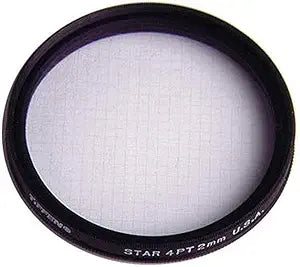
Tiffen 49STR42 49mm 4 Point Star Effect Filter
★★★★★
Turn any point light source into a tack-sharp four-pointed star with this rotatable Tiffen filter — precise enough for candle flames, dramatic enough for city skylines.
$24.30*$45.00Save 46%
View on Amazon
✓ In Stock on Amazon.com
*Price sourced from Amazon.com. Last updated:Jul 14, 2026.Price and availability are subject to change.
Affiliate Disclosure: Studio Supplies may earn a commission from qualifying purchases made through links on this page, at no additional cost to you. This helps support our editorial team.
Notice a mistake? Let Us Know
Overview
Key Features
Creates four-point star effects from direct or reflected light sources
Adds sparkle to water scenes and candle flames
Filter can be rotated for creative control
49 millimeters in diameter
Specifications
Filter Diameter
49mm
Effect
4-point star diffraction
Construction
ColorCore glass laminated between two optical glass elements
Mount Type
Screw-mount, rotatable
Model
49STR42
Pros & Cons
👍 Pros
- Rotation mechanism allows precise angular alignment of star points relative to compositional elements — a degree of creative control not available with fixed star filters.
- ColorCore glass lamination positions the diffraction layer between two optical glass elements, reducing surface flare compared to single-layer etched filter designs.
- 49mm thread mount fits a wide range of standard kit and prime lenses without adapters in this filter diameter.
- Physically compact and lightweight, adding negligible bulk to a lens kit compared to carrying a dedicated effects lens.
👎 Cons
- Mounting the filter introduces a measurable reduction in overall frame contrast and micro-contrast, even in areas without light sources — visible on critical inspection of RAW files.
- Effect intensity is dependent entirely on light source characteristics; the filter produces weak or invisible star effects in scenes without small, bright specular highlights.
- Star points from the four-line diffraction pattern can appear asymmetrical or inconsistent if light sources are not sufficiently point-like or if the filter glass is not precisely centered.
- 49mm thread diameter limits use to lenses in this specific filter size; larger-diameter lenses require a step-up ring, which may vignette on wider focal lengths.
- No lens cap compatibility when mounted — the front element requires a separate protective solution during transport.
Frequently Asked Questions
How does rotating this filter affect the star effect in my shots?
Rotating the filter physically changes the orientation of the diffraction grating etched into the ColorCore glass, which directly rotates the four star points around the light source. A 45-degree rotation on the filter produces a 45-degree rotation of the star points in the frame — giving you precise creative control to align or stagger star points relative to your horizon line or subject.
What types of light sources produce the best star effects with this filter?
Small, bright, specular light sources produce the sharpest and most defined star points — candle flames, street lamps, bare bulbs, specular water reflections, and hard catchlights. Broad, diffuse light sources like overcast sky or softboxes generate little to no visible star effect because the diffraction requires a concentrated point of high contrast.
Will this filter degrade image sharpness in areas of the frame that don't contain light sources?
There is a measurable but typically minor reduction in overall contrast and micro-contrast across the frame when any diffraction filter is mounted. The Tiffen ColorCore construction — laminating the effect layer between two pieces of optical glass — minimizes this compared to surface-coated alternatives, but it is not optically neutral. For critical sharpness across the entire frame with no effect, the filter should be removed.
Is this filter stackable with a UV or polarizer filter?
Physically, yes — it threads like a standard screw-mount filter. Optically, stacking introduces additional glass elements, increasing the risk of internal reflections (ghosting) and further reducing contrast. Stacking a star filter with a circular polarizer in low-light scenes is particularly problematic due to light loss. Single-filter use is recommended for cleanest results.
Related Products


