

Tiffen
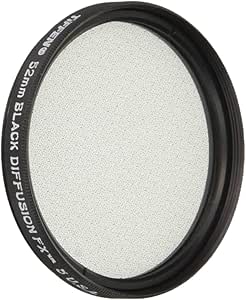
Tiffen 52BDFX5 52mm Black Diffusion FX 5 Filter
★★★★★
Tiffen's grade 5 Black Diffusion FX wraps portraits in luminous, skin-flattering glow without sacrificing edge definition.
$65.00*
View on Amazon
✓ In Stock on Amazon.com
*Price sourced from Amazon.com. Last updated:Jul 14, 2026.Price and availability are subject to change.
Affiliate Disclosure: Studio Supplies may earn a commission from qualifying purchases made through links on this page, at no additional cost to you. This helps support our editorial team.
Notice a mistake? Let Us Know
Overview
Specifications
Brand
Tiffen
Model
52BDFX5
Filter Size
52mm
Filter Type
Black Diffusion/FX
Diffusion Grade
5 (strongest)
Mount
Standard threaded screw-on
Pros & Cons
👍 Pros
- Grade 5 diffusion creates a pronounced, cinematic softness ideal for glamour and beauty portrait sessions where skin texture smoothing is the primary goal.
- The optical effect spreads and blooms highlights in a way that digital post-production diffusion filters only approximate — especially visible in backlit and window-lit portrait environments.
- Standard 52mm threaded mount integrates with hoods and existing filter systems without requiring proprietary adapters.
- Tiffen's ColorCore glass manufacturing ensures the filter maintains neutral color balance — diffusion without a color cast shift.
- The physical filter is set-and-forget once dialed in for a session, freeing the photographer from per-image post-processing replication.
👎 Cons
- Grade 5 is the strongest setting on the scale — it can easily overpower the effect in natural-light portrait sessions where a lighter touch (grades 1–3) would read more elegantly.
- The 52mm thread limits this filter to lenses with that specific diameter; photographers with larger primary lenses need a step-up ring or a separately purchased size.
- Strong diffusion at grade 5 can reduce apparent sharpness enough to complicate heavy cropping in post — framing in-camera becomes more important.
- The effect is hardwired at grade 5 — unlike a variable diffusion filter, you cannot dial back the intensity mid-shoot without physically swapping the filter.
- Adding a filter to the optical path introduces a minor additional surface for flare-inducing reflections, most noticeable when shooting toward strong light sources.
Frequently Asked Questions
What does "grade 5" mean on the Black Diffusion FX scale, and how strong is that effect?
Tiffen's Black Diffusion/FX scale runs from 1 (very subtle) to 5 (most pronounced). Grade 5 delivers a noticeably soft, dreamy quality — it will visibly soften fine detail and spread highlights. For gentle, almost imperceptible diffusion, grades 1–2 are the typical choice; grade 5 is best suited for intentional, stylized portrait and glamour work where the effect is meant to be seen.
Does this filter affect sharpness across the entire frame?
The Black Diffusion FX effect softens fine texture and spreads highlight halation throughout the frame while preserving overall structural sharpness. Edges and large contrast boundaries remain readable — the effect reduces micro-contrast and skin texture rather than making the image look out-of-focus. At grade 5, the softening is more pronounced than grades 1–3.
Is the 52BDFX5 compatible with lens hoods and other screw-on filters?
Yes, the 52mm filter uses a standard threaded mount that accepts lens hoods and additional screw-on filters. For filter stacking, keep stacks shallow to avoid vignetting on wider lenses; the Black Diffusion FX works well as the front element of a two-filter stack.
What shooting scenarios is this filter best suited for?
Grade 5 is most at home in intentional glamour, beauty, and vintage-style portrait sessions where a pronounced cinematic softness is the creative goal. It is less suited for documentary, product, or architecture work where image sharpness and clean detail are primary requirements.
Can this effect be replicated convincingly in post-production?
Diffusion glow effects in post-production are increasingly capable, but in-camera optical diffusion still produces a physically different interaction between light, the lens, and the sensor — particularly in how highlights bloom and spread. For clients or productions where the look is integral to the final output, the physical filter remains the more authentic and predictable tool.
Related Products


