

Tiffen
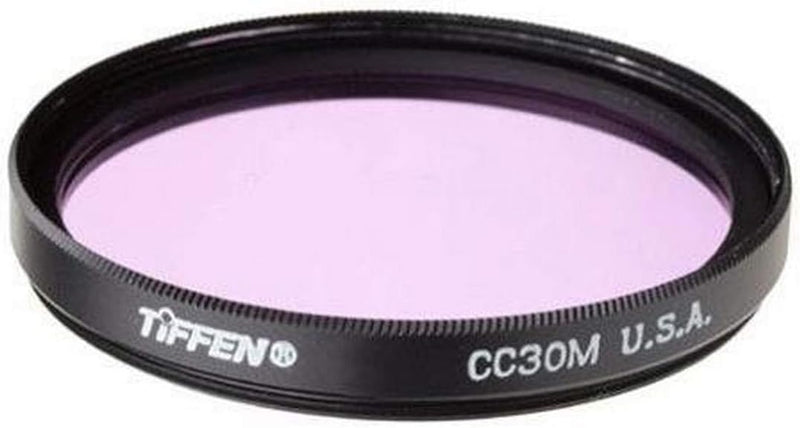
Tiffen 52CC30M 52mm 30 Magenta Filter
★★★★★
Precise magenta correction for 52mm lenses — the Tiffen CC30M dials out fluorescent green cast and early-morning color bias before it ever touches your sensor.
$40.00*
Check availability
*Price sourced from Amazon.com. Last updated:Jul 14, 2026.Price and availability are subject to change.
Affiliate Disclosure: Studio Supplies may earn a commission from qualifying purchases made through links on this page, at no additional cost to you. This helps support our editorial team.
Notice a mistake? Let Us Know
Overview
Key Features
Balances excessive green cast and produces creative effects
Great for early-morning tint
52 millimeters in diameter
Combine with other magenta filters to achieve additional densities
Specifications
Diameter
52mm
Filter Type
30 Magenta
Effect
Balances excessive green cast, produces creative effects, good for early-morning tint
Pros & Cons
👍 Pros
- 52mm threading fits a wide range of compact prime lenses — Nikon and legacy Canon shooters in particular will find this a direct fit without adapters.
- Glass optical construction maintains color fidelity and avoids the color fringing or chromatic artifacts associated with lower-quality filter glass.
- Targets the green-magenta axis specifically — more precise correction for fluorescent and underwater green cast than a warming filter can provide.
- Stackable with other CC magenta densities (CC10M, CC20M) to produce intermediate or stronger correction from a minimal filter investment.
- Useful for film photographers shooting color-balanced stock under non-standard light without committing to post-processing or push/pull corrections.
👎 Cons
- Single-purpose correction — the CC30M addresses green cast only and has no value in tungsten, sunny daylight, or golden-hour shooting conditions.
- 52mm filters are not compatible with larger-diameter lenses without step-down rings, limiting versatility across a mixed lens kit.
- Optical glass in the light path reduces flare resistance and can produce slight contrast loss in high-contrast, backlit scenes compared to shooting barehanded.
- In digital workflows, many green-cast scenarios are addressable with white balance adjustments in RAW post-processing, reducing the necessity of in-camera glass correction for some shooters.
- No included case or pouch — the filter requires separate protective storage to prevent scratches on the glass surfaces.
Frequently Asked Questions
Which 52mm lenses is the CC30M most useful for in a typical camera bag?
The 52mm filter thread is standard on a wide range of classic and current prime lenses — Nikon's 50mm f/1.4D and f/1.8D, several Micro-Nikkor macros, and older Canon FD primes, among others. For photographers using these lenses in fluorescent-lit interiors (schools, gyms, event halls), the CC30M is the correct correction for that environment's green-dominant light.
How does the CC30M correct green cast versus using white balance on a digital camera?
White balance applies a global correction to the entire frame. In mixed-light environments — where fluorescent overhead fills and daylight spills from windows — a WB shift that fixes the fluorescent zone warms the daylight zone incorrectly. The CC30M corrects the source before exposure, so the entire frame is balanced from capture, not corrected asymmetrically in post.
Can I stack this CC30M with a second magenta filter for stronger correction?
Yes — CC filters are designed for stacking. Two CC30M filters produce a CC60M correction level. You can also combine this with a CC10M or CC20M for intermediate densities. Keep stacks to two elements maximum to limit flare and light loss; each additional filter surface reduces transmission and can introduce minor contrast reduction.
Does this filter affect autofocus or in-camera metering?
Autofocus is unaffected — the CC30M is an optical glass filter with no mechanical interference. TTL metering reads through the filter and compensates for the approximately 1/3-stop light reduction automatically, so no manual exposure adjustment is needed in most shooting situations.
Is the CC30M useful for underwater photography or is it better suited to above-water fluorescent correction?
The CC30M's magenta correction addresses green cast from any source — fluorescent tubes, underwater ambient light, and certain overcast conditions all introduce green shift that magenta subtracts. For shallow underwater shooting on daylight-balanced film or without color correction in-camera, a CC30M or stronger magenta density is a valid on-lens correction. Strength needed increases with depth.
Related Products


