



Tiffen
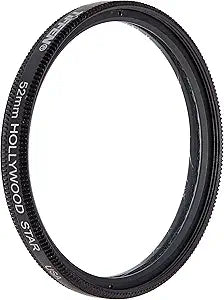
Tiffen 52HOSTR Hollywood Star Effect Filter 52mm
The Tiffen 52mm Hollywood Star filter turns any point light source into a controlled cinematic starburst — rotate the mount to set rays exactly where your composition demands.
$45.00*
View on Amazon
✓ In Stock on Amazon.com
*Price sourced from Amazon.com. Last updated:Aug 30, 2026.Price and availability are subject to change — details.
Affiliate Disclosure: As an Amazon Associate, Studio Supplies earns from qualifying purchases made through links on this page, at no additional cost to you. This helps support our editorial team.
Notice a mistake? Let Us Know
Overview
Key Features
Limitless creative options.
Rotating mount allows exact positioning of light rays.
Can be used in combination with other filters for remarkably creative effects.
Precision metal mounting ring.
Specifications
Brand
Tiffen
Model
52HOSTR
Filter Thread Size
52mm
Filter Type
Hollywood Star Effect
Mount Type
Rotating
Ring Material
Precision metal
Frequently Asked Questions
How does the rotating mount on this filter change how I compose a shot?
It gives you directional control over the starburst rays. With a fixed star filter, the ray angle is determined by how far the filter threads in — essentially random. The Hollywood Star's rotating mount lets you align rays along leading lines, sweep them away from a subject's eyes, or mirror them symmetrically across the frame before you shoot.
What subjects produce the best results with this 52mm filter?
Small, bright, specular light sources — bare bulbs, streetlights at night, bokeh highlights in low-light portraits, candles in environmental work — produce sharp, defined rays. Broad or diffuse light sources won't generate a visible starburst effect. Night portraiture with practical background lighting and low-key product photography with specular highlights are natural fits for the 52mm thread size, common on standard primes and kit zooms.
Can I layer this with a warming or ND filter?
Yes — Tiffen explicitly designs this filter for combination use. In practice, stacking adds additional glass elements to the path, which can introduce minor contrast reduction or flare at very wide apertures. At 52mm, vignetting with a second filter is more likely on wide-angle lenses than on standard or portrait focal lengths; test before a paid session.
Does this filter affect exposure significantly?
The light transmission reduction is minimal — generally less than a 1/3 stop — so no meaningful exposure compensation is required in practice. The star pattern is an optical diffraction effect, not a density reduction.
Is 52mm a common enough thread size to make this filter useful across multiple lenses?
Yes. 52mm is one of the most prevalent filter thread sizes, appearing on 50mm f/1.8 primes across Canon, Nikon, and third-party mounts, as well as many kit zooms. It's also easy to step down from larger diameters if needed.
Related Products


