

Tiffen
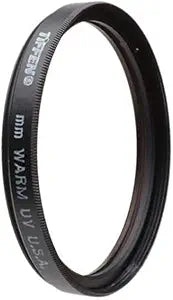
Tiffen 55WRMUV 55mm Warm UV Protection Filter
Keep portraits warm and your glass protected — Tiffen's 55mm Warm UV filter is a permanent fixture for outdoor and natural-light shooters.
View price on Amazon
Affiliate Disclosure: As an Amazon Associate, Studio Supplies earns from qualifying purchases made through links on this page, at no additional cost to you. This helps support our editorial team.
Notice a mistake? Let Us Know
Overview
Key Features
Country of Origin:United States
Package length:3.46"
Package width:2.91"
Package height:0.63"
Specifications
Filter Size
55mm
Filter Type
Warm UV
Function
UV Light Absorption, Color Warming
Warming Filter Base
Tiffen 812®
Country of Origin
United States
Package Dimensions
3.46" L x 2.91" W x 0.63" H
Frequently Asked Questions
Will the Tiffen 55mm Warm UV noticeably change my white balance, or can I leave it on across mixed lighting conditions?
The warming shift is genuine and consistent — it's based on Tiffen's 812 filter, which imparts a soft amber cast that reads as pleasing in natural and shade-lit conditions. In mixed or artificial lighting where color accuracy is critical, you'd remove it. For outdoor portrait, wedding, and travel work it's the kind of filter most photographers set and forget, correcting for it with a single white balance preset if needed.
Does the 55mm Warm UV degrade sharpness or add flare on fast portrait primes?
No measurable sharpness loss under normal shooting conditions — Tiffen produces the glass to optical standards that don't compromise resolution at 55mm. Minor flare potential exists when shooting directly into strong backlight, as with any filter glass, but Tiffen's coating keeps this controlled in practical use.
Can I stack a polarizer on the Tiffen 55mm Warm UV for landscape work?
Physically yes — the filter has standard 55mm threads on both sides. In practice, stacking two filters at 55mm can cause vignetting on ultra-wide lenses below roughly 24mm equivalent. Test your specific lens at its widest focal length before committing to a stacked setup in the field.
How does this compare to just shooting with a clear protective filter and warming in Lightroom?
For portrait-focused shooters, the in-camera result often looks slightly more organic than a digitally applied warm curve — particularly in skin tones and the interaction between warm light and natural shadow areas. The filter also eliminates the UV-induced blue haze that affects sharpness in open-air shooting, which post-processing color correction doesn't fully address. If you're already adding warmth in every outdoor edit, doing it on the glass saves time and can improve raw image quality.
Related Products


