

Tiffen
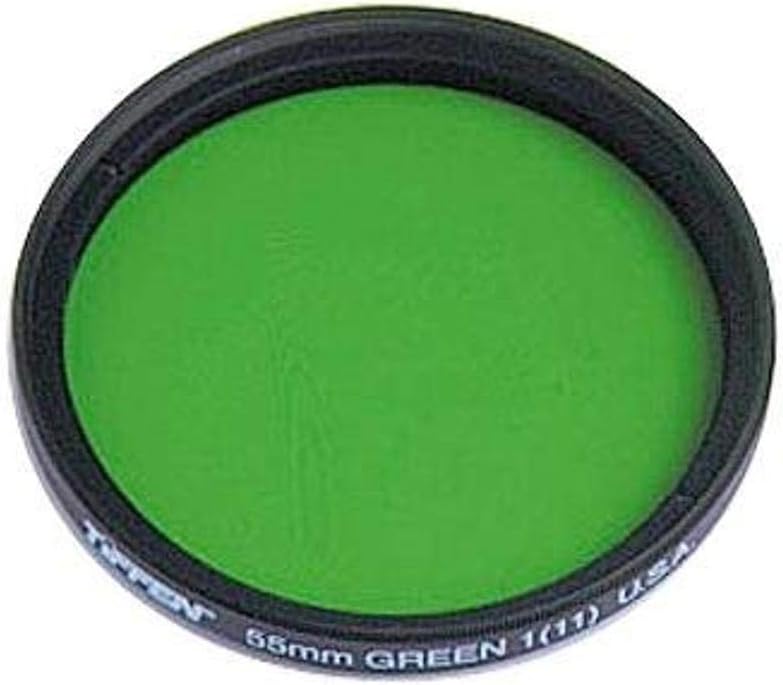
Tiffen 5811G1 58mm Green Filter B&W Photography
A classic green filter for black-and-white photography that lightens foliage and darkens skies for natural tonal separation.
$18.19*
View on Amazon
✓ In Stock on Amazon.com
*Price sourced from Amazon.com. Last updated:Aug 29, 2026.Price and availability are subject to change — details.
Affiliate Disclosure: As an Amazon Associate, Studio Supplies earns from qualifying purchases made through links on this page, at no additional cost to you. This helps support our editorial team.
Notice a mistake? Let Us Know
Overview
Key Features
Light green filter
Darkens sky in contrast to clouds
In foliage, greens are lightened and reds darkened
58mm diamter
Used primarily for black-and-white imaging
Specifications
Brand
Tiffen
Model
5811G1
Filter Type
Light Green (#11)
Diameter
58mm
Primary Use
Black-and-White Photography
Effect
Darkens sky, lightens greens, darkens reds
Frequently Asked Questions
Why would I use a green filter instead of a yellow or red one for black-and-white photography?
A green filter lightens green tones and provides more natural-looking skin tones in outdoor portraits compared to yellow or red filters. It also darkens skies moderately while keeping foliage bright, making it ideal for landscape and portrait work where greenery is prominent.
Does this filter have any effect when used with color photography?
While designed primarily for black-and-white imaging, the filter will cast a green tint over color images. It is not typically recommended for standard color work unless you are deliberately seeking that effect.
What is the #11 designation on this filter?
The #11 refers to the Wratten number system, a standardized classification for optical filters. #11 designates a yellow-green filter that is widely used in black-and-white photography for its balanced effect on skin tones and foliage.
Will this filter fit my lens?
This filter has a 58mm thread diameter. It will fit any lens with 58mm front filter threads. Check your lens cap or the markings around the front of your lens for the diameter symbol (ø) followed by the size.
How much light does this green filter absorb?
Green #11 filters typically require a 2-stop exposure compensation. If you are using through-the-lens metering, your camera will account for this automatically; with a handheld meter, you will need to adjust manually.
Related Products


