

Tiffen
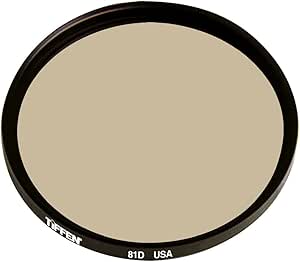
Tiffen 5881D 58mm 81D Light Balancing Filter
Warm up flat, overcast light with the Tiffen 81D — richer flesh tones and color depth from a single 58mm filter.
$56.34*
Check availability
*Price sourced from Amazon.com. Last updated:Jul 14, 2026.Price and availability are subject to change.
Affiliate Disclosure: Studio Supplies may earn a commission from qualifying purchases made through links on this page, at no additional cost to you. This helps support our editorial team.
Notice a mistake? Let Us Know
Overview
Key Features
Creates warmer tones and brighter colors on overcast days or when shooting with electronic flash.
Great for improving flesh tones.
81A converts tungsten 3200 K film to 3400 K lighting.
High quality optical glass.
High Quality Metal mounting ring.
Specifications
Brand
Tiffen
Filter Size
58mm
Filter Type
81D Light Balancing Filter
Material
High quality optical glass
Mounting
High Quality Metal mounting ring
Pros & Cons
👍 Pros
- Shooting portraits in open shade or overcast light, the 81D shifts cool, flat ambient light toward natural warmth that makes skin tones render with dimensional depth rather than flat gray undertones.
- Tiffen's ColorCore optical glass construction maintains sharpness across the frame — no softening at the edges that would undermine a sharp prime or telephoto lens.
- The high-quality metal mounting ring threads smoothly without cross-threading risk, and its durability survives the repeated on-off cycles of field shooting without stripping.
- For photographers shooting film in daylight-balanced stocks, the 81D provides the strongest warming in the 81 series — sufficient to correct deeply blue-biased lighting scenarios in a single filter.
- Compact 58mm form factor adds negligible weight and length to your kit — you can leave it on the lens all day in overcast conditions without noticing it's there.
👎 Cons
- The 81D's warming effect requires roughly 2/3 stop of additional exposure, which can push already slow shutter speeds lower in dim overcast conditions — a real concern for handheld shooting.
- The 81D's warming is fixed — in mixed lighting situations where the color temperature shifts throughout a session, the filter may over-warm tungsten-lit portions of the scene.
- No multi-coating on the filter face means more susceptibility to flare from direct light sources compared to premium multi-coated alternatives at higher price points.
- The 58mm size is specific — photographers with multiple lenses at different filter diameters need separate filters or step-up rings rather than one universal size.
- The warming effect, while useful, is easily replicable in post-processing for digital shooters — making the filter more essential for film work than digital workflow.
Frequently Asked Questions
How much exposure compensation does the Tiffen 81D filter require?
The 81D has a filter factor of approximately 1.5x, requiring roughly 2/3 of a stop of additional exposure. In practice, most photographers shooting digital will let their camera's metering compensate automatically — but when shooting film or using manual exposure, dial in that extra two-thirds stop to avoid underexposure while retaining the warm color shift.
What's the practical difference between the 81A, 81B, and 81D in the Tiffen series?
The 81 series increases in warming density as the letter advances — 81A is the lightest correction, and 81D provides a noticeably stronger warm shift. The 81D is best suited for overcast days, open shade, or electronic flash situations where the light is distinctly blue-biased. If you find the 81A doesn't move the needle enough on your typical shooting conditions, the 81D delivers meaningful visible warming without crossing into amber excess.
Will the 58mm Tiffen 81D fit my lens?
The 5881D fits any lens with a 58mm front filter thread. Common lenses in this thread size include various Nikon, Canon, Sony, and Fujifilm kit and standard zooms. Check the front element of your lens barrel for the diameter symbol (ø) followed by the millimeter size — if it reads ø58, this filter threads on directly.
Does the 81D filter affect sharpness or introduce color fringing?
Tiffen's ColorCore glass manufacturing bonds the filter material between optical glass layers, which preserves edge sharpness and eliminates the delamination risk of coated alternatives. On a well-made 58mm lens, you will not see resolution degradation or chromatic aberration introduced by the 81D. The quality of the metal mounting ring also prevents flex that can cause vignetting on wider focal lengths.
Is the Tiffen 81D useful for digital photography, or is it primarily a film-era tool?
The 81D works effectively with digital sensors, particularly for photographers who prefer to bake correct color into their captures rather than relying on post-processing. Film photographers historically used it to balance daylight-corrected stock in cool conditions, but digital shooters find it valuable for portrait and landscape work where warm, natural skin and foliage rendering is the goal — and where white balance adjustment alone doesn't fully capture the dimensional quality of optically warmed light.
Related Products


