

Tiffen
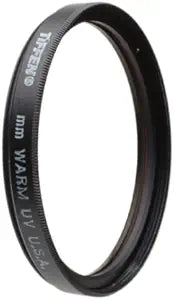
Tiffen 67WRMUV 67mm Warm UV Filter
Wrap your 67mm glass in a filter that lifts skin tones and cuts UV haze without touching your color vision.
View price on Amazon
Affiliate Disclosure: As an Amazon Associate, Studio Supplies earns from qualifying purchases made through links on this page, at no additional cost to you. This helps support our editorial team.
Notice a mistake? Let Us Know
Overview
Key Features
Package Dimensions: 1.524 H x 10.922 L x 9.144 W (centimeters)
Absorbs slightly less UV light than the Haze 2A
Package Weight: 0.1 pounds
Country of Origin : United States
Specifications
Brand
Tiffen
Model
67WRMUV
Filter Size
67mm
Filter Type
Warm UV
Effect
UV Protection + Warming
Country of Origin
United States
Weight
0.1 lbs
Package Dimensions
1.524 H x 10.922 L x 9.144 W cm
Frequently Asked Questions
How does the Warm UV Filter differ from a standard UV filter on location shoots?
The practical difference shows up in skin tones. A standard UV filter cuts haze but leaves color neutral — the Warm UV adds a mild amber bias that counteracts the cool, bluish cast common in open shade and overcast daylight. You'll see it most clearly in portraits and lifestyle work where skin warmth matters.
Will the warming effect require me to compensate in post?
Rarely. The Tiffen 67WRMUV introduces a subtle shift, not a dramatic one — it's meaningfully less aggressive than a full 81A warming filter. Most photographers leave it on as their default outdoor UV with no exposure or white balance compensation needed.
Can I stack this filter with a polarizer for landscape work?
Yes, though stacking always risks vignetting on wide-angle lenses. At 67mm on a standard zoom, thin-ring stacking typically clears fine, but test your widest focal length before committing in the field.
Does the filter affect sharpness noticeably?
Tiffen manufactures this filter from optical glass in the US, and real-world sharpness loss is negligible for most shooting scenarios. You wouldn't notice a difference on a print or screen-resolution output, though lab tests on ultra-high-resolution sensors can reveal very marginal softening inherent to any filter element.
Is this a good permanent leave-on filter for lens protection?
It works well as a protection filter with a bonus warming benefit. The trade-off versus a plain UV is the color cast — if you frequently shoot under mixed artificial light or controlled studio strobes where you want a perfectly neutral baseline, you'd want to swap it out.
Related Products


