

Tiffen
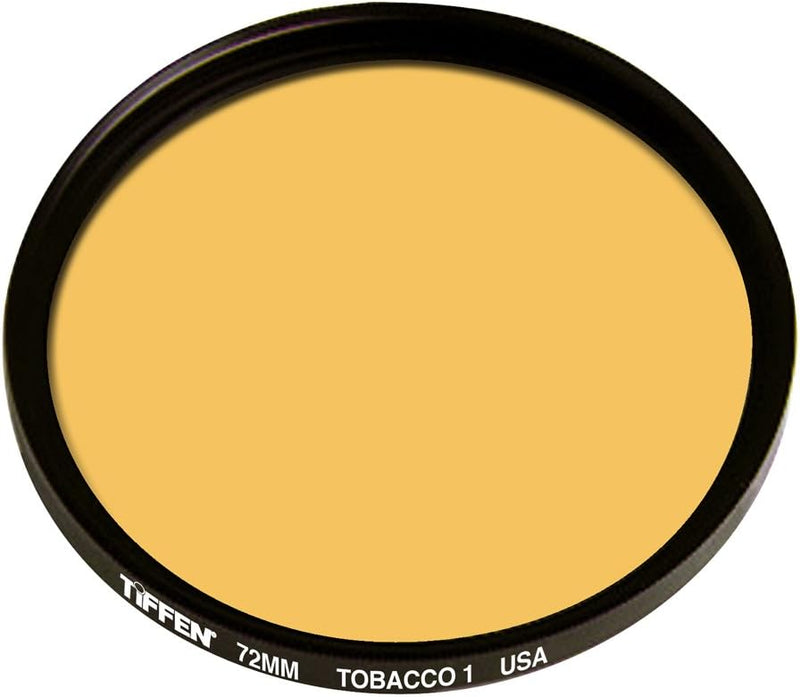
Tiffen 72TO1 72mm Tobacco 1 Filter Warming Effect
Wrap a landscape in amber dusk or give a portrait session the warmth of golden hour — the Tiffen Tobacco 1 is a one-filter mood shift.
$119.99*
View on Amazon
✓ In Stock on Amazon.com
*Price sourced from Amazon.com. Last updated:Jul 15, 2026.Price and availability are subject to change.
Affiliate Disclosure: Studio Supplies may earn a commission from qualifying purchases made through links on this page, at no additional cost to you. This helps support our editorial team.
Notice a mistake? Let Us Know
Overview
Key Features
Gives An "old time" Flavor to Images
Adding color excitement to a drab sky
Enhancing the existing color or creating subtle color drama
72mm Diameter
10 Year Warranty
Specifications
Filter Size
72mm
Filter Type
Solid color warming
Color
Tobacco (brownish-yellow)
Density
1 (lightest in tobacco series)
Effect
Even warming across full image plane
Model
72TO1
Brand
Tiffen
Pros & Cons
👍 Pros
- The even brownish-yellow warmth translates immediately in golden-hour landscape and portrait work, giving RAW files a starting color temperature that feels genuinely sun-warmed rather than color-corrected in post.
- The Tobacco 1 density is subtle enough to use as a default in overcast outdoor sessions, adding life to flat light without requiring heavy Lightroom correction afterward.
- Optical glass construction maintains edge-to-edge sharpness across the 72mm image circle — the filter does not introduce soft edges or distortion that would compromise wide-aperture work.
- Fluorine-free glass construction holds up well to field handling; the filter cleans easily without streaking on shoots where lens swaps and dust are unavoidable.
- As a solid filter, the effect is consistent and predictable across every frame — no need to reposition or recheck the gradient alignment between shots.
👎 Cons
- The fixed density means you cannot dial back the warmth effect for a lighter touch — on certain skin tones or in very warm ambient light, the tobacco tint can push toward orange in a way that requires post-correction.
- A solid color filter warms the entire image equally, which in landscape work can make foreground elements look unnaturally tinted compared to a graduated approach that targets only the sky.
- The 72mm thread size limits this filter to lenses in that filter diameter — shooters with multiple lens sizes need separate filter sizes or a step-up ring system, adding cost and kit weight.
- In mixed-light environments — indoor ambient with window light — the tobacco cast can conflict with cooler light sources, creating inconsistent color across the frame that's harder to correct than a neutral starting point.
Frequently Asked Questions
How strong is the color effect with the Tobacco 1, and will it overpower the scene?
The "1" designation indicates the lightest density in Tiffen's tobacco range — it adds a subtle brownish-yellow warmth that reads as a mood enhancement rather than a color takeover. In most outdoor and portrait scenarios, the effect feels like a natural late-afternoon light rather than a heavy tint.
Does this filter require any exposure compensation?
A light solid color filter like the Tobacco 1 absorbs a small amount of light. In practice, the light transmission loss is minimal at this density, but in critical metering situations — especially with slide film or very tight raw exposure — checking your meter with and without the filter is good field practice.
Will the Tobacco 1 affect autofocus or through-the-lens metering accuracy?
The filter does not interfere with autofocus performance or phase-detection systems. TTL metering will read through the filter automatically and compensate — the slight density shift is accounted for in metering as long as you're metering with the filter in place.
Can I stack the Tobacco 1 with other filters — a polarizer or UV filter?
Physically you can thread it with other 72mm filters, but stacking is not recommended for critical work. Each additional filter element adds flare risk and can cause vignetting, particularly at wider focal lengths. If you need polarization and color warming, using a single warm polarizer is a cleaner optical choice.
How does solid color filtration differ from a graduated tobacco filter in real-world use?
A solid filter like this one applies the tobacco color evenly across the entire frame — sky, foreground, and subject all receive the same warming shift. A graduated version would tint only the upper portion of the frame. For portraits and close subjects where even warmth is the goal, solid is the right choice; for landscapes where you want to warm only the sky, a graduated filter would be more appropriate.
Related Products


