

Tiffen
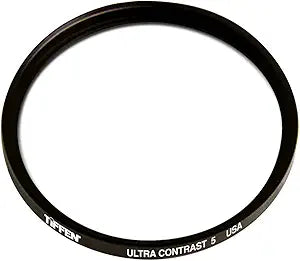
Tiffen 72UC5 72mm Ultra Contrast 5 Filter
★★★★★
Recover shadow detail and tame blown highlights in a single filter step — the Tiffen 72mm Ultra Contrast 5 brings broadcast-proven contrast control to your lens kit.
$99.95*
View on Amazon
✓ In Stock on Amazon.com
*Price sourced from Amazon.com. Last updated:Jul 14, 2026.Price and availability are subject to change.
Affiliate Disclosure: Studio Supplies may earn a commission from qualifying purchases made through links on this page, at no additional cost to you. This helps support our editorial team.
Notice a mistake? Let Us Know
Overview
Key Features
Works with surrounding ambient light.
Captures details lost in shadows.
Lowers contrast evenly throughout image.
No flare or halation.
Specifications
Brand
Tiffen
Model
72UC5
Filter Size
72mm
Filter Type
Ultra Contrast
Grade
5 (strongest in UC line)
Effect
Evenly lowers contrast using ambient light
Sharpness Impact
None
Flare/Halation
None
Primary Application
Motion picture and broadcast television
Pros & Cons
👍 Pros
- Recovers shadow detail in high-contrast outdoor scenes without requiring HDR processing or multiple exposures in post — a one-step on-lens solution.
- Produces no flare, halation, or softening side effects, preserving the optical performance of the underlying lens while modifying tonal range.
- The 72mm format makes it compatible with a wide range of standard zoom and telephoto lenses without requiring step rings.
- Recognized by the Academy of Motion Picture Arts and Sciences for technical achievement — a credential that speaks to its credibility in professional production contexts.
- Lowers contrast evenly across the entire frame rather than affecting only shadows or only highlights selectively.
👎 Cons
- The UC5 grade is the strongest in the line — its contrast reduction is pronounced and intentional, which means it is too strong for situations requiring only subtle shadow lift. Photographers who need range will want to invest in multiple grades.
- The filter has no built-in ND or polarizing effect — it addresses contrast only, so high-key exterior exposure control still requires separate ND filtration.
- The strength of the UC5 effect may be visible in images shot in already low-contrast conditions like overcast flat light, where shadow lifting can produce an artificially flat or milky appearance.
- No protective coating information is specified — field use on dusty or humid shoots requires careful handling and storage to maintain optical performance.
Frequently Asked Questions
How does the Ultra Contrast 5 filter lower contrast without introducing flare or halation the way a diffusion filter would?
The Ultra Contrast filter works by redistributing ambient light in the scene rather than scattering light from bright sources. It uses the overall light energy already present to gently lift shadow values — unlike soft focus or pro-mist filters, it does not generate glowing halos around highlights or reduce edge sharpness. The effect is contrast reduction that reads as a natural tonal range rather than a diffused or glowing look.
What does the "5" designation indicate, and how strong is this effect compared to lower grades in the Ultra Contrast line?
Tiffen's Ultra Contrast filters are numbered 1 through 5, with 5 representing the strongest available contrast reduction. A UC5 produces a pronounced shadow lift and contrast reduction suitable for high-contrast exterior scenes or deeply shadowed studio setups where recovering shadow detail is the priority. For subtler work — slight contrast reduction in controlled indoor settings — a UC1 or UC2 would be more appropriate. The UC5 is a deliberate, visible effect.
Will this filter affect the sharpness or color rendition of the lens it's mounted on?
According to Tiffen's design intent, the Ultra Contrast filter is engineered to have no apparent effect on image sharpness or color rendition — it lowers contrast through light redistribution, not through optical diffusion or color-shifting coatings. In practice, high-quality glass like Tiffen uses maintains color neutrality across the tonal range, preserving the color character of the underlying lens.
Is this filter suitable for both video production and still photography applications?
Yes — the Ultra Contrast filter was developed for motion picture and broadcast television use, where managing contrast for display on video monitors and film stocks is a fundamental concern. Still photographers working in high-dynamic-range conditions — harsh midday light, deep shadow fill needs, or high-contrast backlit scenes — will find the same contrast management benefit translates directly to RAW or JPEG capture.
Does mounting this 72mm filter introduce any vignetting concerns on wide-angle lenses?
Filter vignetting risk is primarily a function of filter thread depth relative to the lens's front element diameter. At 72mm, this filter is sized for mid-range telephoto and standard zoom lenses. On wide-angle lenses with a 72mm filter thread, check the filter's ring profile depth against your lens specifications — ultra-wide lenses below 20mm may show corner vignetting, particularly when stacking this filter with others.
Related Products


