Tiffen

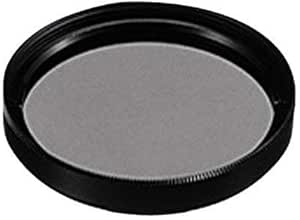
Tiffen 72WIDHZE 72mm Wide Angle UV Haze-1 Filter

3.5 (6 reviews)

Protect wide-angle glass and cut haze without the vignetting penalty — the Tiffen 72WIDHZE's thin profile is built for exactly this lens class.

$79.99*
In Stock on Amazon.com
View on Amazon

*Price sourced from Amazon.com. Last updated:Jul 14, 2026.Price and availability are subject to change.

Affiliate Disclosure: Studio Supplies may earn a commission from qualifying purchases made through links on this page, at no additional cost to you. This helps support our editorial team.

Notice a mistake? Let Us Know

Overview

The Tiffen 72WIDHZE is a wide-angle specific UV Haze-1 filter built for photographers who need front element protection and UV absorption without the vignetting penalty that standard-height filter rings introduce on wide-angle lenses. At 72mm — a common thread diameter for professional wide-angle zooms and large-aperture standard primes — front element damage from field use is both statistically likely and expensive to address. The UV Haze-1 specification absorbs approximately 75% of incoming UV radiation, which translates to meaningful haze reduction in landscape, travel, and aerial photography where UV scatter creates the characteristic blue-grey wash across distant subjects and reduces apparent contrast and color saturation in highlights and shadows.

The thin ring profile is the defining engineering characteristic: it positions the glass close enough to the front element to remain outside the optical image circle on wide-angle lenses, eliminating the corner vignetting that appears when a taller filter ring intrudes on the field of view at short focal lengths and large apertures. This makes the 72WIDHZE appropriate for permanent lens protection duty — it can remain mounted across all shooting scenarios without requiring removal to avoid wide-angle artifacts. Tiffen's optical glass construction provides consistent transparency across the filter surface without color cast or optical aberration contribution. Keeping the outer surface clean is the primary maintenance requirement for preserving that optical transparency through a full day of field shooting.

Key Features

Reduces excessive blue by absorbing almost three quarters of UV light.

Thin design to help illuminate viginetting.

Eliminates UV problems from most situations where increased Haze tends to wash out color and image clarity.

Protects your camera or camcorder lens against dust, moisture, fingerprints, scratches and damage.

Can be kept on your camera at all times.

Specifications

Filter Size
72mm
Filter Type
UV Haze-1
Design
Wide Angle (Thin Profile)
UV Absorption
~75%
Model
72WIDHZE

Pros & Cons

👍 Pros

  • Thin profile specifically engineered to eliminate the vignetting that standard-height UV filter rings introduce on wide-angle lenses at large apertures, making it a functionally correct choice for this lens class
  • Absorbs approximately 75% of UV radiation, providing meaningful haze reduction in outdoor landscape and aerial photography without any exposure compensation requirement
  • Protects the front element against dust, moisture, fingerprints, and light physical contact — damage types that are expensive to repair on premium 72mm wide-angle lenses
  • Permanent on-lens use is fully supported without image quality impact, allowing the filter to serve as a continuous protective barrier across all shooting situations without requiring removal
  • 72mm thread size fits a range of professional-grade wide-angle zooms where front element replacement cost makes protective filter use financially justified

👎 Cons

  • Reduced ring height provides less hand-grip for installation and removal compared to standard-height filter rings, increasing the importance of careful thread engagement to avoid cross-threading on precision 72mm lens mounts
  • 75% UV absorption leaves 25% UV transmission, meaning the filter does not fully eliminate haze in extreme high-UV environments such as high-altitude mountain or tropical aerial shooting where maximum UV rejection matters
  • An additional glass surface in the optical path marginally increases flare potential when shooting directly toward strong light sources — inherent to all front-element filters, not specific to this design
  • The thin ring's reduced mechanical advantage makes hand removal difficult if the filter binds on the thread, requiring a filter wrench rather than hand-only removal in those situations
  • Product specification does not clearly indicate the anti-reflection coating tier relative to Tiffen's premium coated options, leaving coating quality comparison to higher-end Tiffen UV filters unclear

Frequently Asked Questions

Standard-height filter rings can intrude on the image circle of wide-angle lenses — particularly below 28mm equivalent — creating a dark vignette at the frame corners. The 72WIDHZE's thin ring profile keeps the filter glass outside the optical path at wide focal lengths and large apertures, allowing it to sit on wide-angle glass without clipping the image.
The UV Haze-1 filter absorbs approximately 75% of incoming UV radiation. This level of rejection is effective at reducing the blue-grey haze effect in outdoor landscape, mountain, and aerial photography where UV scatter washes out distant subjects — while having no visible effect on color rendering in the primary subject zone.
No — a UV Haze-1 filter has negligible transmission loss in the visible light spectrum. Exposure does not change when adding or removing this filter. Its optical effect is entirely in the UV range, which the camera sensor records but which does not affect meter readings or require any aperture, shutter, or ISO adjustment.
Yes — Tiffen specifies the filter for permanent lens protection duty. The primary maintenance consideration is keeping the filter surface clean; accumulated fingerprints and dust on the additional glass surface can reduce contrast and contribute to flare when shooting toward strong light sources. A clean UV filter has no visible optical impact on the image.
The reduced ring height provides less mechanical grip for hand removal compared to a standard-height filter ring. If the filter binds on the lens thread, a filter wrench is more necessary than it would be with a taller ring. Using proper thread engagement during installation — avoiding cross-threading at 72mm — is the best way to prevent a stuck filter scenario.