

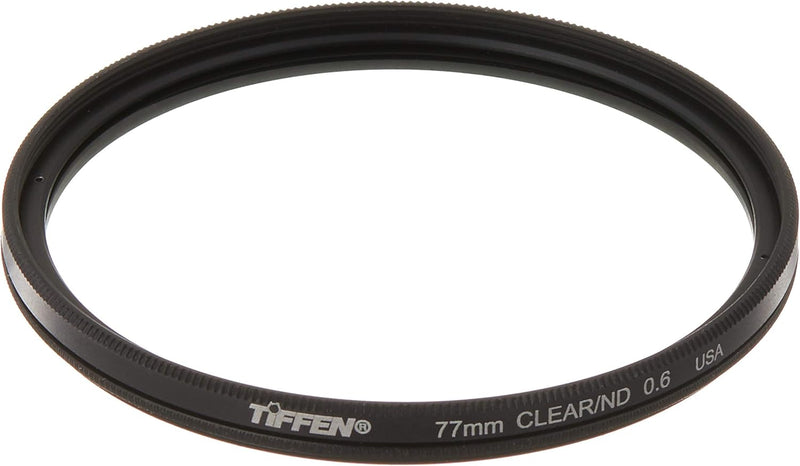


Tiffen
Tiffen 77CGND6 77mm Color Graduated ND 0.6 Filter
Bring blown-out skies back into the frame — the Tiffen 77CGND6 delivers a 2-stop graduated density correction for landscape exposures that actually hold detail.
View price on Amazon
Affiliate Disclosure: As an Amazon Associate, Studio Supplies earns from qualifying purchases made through links on this page, at no additional cost to you. This helps support our editorial team.
Notice a mistake? Let Us Know
Overview
Key Features
Half Color, half clear with a graduated density transition for a smooth blending of Color
Also for use in black and White imaging
72 millimeter diameter
Neutral gray appearance drops exposure
Specifications
Brand
Tiffen
Model
77CGND6
Filter Thread
77mm
Filter Type
Color Graduated Neutral Density
Density
0.6 (2-stop reduction)
Transition
Graduated — half ND, half clear
Color Cast
Neutral gray (no color shift)
Frequently Asked Questions
What does the 0.6 density rating mean for my exposure settings?
A 0.6 ND density equals a 2-stop reduction. Positioned over the sky, this lets you expose for the foreground without the sky blowing out by 2 stops — effectively bringing a bright exterior sky back into the latitude of your sensor or film without affecting the lower half of the frame.
How does this differ from a standard (non-color) graduated ND?
The "Color" designation in Tiffen's CGND series indicates the filter is designed for use in color imaging — the description confirms a neutral gray appearance, meaning it does not introduce a visible color cast. It functions as a neutral density graduated filter suitable for both color and black-and-white work, as noted in the product features.
Will the hard or soft graduation line be visible in my images?
The Tiffen 77CGND6 uses a graduated density transition between the ND and clear halves, which softens the blending zone. How prominent that line appears depends on your aperture (wider apertures render the transition softer) and whether you place the horizon in the middle of the frame or off-center.
What filter thread size do I need, and does this fit my lens?
The filter is 77mm. Check your lens's front element thread size — usually engraved on the barrel or listed in the lens specs. If your lens has a different diameter, a step-up ring can adapt it, but vignetting at wide focal lengths is a risk with added adapter thickness.
Can I stack this filter with a circular polarizer?
Physically yes, but stacking increases the risk of vignetting at wider focal lengths on 77mm lenses, and the additional glass introduces a small risk of image degradation. If light control is the goal, evaluate whether a single filter achieves the result before stacking.
Related Products


