

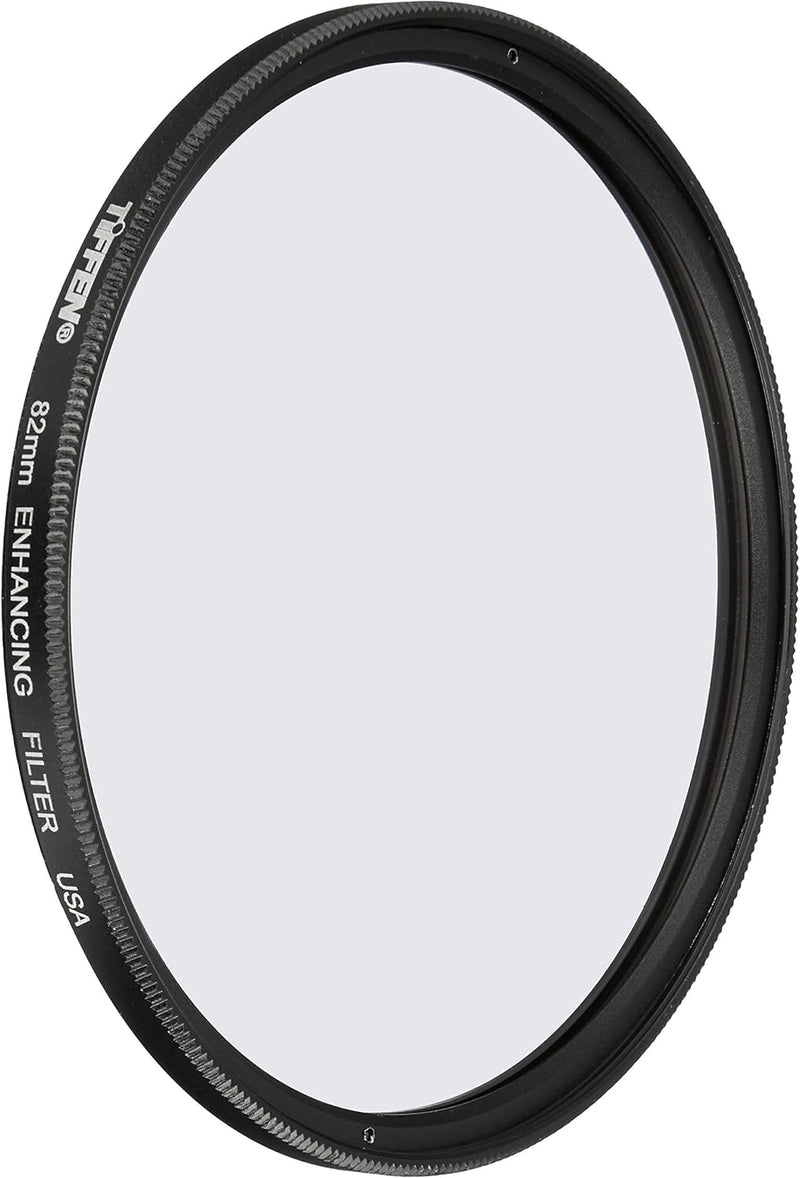
Tiffen
Tiffen 82EF1 82mm Enhancing Camera Lens Filter
★★★★★
Pull rich autumn reds and rust tones forward in landscapes and still life — the Tiffen 82mm Enhancing Filter adds warmth and depth without altering your greens or blues.
$144.00*$209.00Save 31%
Check availability
*Price sourced from Amazon.com. Last updated:Jul 14, 2026.Price and availability are subject to change.
Affiliate Disclosure: Studio Supplies may earn a commission from qualifying purchases made through links on this page, at no additional cost to you. This helps support our editorial team.
Notice a mistake? Let Us Know
Overview
Key Features
Package Dimensions: 9.144 cms (L) x 10.922 cms (W) x 1.524 cms (H)
Product Type: Camera Lens Filters
Package Quantity: 1
Country Of Origin: United States
Specifications
Filter Size
82mm
Filter Type
Enhancing / Color Intensifying
Effect
Intensifies reds, rust browns, and oranges
Country of Origin
United States
Package Quantity
1
Brand
Tiffen
Model
82EF1
Pros & Cons
👍 Pros
- Selectively intensifies reds, rust browns, and oranges without pushing greens or blues out of balance, making autumn foliage and warm-stone architecture noticeably richer in a single exposure.
- The optical effect is baked directly into the RAW file, reducing the retouching time needed to achieve saturated warm tones in post.
- The 82mm thread size fits a wide range of large-diameter zoom lenses and fast primes, making it a versatile addition to a filter collection built around bigger glass.
- Tiffen's US manufacturing heritage means consistent optical quality and coating reliability across units.
- Works entirely without batteries or electronics — nothing to fail, no software required.
👎 Cons
- The color effect is narrow by design — the filter adds little value when shooting subjects dominated by greens, blues, or neutral tones, limiting how frequently it earns a spot on the lens.
- Warm skin tones can be oversaturated on certain complexions, requiring careful use or post-correction in portrait contexts.
- The filter introduces a modest reduction in light transmission, requiring exposure compensation that can complicate shooting in already low-light conditions.
- At 82mm, the physical filter is large and requires a quality filter pouch or case to prevent the coated glass surface from scratching — not an issue unique to this filter, but worth noting for field kit management.
Frequently Asked Questions
What specific colors does the Tiffen 82mm Enhancing Filter actually affect on location?
The filter targets reds, rust browns, and oranges specifically — think autumn foliage, terracotta architecture, dried grasses, and warm-toned earth. It works by boosting saturation selectively in that color range. Greens, blues, and neutral tones are largely unaffected, which is what separates an enhancing filter from simply cranking overall saturation in post.
Is this filter useful for portrait work, or is it better suited to landscapes and architecture?
In most portrait contexts it's a narrow tool — skin tones with orange or warm-red components will be affected, which can either flatter or over-saturate depending on your subject's complexion. It shines most on location landscapes, fall foliage, and architectural subjects with warm stone or brick elements. Test on your specific subject before committing to it as a portrait filter.
Will the Enhancing Filter cause a noticeable exposure shift requiring compensation on the 82mm size?
Enhancing filters do introduce a modest light transmission reduction — you'll typically need to open up slightly or adjust exposure compensation. The exact filter factor should be confirmed against Tiffen's published specs for the EF1 variant, but expect roughly a 1/2 to 1 stop of compensation depending on scene conditions.
Does the 82mm size work across different lens brands, or is it mount-specific?
Filter thread sizes are universal — any lens with an 82mm front filter thread accepts this filter regardless of camera brand or mount. Verify the filter thread diameter of your specific lens before purchasing; 82mm is a common large-diameter thread found on wide zooms and large-aperture primes, but confirm it matches your glass.
Is the color effect of the Enhancing Filter something that can be replicated accurately in post-processing?
You can approximate it in post, but the filter produces its effect optically, which means it's baked into the RAW data before demosaicing. Some photographers prefer the filter's analog rendering of warm tones over digital saturation curves. If you're shooting scenes where maximizing in-camera accuracy matters — or where you want less retouching time — the optical result has genuine workflow value.
Related Products


