

Tiffen
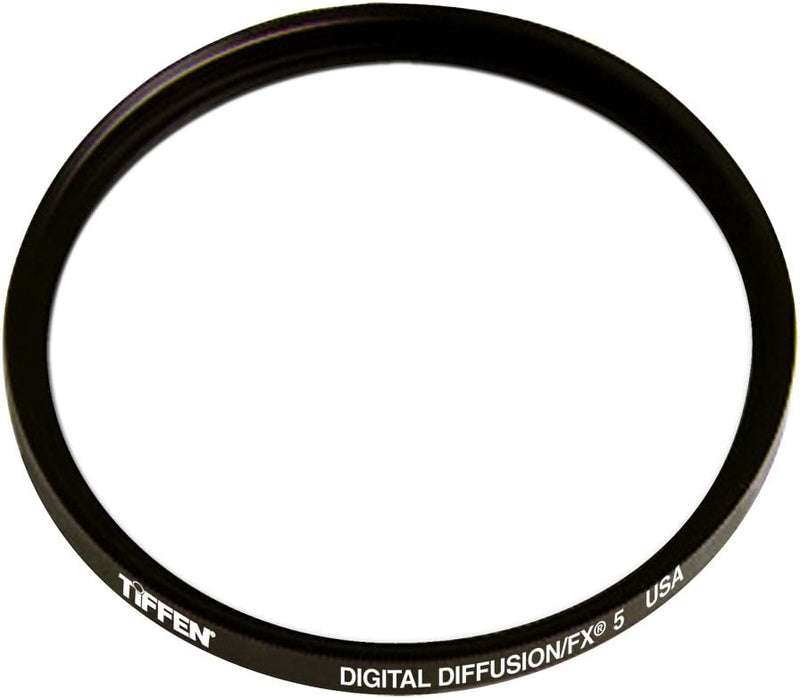
Tiffen W72DDFX5 72mm Digital Diffusion FX 5 Filter
★★★★★
Flattering skin without losing edge sharpness — the Tiffen Digital Diffusion/FX 5 softens texture at the glass level, in-camera, with no post-production required.
$99.95*
View on Amazon
✓ In Stock on Amazon.com
*Price sourced from Amazon.com. Last updated:Jul 14, 2026.Price and availability are subject to change.
Affiliate Disclosure: Studio Supplies may earn a commission from qualifying purchases made through links on this page, at no additional cost to you. This helps support our editorial team.
Notice a mistake? Let Us Know
Overview
Key Features
Softens Skin Details
Invisible Appearance
Smoothes Textured Backgrounds
Helps to Maintain Sharp Focus
ColorCore Water White Glass
Specifications
Brand
Tiffen
Model
W72DDFX5
Filter Size
72mm
Filter Type
Digital Diffusion/FX 5
Glass Type
ColorCore Water White Glass
Coating
Multi-Coated
Effect
Softens skin details, smooths textured backgrounds, maintains overall focus
Pros & Cons
👍 Pros
- The Digital Diffusion FX optical design softens skin texture and smooths backgrounds while preserving subject-level sharpness — giving portrait images a retouched quality directly from the capture rather than in post.
- ColorCore Water White glass construction is optically neutral, preserving accurate skin tone color rendition without the greenish cast that affects cheaper filter glass.
- In-camera diffusion eliminates the workflow step of applying skin smoothing in post — the softened look is captured at exposure, reducing retouching time in portrait sessions.
- ColorCore Water White glass construction minimizes the color cast introduced by the filter, preserving accurate skin tone rendering that lower-quality glass diffusion alternatives compromise.
- The strength 5 effect produces a pronounced, visible softening suitable for beauty and glamour portrait work where heavy skin diffusion is the explicit creative goal.
- The filter softens textured backgrounds as well as skin, creating a cohesive, polished feel across the full frame rather than selectively treating only the subject.
- Multi-coating on the glass surface reduces flare and internal reflections that become visible when shooting with diffusion filters toward bright light sources or windows.
- Multi-coating reduces lens flare and ghosting from the additional glass surface introduced into the optical path — a practical advantage when shooting in high-contrast or backlit portrait situations.
- Standard 72mm filter thread construction allows the filter to be swapped between multiple lenses with matching filter diameters without adapters or step rings.
- 72mm thread diameter covers a wide range of mid-to-large aperture portrait and short telephoto lenses commonly used for the flattering-portrait work this filter targets.
👎 Cons
- Strength 5 is a strong effect — at close portrait distances, it may over-smooth fine detail in ways that are difficult to reverse in post, making it unsuitable for documentary, editorial, or product work where surface texture should read clearly.
- The FX 5 strength is pronounced — in situations where only subtle skin smoothing is needed (outdoor natural light portraits, editorial work), it can read as over-processed or overly soft to modern tastes calibrated by digital sharpness.
- Once the filter is on and the shot is exposed, the diffusion effect is baked into the RAW file's embedded preview and the JPEG — you cannot reduce the effect in post, only add more via software.
- Any front-element diffusion filter applied to a 72mm lens adds a small amount of flare susceptibility, particularly in backlit scenarios where front-element coatings are doing their heaviest work.
- The filter's effect is fixed at strength 5 — there is no way to reduce the intensity in-camera without swapping to a lower-strength alternative, requiring multiple filter purchases to cover a range of diffusion levels.
- At 72mm, this filter adds a step-up ring requirement for any lens smaller than 72mm front thread, which introduces additional flare risk at the ring junction and increases overall front element diameter.
- Diffusion filters can reduce apparent microcontrast across the entire frame, which is a trade-off for landscape or architecture shots where fine detail in non-skin subjects is important.
- Physical filters can show edge vignetting on lenses with shorter effective front element distance or very wide focal lengths — the 72mm thread diameter reduces but does not eliminate this risk at extreme wide angles.
- Reapplication of the correct filter during a fast-moving portrait session adds a physical workflow step compared to software diffusion applied during post-production with adjustable intensity.
- The strong FX 5 effect can interact with lens flare in unpredictable ways in backlit scenarios — the diffusion layer can enhance glow around specular highlights in ways that may or may not be desirable.
Frequently Asked Questions
How does the Digital Diffusion FX 5 compare to the lower-numbered strengths in the same range — is strength 5 very heavy?
Within Tiffen's Digital Diffusion/FX range, higher numbers indicate stronger effect. Strength 5 is toward the heavier end of the scale — it produces a visible softening of skin texture and background detail that will be noticeable in the final image, particularly in close-up portrait work. Shooters who want a subtler, barely-there diffusion typically prefer the 1 or 2 strengths; strength 5 is for portrait work where significant skin smoothing and a pronounced dreamy quality are the creative intent.
What does the "5" strength designation mean for the Digital Diffusion/FX filter line?
In Tiffen's Digital Diffusion/FX range, the number indicates diffusion intensity — higher numbers produce stronger softening effects. The FX 5 sits at the stronger end of the series, delivering a pronounced softening of fine skin texture and surface detail. Photographers wanting a subtler look would step down to the FX 1 or FX 2; the FX 5 is for scenarios where significant skin smoothing is the goal.
Will the FX 5 noticeably degrade sharpness at the subject's edges and focus point?
By design, it maintains overall focus and edge definition while softening fine texture. The diffusion targets high-frequency detail — pores, wrinkles, surface grain — rather than the mid-frequency edges that define subject separation from background. Focal sharpness at the subject's eyes, for example, is preserved while skin microdetail is smoothed.
Does the W72DDFX5 fit standard 72mm filter threads, and what lens types commonly use 72mm?
Yes — the W72DDFX5 screws directly into any 72mm filter thread. Common lenses with 72mm filter threads include several Canon L-series zoom lenses, Nikon wide-to-standard zooms, and a range of Sony, Tamron, and Sigma telephoto primes. Verify your specific lens's filter thread diameter before purchasing, as it varies even within focal length families.
Will this filter help maintain autofocus accuracy, or does it interfere with phase-detection AF?
Tiffen's Digital Diffusion/FX filters are designed to maintain sharp focus while adding diffusion — the "helps maintain sharp focus" specification refers to the filter's optical design, which avoids the global blur that cheaper diffusion alternatives introduce. However, no front-element filter is entirely neutral; in very low contrast scenes, any diffusion filter can reduce the local contrast that phase-detection AF systems rely on, potentially causing slight focus hunting on soft-contrast subjects.
What glass type is used in this filter, and why does it matter?
Tiffen uses ColorCore Water White glass, which is optically clear low-iron glass. Standard glass has a greenish tint that can shift color balance — particularly in warm skin tones — when light passes through it. Water White glass is colorimetrically neutral, preserving accurate color rendition through the filter without introducing a color cast that would require correction in post.
What thread size does this filter fit, and can I use it with step-up rings?
This filter is 72mm thread diameter. It will fit directly on any lens with a 72mm filter thread. With a step-up ring, it can be used on lenses with smaller front threads — for example, a 67mm lens with a 67-72mm step-up ring — though vignetting at wide angles should be verified for each combination.
Can the W72DDFX5 be stacked with a UV or circular polarizer?
Physically, it can be stacked — the filter has standard threads on both sides. However, stacking diffusion with a polarizer adds filter thickness that increases vignetting risk at wider focal lengths (typically below 28mm equivalent) and introduces additional flare surfaces. Most portrait shooters using this filter do not stack it with other optical filters — the diffusion effect is typically used alone or with a protective UV filter at most.
Is the ColorCore Water White glass construction relevant for color accuracy?
Yes — ColorCore is Tiffen's process of laminating the optical effect directly between two pieces of optically clear, low-iron (water white) glass. Low-iron glass has minimal green color cast compared to standard float glass, which means the filter introduces less color shift than cheaper glass alternatives. For portrait and skin tone work where accurate color rendition matters, this construction is a practical advantage over resin or lower-quality glass diffusion filters.
Does using the FX 5 outdoors in bright light affect exposure metering or flash sync behavior?
No — diffusion filters of this type do not act as neutral density filters. They do not reduce transmitted light to a degree that affects exposure metering, and they have no interaction with flash sync timing or TTL metering systems.
Related Products


