



Ultimate Support
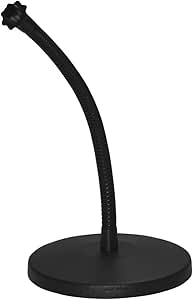
Ultimate Support JS-DMS75 Desktop Gooseneck Mic Stand
Lock your mic exactly where you need it — the JS-DMS75's solid die-cast base and quiet gooseneck hold position through every long session without drift or rattle.
$36.78*
View on Amazon
✓ In Stock on Amazon.com
*Price sourced from Amazon.com. Last updated:Aug 27, 2026.Price and availability are subject to change — details.
Affiliate Disclosure: As an Amazon Associate, Studio Supplies earns from qualifying purchases made through links on this page, at no additional cost to you. This helps support our editorial team.
Notice a mistake? Let Us Know
Overview
Specifications
Base Type
Solid die-cast round base
Shaft Type
Gooseneck
Gooseneck Length
7.5 inches
Thread Standard
5/8"-27 (universal mic thread)
Application
Desktop — panel discussions, podcasting, voice-over
Adjustment
Quick and quiet gooseneck positioning
Frequently Asked Questions
Does the JS-DMS75 gooseneck hold its position under the weight of a heavier condenser mic?
The gooseneck shaft is designed to hold position once set, but it is sized for lightweight mics — small condensers, dynamic cardioids in the 200–400g range. Heavier large-diaphragm condensers (500g+) will cause the shaft to sag over time. For those applications, a full boom arm is the better choice.
What thread standard does the JS-DMS75 use for mic attachment?
The stand uses a standard 5/8"-27 thread mount, which is the universal microphone thread in professional audio. Most microphone clips and shock mounts ship with a 5/8"-27 adapter, so compatibility with your existing hardware is not a concern.
How stable is the die-cast base on a live panel or broadcast desk?
The solid die-cast round base provides enough mass to resist tipping under normal mic placement angles. On a vibration-prone surface like a shared conference table, the base transmits some low-frequency rumble — a foam pad or thin rubber sheet under the base makes a measurable difference to the noise floor.
Is the gooseneck adjustment truly quiet during live recording?
Yes — the gooseneck repositions with minimal mechanical noise, which matters in broadcast and panel scenarios where talent repositions the mic between questions. It does not produce the metallic twang that cheaper segmented-arm stands generate.
What is the usable gooseneck reach of the JS-DMS75?
The model designation "75" refers to a 7.5-inch gooseneck shaft. That gives you enough reach to position a mic 6–8 inches above the desk surface comfortably, suitable for close-talking podcasting or panel mic placement just below the talent's chin line.
Related Products


