



Universal Audio
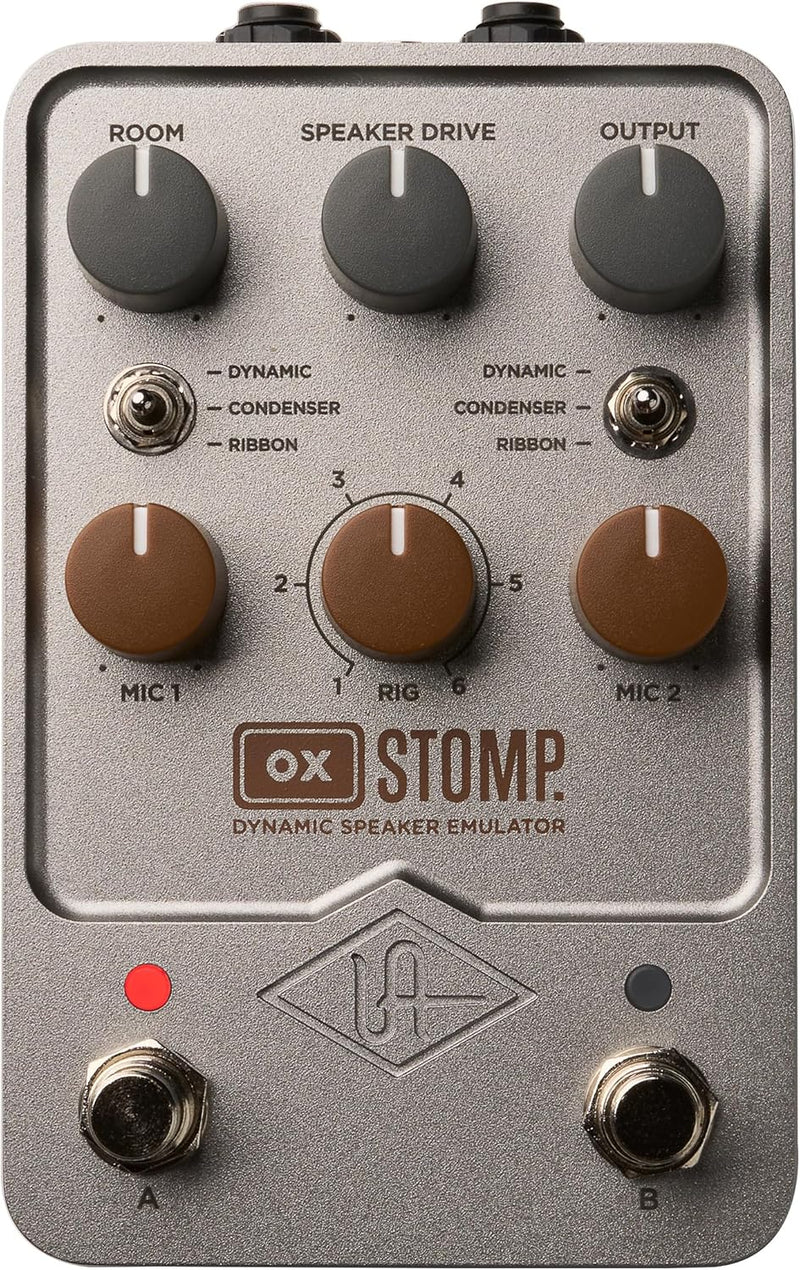
Universal Audio OX Stomp Speaker Emulator Pedal
Studio-grade cabinet and mic emulation in a pedalboard stompbox — the UA OX Stomp brings authentic amp tone to direct recording without compromise.
$332.99*$349.00Save 4%
View on Amazon
✓ In Stock on Amazon.com
*Price sourced from Amazon.com. Last updated:Oct 24, 2026.Price and availability are subject to change — details.
Affiliate Disclosure: As an Amazon Associate, Studio Supplies earns from qualifying purchases made through links on this page, at no additional cost to you. This helps support our editorial team.
Notice a mistake? Let Us Know
Overview
Key Features
Dynamic Speaker Modeling convincingly emulates speaker breakup, drive, and cone cry
Expand the Tones of any Amp-in-a-Box Modeler and award-winning Room Emulation
Perfectly mic’d amp tones and craft stunning guitar sounds with UA effects
Customize with a Full-Featured Mobile App
22 cabinets and six microphones, OX Stomp gives you nearly any tone imaginable
Specifications
Speaker Modeling
Dynamic Speaker Modeling
Cabinet Emulations
22
Microphone Models
6
Connectivity
1/4-inch audio I/O, USB Type-C, Bluetooth
Power
9V DC (high-current — see manufacturer specs)
App Control
UA mobile app via Bluetooth
Brand
Universal Audio
Model
OX Stomp
Frequently Asked Questions
Does the OX Stomp replace a real speaker cabinet for live or recording use?
For direct recording and IEM monitoring, yes — convincingly. The Dynamic Speaker Modeling replicates the mechanical behavior of a real cabinet, including cone breakup and speaker compression at various drive levels. For full-stage amplification through a PA, it feeds a studio-quality signal. What it doesn't do is push air in the room the way a physical cabinet does — that tactile experience is absent in direct applications.
How does the OX Stomp integrate with existing amp-in-a-box pedals like the Strymon Iridium or Quad Cortex?
The OX Stomp is designed explicitly as a downstream processor for amp-in-a-box modelers. You run the output of your modeler into the OX Stomp's input, and it layers its 22-cabinet and 6-microphone emulations on top of the modeler's preamp character. This lets you separate preamp and cabinet selection, mixing UA's acclaimed cab library with whatever front-end tone-shaping you already use.
What's the mobile app workflow like, and is Bluetooth reliable for live use?
The UA companion app connects via Bluetooth for preset loading, cabinet selection, mic placement, and room emulation adjustments. Setup and sound design happen in the app, then the pedal operates standalone without requiring a phone connection. Bluetooth is not in the audio signal path — it's purely for control, so any connection quirks don't interrupt your signal.
Does the OX Stomp require 9V DC power, and how much current draw does it need?
Yes, 9V DC, but current draw is higher than a typical analog stompbox — check the UA specification for exact mA requirements. Standard 9V 100mA pedalboard supplies will not be sufficient. You'll need a high-current isolated output (typically 500mA or more) from a supply like a Strymon Zuma or Cioks DC7.
Can the OX Stomp be used as a recording interface directly into a DAW?
The USB Type-C port enables direct connection to a DAW as an audio interface, sending the processed cabinet/mic/room signal as a clean digital feed. This is one of the OX Stomp's most practical studio features — it removes an analog conversion step and delivers the processed tone directly into your session.
Related Products


