



Warm Audio
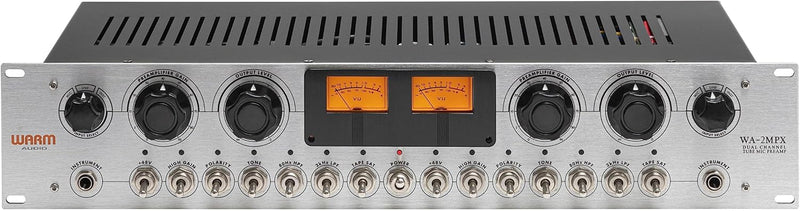
Warm Audio WA-2MPX Dual-Channel Tube Microphone Preamp
Capture the Golden Age of Recording with Classic Tube Warmth The Warm Audio WA-2MPX is a dual-channel tube microphone preamp designed to authentically recreate the iconic sound of vintage tape-era recordings. With premium components and a true-to-original circuit design, this preamp delivers the ...
$1,329.05*$1,399.00Save 5%
View on Amazon
✓ In Stock on Amazon.com
*Price sourced from Amazon.com. Last updated:Aug 28, 2026.Price and availability are subject to change — details.
Affiliate Disclosure: As an Amazon Associate, Studio Supplies earns from qualifying purchases made through links on this page, at no additional cost to you. This helps support our editorial team.
Notice a mistake? Let Us Know
Overview
Capture the Golden Age of Recording with Classic Tube Warmth
The Warm Audio WA-2MPX is a dual-channel tube microphone preamp designed to authentically recreate the iconic sound of vintage tape-era recordings. With premium components and a true-to-original circuit design, this preamp delivers the analog warmth and color that shaped rock 'n' roll and continues to inspire modern artists.
Key Specifications:
- Brand: Warm Audio
- Model: WA-2MPX
- Type: Dual-Channel Tube Microphone Preamp
- Tubes: Three premium tubes per channel
- Transformers: Custom-wound USA CineMag transformers
- Gain: Up to 90dB
- Filters: Hi-Pass (80Hz), Low-Pass (2kHz)
- Saturation: Selectable, all-analog tape saturation
- Connectors: XLR input and output
- Power Source: AC Adapter
Key Features
Authentic Reproduction Of The Most Revered Tape-Era Tube Mic Preamp: The WA-2MPX is based on the 351-style tube preamplifier found in American tape machines that pioneered the birth of rock ‘n’ roll & radio-ready hits.
Power & Versatility For A Wider Range Of Analog Tone: Delivering an impressive 300v of raw power & 90dB of tube gain, WA-2MPX achieves clean gain & powerful volume, that pushes the tubes to saturate just like the most timeless analog gear.
Premium Components & Handwired Construction For An Authentic Vintage Experience: Hand-assembled with three premium tubes per channel paired with custom-wound true-to-spec USA CineMag transformers, the WA-2MPX authentically reproduces all the analog tone of the original.
Selectable, All-Analog Tape Saturation: WA-2MPX uses discrete analog components that provide compression, saturation, and non-linear frequency response for authentic tape-era reel-to-reel sound at 15IPS.
Hi-Pass (80Hz) & Low-Pass (2kHz) Filters to Refine Tone: The 2kHz low-pass filter allows you to further shape and focus your tone, dialing in ultimate midrange warmth & punch. The 80Hz hi-pass filter helps remove unwanted bass noise from unruly sources.
Hand-Inspected & Tested at Warm Audio HQ in Austin, Texas: Carefully inspected at Warm Audio Headquarters in Austin, Texas by trained engineers & musicians with a passion for helping you sound your best.
Specifications
Channel Count
Dual-Channel
Preamplifier Type
Tube Microphone Preamp (351-style reproduction)
Power Output
300v
Gain
90dB (tube gain)
Components
Premium tubes (three per channel), Custom-wound USA CineMag transformers
Saturation Feature
Selectable, All-Analog Tape Saturation (15IPS)
Filters
Hi-Pass (80Hz), Low-Pass (2kHz)
Frequently Asked Questions
What type of preamplifier is the Warm Audio WA-2MPX?
The WA-2MPX is a dual-channel tube microphone preamp, authentically reproducing a 351-style tape-era tube preamplifier.
What is the maximum gain offered by this preamp?
This preamp provides an impressive 90dB of tube gain, allowing for powerful volume and clean gain.
What kind of components are used in its construction?
It is hand-assembled with three premium tubes per channel and custom-wound USA CineMag transformers, ensuring vintage analog tone.
Does this preamp offer tape saturation effects?
Yes, it features selectable, all-analog tape saturation, providing compression, saturation, and non-linear frequency response for an authentic reel-to-reel sound.
Are there any built-in filters for tone shaping?
Yes, it includes an 80Hz Hi-Pass filter to remove unwanted bass noise and a 2kHz Low-Pass filter to refine and focus tone.
Where is the Warm Audio WA-2MPX inspected and tested?
It is hand-inspected and tested at Warm Audio Headquarters in Austin, Texas, by trained engineers and musicians.
Related Products


