

Williams Sound
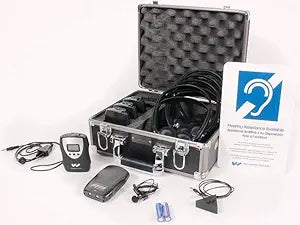
Williams Sound FM ADA KIT 37 Compliance Assistive Listening System
Ensure Accessibility with EaseThe Williams Sound FM ADA KIT 37 provides a complete FM solution designed to meet ADA compliance requirements in smaller group settings. With simple setup and operation, this kit ensures clear audio for individuals requiring hearing assistance in environments like li...
$1,918.00*
View on Amazon
✓ In Stock on Amazon.com
*Price sourced from Amazon.com. Last updated:Aug 27, 2026.Price and availability are subject to change — details.
Affiliate Disclosure: As an Amazon Associate, Studio Supplies earns from qualifying purchases made through links on this page, at no additional cost to you. This helps support our editorial team.
Notice a mistake? Let Us Know
Overview
Ensure Accessibility with Ease
The Williams Sound FM ADA KIT 37 provides a complete FM solution designed to meet ADA compliance requirements in smaller group settings. With simple setup and operation, this kit ensures clear audio for individuals requiring hearing assistance in environments like libraries or conference rooms.
Specifications:- Compliance: Meets 2010 ADA accessibility guidelines
- Operating Range: 150 feet
- Receiver Battery Life: 100 hours
- Transmitter: PPA T46
- Receiver: PPA R37
- Operating Frequency: 72-76 MHz (17 selectable channels)
- Receiver Intermediate Freq.: 75 kHz
- Receiver AFC Range: ± 120 kHz
- Receiver Sensitivity: 2 µV at 12 dB Sinad (with squelch defeated)
- Receiver Input Overload: 100 mV
- Receiver Frequency Response: 200 – 15 kHz
- Receiver Modulation: FM, +/- 75 kHz peak deviation
- Receiver Signal-to-Noise Ratio: 65 dB min @ 100 uV
- Receiver Audio Output: 35 mW max, peak into 16 ohms
- Receiver Output Connector: 3.5 mm stereo/mono phone jack
- Transmitter Stability: ± .005%, frequency synthesized, crystal reference, PLL
- Transmitter RF Output: 80 mV/m at 3m
- Transmitter Frequency Response: 180 Hz to 13 kHz, ± 3dB at 1% max. THD
- Transmitter Signal-to-Noise Ratio: 65dB
- Microphone Input: 3.5 mm mono jack with electret mic bias, adjustable gain with 25 dB range
- Aux Input: 2.5 mm stereo jack, adjustable gain with 60dB range
- Audio Compression: 1:1 (off) or 2:1 (on) selectable in menu
- Includes: (1) PPA T46 transmitter, (4) PPA R37 receivers, (4) HED 027 headphones, (1) MIC 090 lapel microphone, (1) MIC 049 desktop conference mic, (1) CCS 029 system carry case, (2) NKL 001 neckloops, (5) BAT 001-2 AA alkaline batteries and (1) IDP 008 ADA wall plaque
- Origin: Made in USA
Key Features
150' operating range
100 hours receiver battery life
Meets new 2010 ADA accessibility guidelines
Made in USA
Includes: (1) PPA T46 transmitter, (4) PPA R37 receivers, (4) HED 027 headphones, (1) MIC 090 lapel microphone, (1) MIC 049 desktop conference mic, (1) CCS 029 system carry case, (2) NKL 001 neckloops, (5) BAT 001-2 AA alkaline batteries and (1) IDP 008 ADA wall plaque
Specifications
Operating Range
150'
Receiver Battery Life
100 hours
Compliance
Meets new 2010 ADA accessibility guidelines
Country of Origin
USA
Transmitter Model
PPA T46
Receiver Model
PPA R37 (4 included)
Headphone Model
HED 027 (4 included)
Lapel Microphone Model
MIC 090
Desktop Conference Microphone Model
MIC 049
System Carry Case Model
CCS 029
Neckloop Model
NKL 001 (2 included)
Battery Type
BAT 001-2 AA alkaline (5 included)
ADA Wall Plaque Model
IDP 008
Frequently Asked Questions
What is the operating range of the Williams Sound FM ADA KIT 37?
The Williams Sound FM ADA KIT 37 offers a 150-foot operating range, providing extensive coverage for assistive listening.
How long do the receiver batteries last?
The receivers included in the kit provide an impressive 100 hours of battery life, ensuring long periods of use.
Does this system comply with ADA guidelines?
Yes, this assistive listening system is designed to meet the new 2010 ADA accessibility guidelines.
What components are included in the kit?
The kit includes a PPA T46 transmitter, four PPA R37 receivers, four HED 027 headphones, two NKL 001 neckloops, MIC 090 lapel and MIC 049 desktop conference microphones, a CCS 029 system carry case, five AA alkaline batteries, and an IDP 008 ADA wall plaque.
Where is this product manufactured?
The Williams Sound FM ADA KIT 37 is Made in USA.
Are batteries included with the kit?
Yes, five BAT 001-2 AA alkaline batteries are included, allowing for immediate operation of the system.
Related Products


