



Yamaha
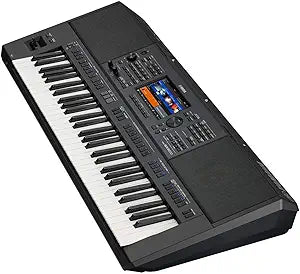
Yamaha PSRSX900 Arranger Workstation Keyboard
A flagship arranger workstation with a touch-screen interface, expressive joystick control, and a style engine deep enough to anchor a full live performance.
$2,599.99*$2,799.99Save 7%
Check availability
*Price sourced from Amazon.com. Last updated:Oct 24, 2026.Price and availability are subject to change — details.
Affiliate Disclosure: As an Amazon Associate, Studio Supplies earns from qualifying purchases made through links on this page, at no additional cost to you. This helps support our editorial team.
Notice a mistake? Let Us Know
Overview
Key Features
The color touch screen allows you to easily see the state of voice and style assignments and quickly access and adjust a wealth of features and settings
The joystick controller allows the player to achieve the wide variety of pitch and modulation combinations present in many different world Music styles
Assignable real-time control knobs allow you to filter and adjust your sound just like an analog synthesizer
Chord looped allows you to record your chord progressions so that the style engine can loop them for you, freeing you up to experiment with two-hand playing or soloing without having to worry about playing the changes
Style section reset allows you to go back to beat one of bar one with the touch of a button. This is handy when a musician you're playing with comes in too early or late and you need to get your accompaniment back on track
Specifications
Brand
Yamaha
Model
PSR-SX900
Category
Arranger Workstation Keyboard
Interface
Color Touch Screen
Pitch/Modulation Control
Joystick Controller
Real-Time Controls
Assignable Control Knobs
Key Features
Chord Looper, Style Section Reset, Built-in Speakers
Series Position
Flagship PSR-SX Series (below Genos)
Frequently Asked Questions
Can the PSR-SX900 function as a standalone performance instrument without connecting to a computer or external sounds?
Yes — the SX900 is a fully self-contained workstation. Its internal voice library, built-in amplification and speakers, and onboard style engine mean you can perform a complete show without a single external connection. That self-sufficiency is central to its appeal for working entertainers and live performers.
How does the Chord Looper feature work in a live performance context?
You record a chord progression into the Chord Looper and the style engine repeats it automatically, freeing both hands for melodic playing or soloing. In a live set this means you can lock in a rhythm section feel and improvise over it — a genuine workflow advantage when you're performing solo.
What does the Style Section Reset button do and when would you actually use it?
It jumps the style engine back to beat one of bar one instantly. In live performance, if a transition goes off-grid or a collaborating musician comes in at the wrong moment, one button press re-establishes your anchor point without stopping the music — a practical safeguard that seasoned players rely on.
How do the assignable real-time control knobs compare to a hardware synthesizer's analog-style controls?
They provide direct hands-on adjustment of filter cutoff, resonance, and effect depth during a performance — the kind of real-time timbral shaping you'd associate with a hardware synth rather than menu-diving. While they're not analog circuits, the tactile immediacy they offer is a meaningful step above navigating a touch screen mid-song.
Is the color touch screen responsive enough for use during live performance?
The touch screen is designed for quick navigation between voices, styles, and settings — it responds well for selecting and adjusting parameters between songs or during transitions. For real-time manipulation mid-performance, the physical knobs and joystick are the intended tools; the screen is more of a command center than a performance surface.
Related Products


