



Yamaha
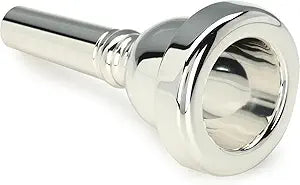
Yamaha YAC SL51 Trombone Mouthpiece Standard Series
A small-shank mouthpiece engineered for dark, centered tone that sits naturally in ensemble trombone writing.
$63.99*$74.99Save 14%
View on Amazon
✓ In Stock on Amazon.com
*Price sourced from Amazon.com. Last updated:Aug 28, 2026.Price and availability are subject to change — details.
Affiliate Disclosure: As an Amazon Associate, Studio Supplies earns from qualifying purchases made through links on this page, at no additional cost to you. This helps support our editorial team.
Notice a mistake? Let Us Know
Overview
Key Features
Small Shank Trombone Mouthpiece with 51 Cup
25.23mm Inner Diameter
6.92mm Throat
Medium Depth
Specifications
Brand
Yamaha
Model
YAC SL51
Instrument
Trombone
Shank Size
Small
Sound Characteristics
Dark sounds, Beautiful, rich tone
Frequently Asked Questions
What does the small shank designation mean, and which instruments does the SL51 fit?
Small shank refers to the taper of the mouthpiece shank — the section that inserts into the receiver of the instrument. Small shank mouthpieces fit tenor trombones with small-bore receivers (typically .500"–.508" bore). They do not fit large-bore or bass trombone receivers, which require large-shank mouthpieces. Verify your instrument's bore spec before ordering.
How does the SL51's cup shape and throat contribute to its described dark tonal character?
Yamaha's Standard Series mouthpieces use controlled cup depth and throat diameter to shape the air column and resonance characteristics. A deeper cup relative to cup diameter tends to produce a darker, more covered fundamental, which is the sonic character the SL51 is designed for. Shallow cups yield brighter, more projecting tones suited to lead playing.
Is the SL51 appropriate for a student, advancing, or professional player?
The SL51 is positioned as an all-around mouthpiece within Yamaha's Standard Series, making it a practical choice for advancing players who want a consistent, quality baseline. Professional players often migrate to artist-spec or custom mouthpieces tailored to specific orchestral or commercial needs, but the SL51's quality of manufacture means it is not outgrown quickly.
What material and finish is the SL51 mouthpiece made from?
Yamaha Standard Series mouthpieces are manufactured from brass with a silver-plate finish, which is standard for orchestral brass mouthpieces. Silver plating affects surface texture and corrosion resistance; some players have metal sensitivities to silver plating and should verify before purchase.
How does the SL51 compare to standard Bach or Schilke equivalents for players switching brands?
Mouthpiece sizing systems differ between manufacturers — Yamaha's SL51 does not correspond directly to a Bach 6.5AL or Schilke 51 by number alone. Dimensional specs (rim diameter, cup depth, throat) should be compared directly when switching, as playing feel and tonal response vary meaningfully between systems even at nominally similar sizes.
Related Products


