



Zoom
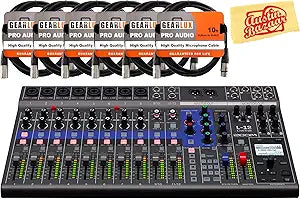
Zoom AUS-L12-COMBO-STD LiveTrak L-12 Mixer Recorder Bundle
XLR
The LiveTrak L-12 brings multitrack recording, five independent headphone mixes, and a clean USB interface into one compact mixer built for bands and podcasters who need studio results without a studio budget.
$604.99*
View on Amazon
✓ In Stock on Amazon.com
*Price sourced from Amazon.com. Last updated:Aug 29, 2026.Price and availability are subject to change — details.
Affiliate Disclosure: As an Amazon Associate, Studio Supplies earns from qualifying purchases made through links on this page, at no additional cost to you. This helps support our editorial team.
Notice a mistake? Let Us Know
Overview
Key Features
12 discrete channels (8 mono plus 2 stereo) with XLR or 1/4-inch connectivity
14-track simultaneous recording, 12-track playback
14-in/4-out USB audio interface connectivity
16 built-in delay and reverb effects with adjustable parameters
Built-in compression control (Channels 1-8)
Specifications
Channels
12 discrete (8 mono XLR/TRS, 2 stereo)
Simultaneous Recording Tracks
14
Simultaneous Playback Tracks
12
USB Audio Interface
14-in / 4-out
EQ
3-band mid-parametric (per channel)
Compression
Built-in, channels 1–8
Effects
16 built-in delay and reverb with adjustable parameters
Headphone Monitor Outputs
5 individual custom mixes
Model
AUS-L12-COMBO-STD
Frequently Asked Questions
How many tracks can the L-12 record simultaneously, and what format does it write?
The L-12 records 14 tracks simultaneously — all 12 input channels plus a stereo mix bus — writing to SD card. Playback is 12 tracks, which allows overdub workflows without losing your original multitrack session.
Does the built-in compression on channels 1–8 affect the recorded multitrack, or only the live mix?
The onboard compression is applied to the live mix output and headphone feeds, but the multitrack recording captures the pre-compression signal on each channel, preserving your dynamic range for post-production processing in your DAW.
Can the L-12 function as a USB audio interface while simultaneously recording to SD card?
Yes. The 14-in/4-out USB interface operates concurrently with SD card recording, making it straightforward to run a live session while also capturing a DAW backup — useful for rehearsals or live-to-laptop podcast sessions.
How does the 3-band mid-parametric EQ perform for correcting problem frequencies on vocals or instruments?
The mid-parametric band gives you sweepable frequency control for surgical notching of feedback-prone or nasal frequencies — a meaningful advantage over fixed mid-band EQ in cheaper mixers. It won't replace a dedicated plugin EQ in post, but it handles in-the-moment tonal corrections reliably.
What are the five headphone mixes, and can each one be individually customized?
The L-12 provides five discrete headphone monitor outputs, each with its own custom mix — levels, effects send, and channel routing can be adjusted independently per output. This is the core live-use advantage: each performer hears exactly what they need without compromise.
Related Products


