



Zoom
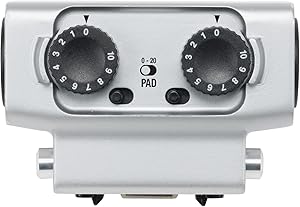
Zoom EXH6 Dual XLR/TRS Input - H6 Capsule
Expand your Zoom H6's input count with two gain-controlled XLR/TRS combo slots — built for field recording sessions that demand more mic channels.
Check availability
Affiliate Disclosure: As an Amazon Associate, Studio Supplies earns from qualifying purchases made through links on this page, at no additional cost to you. This helps support our editorial team.
Notice a mistake? Let Us Know
Overview
Specifications
Product Type
H6 Capsule
Inputs
Dual XLR/TRS
Frequently Asked Questions
Does the EXH-6 support phantom power for condenser microphones?
Phantom power is not supported on the EXH-6 inputs. If you need to connect condenser microphones that require 48V phantom power, you'll need to use the H6's native capsule inputs or run your condenser through an external preamp that supplies its own phantom power before feeding the EXH-6.
How does the -20dB pad affect gain staging when connecting line-level sources?
The -20dB pad on each input is essential when feeding the EXH-6 from line-level sources like mixers or preamp outputs. Without it, line-level signals will clip the input stage — engaging the pad brings the signal into the proper operating range and gives the H6's converters the headroom they need to stay clean.
Can I record all six channels simultaneously on the H6 with the EXH-6 attached?
Yes. The EXH-6 replaces the H6's interchangeable capsule module and adds inputs 5 and 6, giving you six simultaneous recording channels when combined with the four built-in XLR/TRS inputs on the H6 body.
Are the gain controls on the EXH-6 independent from the H6's main input controls?
The EXH-6 has its own individual gain knobs for each of its two inputs, separate from the gain controls for inputs 1–4 on the H6 body. This lets you set each channel's level independently before the signal reaches the recorder.
What types of sources work best with the EXH-6 in a live or field recording context?
The EXH-6 is well-suited for dynamic microphones, ribbon mics (which don't need phantom power), and line-level sources such as instrument DI boxes, mixer aux sends, or audio interface outputs. It extends the H6's capability for multi-source field recording or broadcast remote production.
Related Products


